



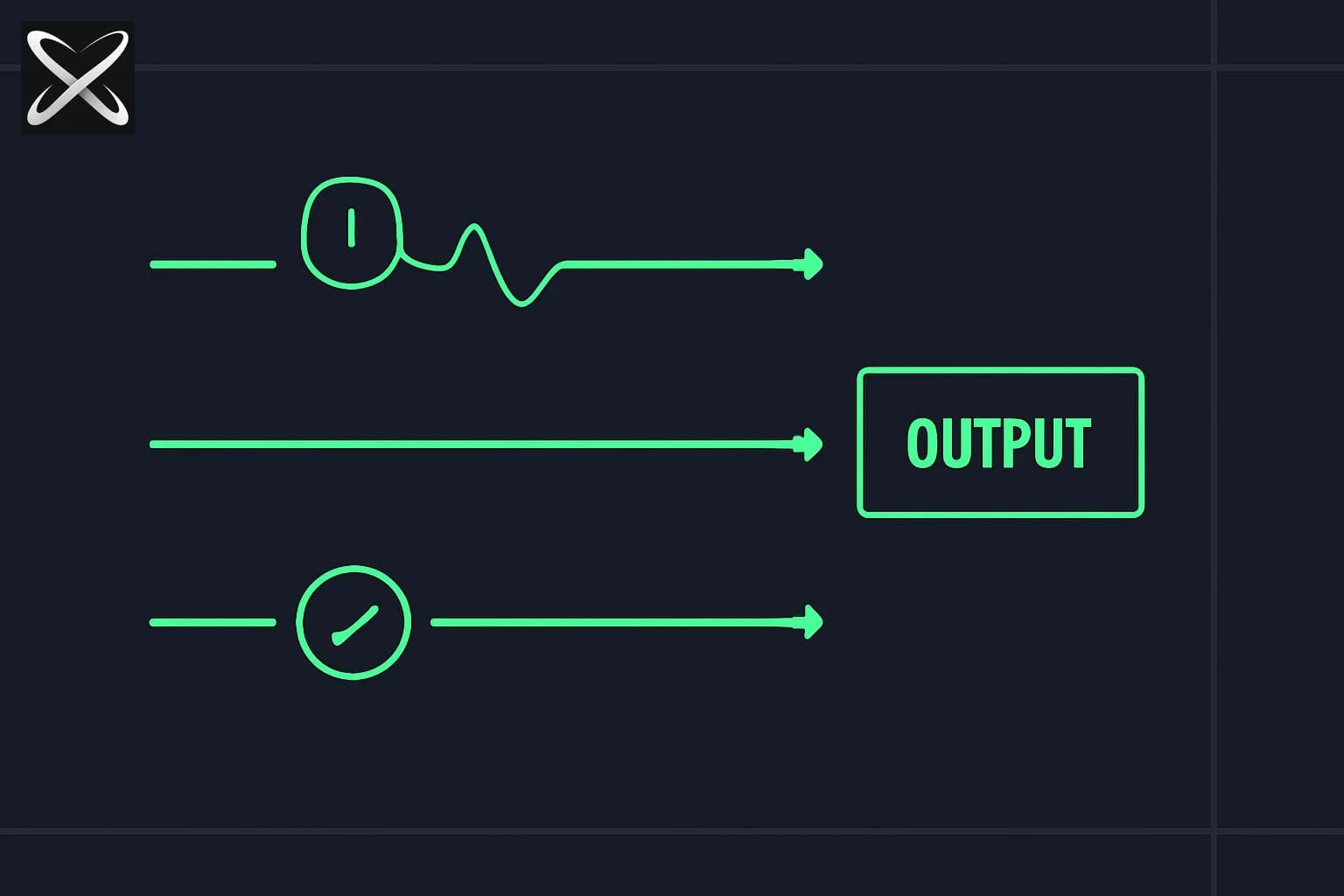
A developer built OpenJev — a free, entirely in-browser tool that lets anyone load an open model and directly compare TypeSafe's Jev-style "direct readout" decision method against ordinary token-by-token generation, on their own GPU, with no backend and no waitlist. It hit 556 points on Hacker News, and the resulting discussion (245 comments) turned into as much a conversation about AI-generated website design and a naming dispute as it was about the underlying technique — alongside real, substantive technical pushback worth taking seriously.
TL;DR
| Question | Answer |
|---|---|
| What is it? | A free, browser-only tool comparing Jev-style direct logit readout vs. generation, on open models |
| Models available | Qwen3 0.6B, MiniCPM5 2B, Qwen3.5 4B — all run client-side via WebGPU |
| How does it compare to Jev? | Trails noticeably on smaller models (40.7-63.7% vs. Jev's 88.3%); closes to 84.5% at Qwen3.5 4B |
| HN reaction | 556 points, 245 comments — split between design criticism, a naming dispute, and real technical debate |
| Naming issue | Originally "OpenJev"; later disclaimed as "not affiliated with or endorsed by TypeSafe" |
| Related project | A separate vLLM PR does something similar with DiffusionGemma, with different (better) reported results |
What OpenJev actually does
The tool runs entirely client-side — no backend, models download once via Hugging Face and stay in your browser cache, and your inputs never leave the page. The core demonstration: pick a decision task (the built-in example is a customer-support email triage question with three allowed routing options), and the tool runs the same loaded model through two different paths simultaneously. One path reads the model's raw logits for just the allowed options directly, without decoding any tokens — the mechanism explainx.ai covered in TypeSafe's own Jev and in the separate open-source vLLM replication. The other path asks the model to generate the same probability distribution as JSON text, token by token, the conventional way. The tool measures wall-clock time for both and displays the ratio directly — letting a visitor see, on their own hardware, exactly how much faster the direct-readout approach is compared to ordinary generation, without taking anyone's word for it.
The published numbers: real, and less flattering than the marketing framing
OpenJev's own published benchmark table is worth reading directly rather than through the site's more triumphant framing, because the actual numbers tell a more nuanced story. On a shared 102-row public benchmark subset, Qwen3 0.6B scores 40.7% "TypeSafe" (equal-case agreement) against Jev's own published 88.3%, and MiniCPM5 2B scores 63.7% — both a real, substantial gap. The gap narrows meaningfully at Qwen3.5 4B, which reaches 84.5%, close to but still behind Jev's reported number. That's a genuinely different result than the separate, independently developed vLLM/DiffusionGemma replication effort explainx.ai covered separately, which reported roughly tied accuracy against Jev using a larger diffusion-based model — a useful reminder that "open alternative to Jev" isn't one single result, it's a spread of outcomes depending on the specific model, size, and implementation, and OpenJev's own honest publication of a real gap (rather than only showing favorable numbers) is itself worth crediting.
The site design became its own HN conversation
A large share of the top-voted comments focused not on the technical claim at all, but on the site's visual design — described by multiple commenters as cluttered, filled with "pointless filler text," and generally exhibiting the specific aesthetic pattern people now associate with AI-generated landing pages. One especially sharp comment reframed this as an analogy: AI-generated writing and websites read like "a final exam essay response from an anxious student... anti-edited to cram in as many details as possible," optimized to cover every possible angle a critic might raise rather than communicating clearly. The site's own "Unsloppify" toggle — meant to switch to a cleaner presentation — drew specific mockery for changing the color scheme without actually reducing the underlying text density, which several commenters read as evidence the toggle itself was more gesture than genuine fix.
The naming dispute, and the more substantive critique underneath it
By the time a related discussion thread appeared, the site had added a direct disclaimer: "Independent research project. Formerly called OpenJev. Not affiliated with or endorsed by TypeSafe. No infringement is intended." That's a real, concrete signal — the project shipped under a name directly referencing a commercial competitor's trademark, and apparently revised that choice after launch-week attention, rather than the naming being an incidental detail nobody noticed.
The more substantive critique came from a commenter (handle "refulgentis"), who pointed out a real tension in the presentation: the site markets itself around ideas like "there is no waitlist!" — implicitly positioning itself as the more open, honest alternative to Jev's gated access — while its own benchmark table shows the featured open models performing meaningfully worse than Jev on the same test set. That's a fair point about framing versus substance: being free and open is a genuine, real advantage, but it's a different claim than being equally capable, and conflating the two in marketing copy invites exactly this kind of pushback.
Why running it locally in the browser is the actually interesting part
Beyond the accuracy comparison, it's worth appreciating the engineering choice underlying OpenJev specifically: running an LLM entirely client-side via WebGPU, with no server round-trip and no data leaving the browser, is a meaningfully different deployment model than the API-based approach both TypeSafe's Jev and most other AI products use. That has real, practical implications beyond just being a neat demo — a genuinely local, in-browser inference tool means zero marginal cost per query once the model is downloaded and cached, complete data privacy since nothing is transmitted anywhere, and no dependency on a third party's uptime or pricing changes. The tradeoff, visible directly in OpenJev's own accuracy numbers, is that browser-based WebGPU inference on consumer hardware currently caps out at meaningfully smaller models than a well-resourced API backend can serve — which is exactly why the smaller models in OpenJev's lineup trail Jev by a real margin, while the largest option available (Qwen3.5 4B) closes much of that gap. That tension — local and free versus larger and more capable — is a genuine, ongoing tradeoff in AI deployment generally, not unique to this one comparison, and OpenJev is a concrete, testable demonstration of where that tradeoff currently sits for this specific class of structured-decision task.
Honest limitations
- The published accuracy gap against Jev is real and not small for the smaller models the tool defaults to, even though it narrows at the larger Qwen3.5 4B option.
- Browser-based WebGPU quantization may itself reduce accuracy further versus running the same models natively, per the site's own disclosed caveat ("Browser quantization may change model accuracy").
- The naming controversy is a legitimate, unresolved concern — the disclaimer addresses trademark risk after the fact, but doesn't retroactively change how the project was marketed and discussed during its most-viewed launch window.
- This is one independent developer's project, not a company-backed or peer-reviewed effort — treat the benchmark methodology and reported numbers with the same scrutiny applied to any single-source claim.
- The specific 102-row public benchmark subset used for comparison isn't independently audited — a small, fixed test set is easier to optimize for or inadvertently overfit to than a larger, continuously refreshed evaluation set would be, and neither this post nor the project itself discloses who originally curated that specific subset.
What this means for builders
If you're evaluating whether an open-model alternative to Jev is viable for your own use case, OpenJev is worth trying specifically because it lets you test the tradeoff on your own hardware with your own example questions, rather than taking either TypeSafe's or any replication project's benchmark numbers at face value — the tool's entire design is built around letting a skeptical visitor verify the claim directly. The honest takeaway from OpenJev's own published numbers, read plainly: smaller open models trail Jev by a real margin on this specific benchmark, larger ones close that gap substantially, and the separate vLLM/DiffusionGemma effort suggests an even smaller gap is achievable with the right model and implementation — meaning the open-source replication space for this technique is genuinely active and improving quickly, not a single settled result either way. Watch both projects over the coming weeks rather than treating either one's current numbers as the final word on how close open models can actually get.
Related on explainx.ai
-
Learn Jev: self-paced Jev & TypeSafe AI course on Udemy, or the live Build with Jev workshop — full comparison.
-
Update — September 21, 2026: StepFun Step 5 Preview launched the same week alongside classifier.dev, another free Jev-adjacent tool — a zero-shot classification API built directly on top of Jev's own uncertainty signal.
-
Update — September 19, 2026: Six Jev clones shipped in two days — OpenJev turns out to be one of at least six independent clones that appeared within 48 hours; see the other five (Laya, Bespoke Nimble, Jevlike, Kev-0.5B, and DiffusionGemmaJev).
-
Primary source: openjev.com (browser tool) · Hacker News discussion (556 points, 245 comments)
This post is sourced to the OpenJev project's own published site and benchmark table, and the resulting Hacker News discussion, as of September 19, 2026. Benchmark figures reported are the project's own published numbers; explainx.ai has not independently reproduced them.