



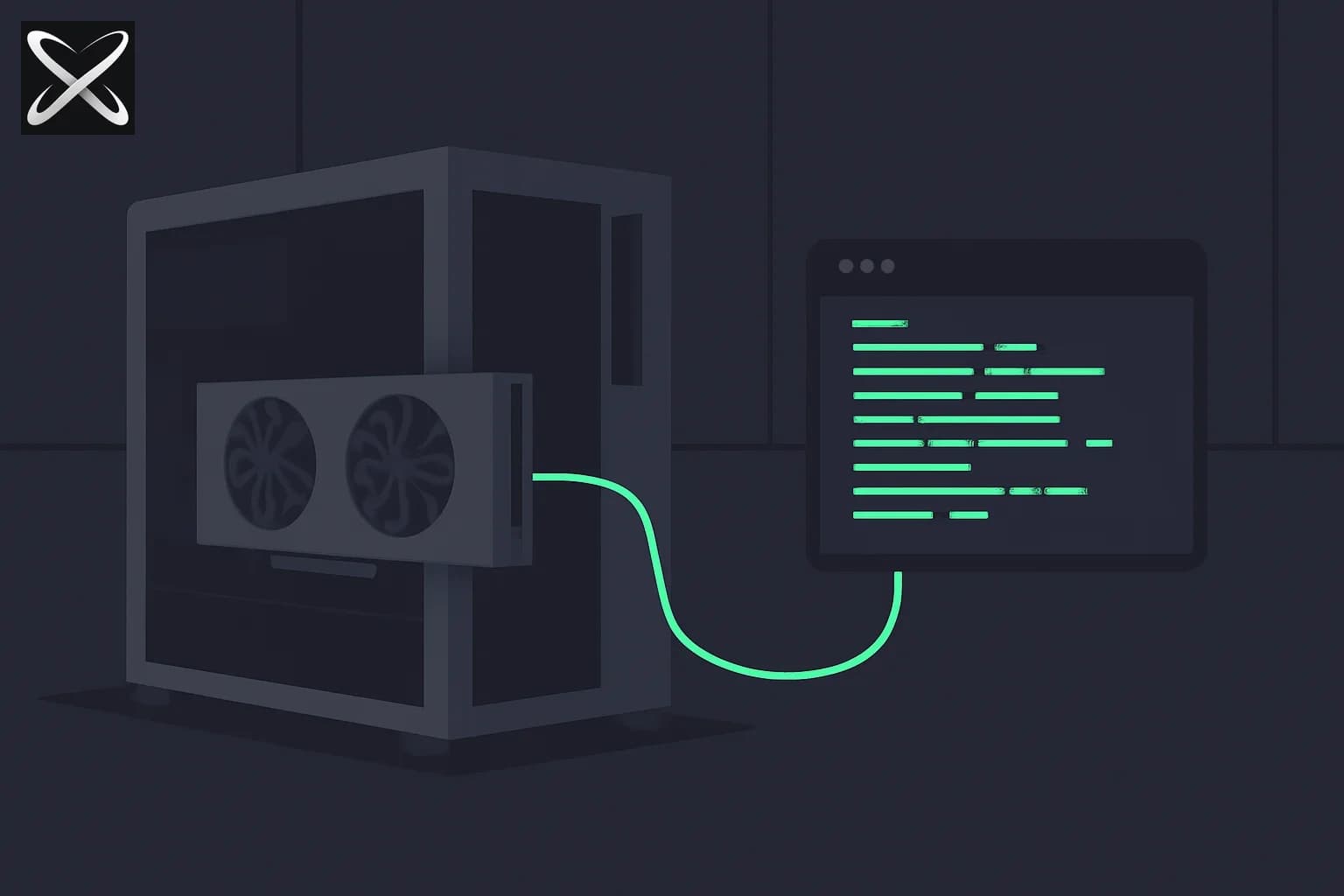
Three days after NVIDIA quietly launched PAIR — the Personal AI Router that pools your idle home computers into a shared inference cluster, which we covered in full here — the first real answer to "okay, but what actually runs on it well" arrived. Nous Research announced that Hermes Desktop now sets up local models in one click on NVIDIA hardware, and NVIDIA confirmed RTX Spark systems from partners including Lenovo start shipping in October 2026. PAIR stopped being a standalone announcement and became the first layer of an actual stack.
Update — October 13, 2026: PAIR has left beta with llama.cpp support; see the RTX Spark launch software roundup.
TL;DR
| Question | Answer |
|---|---|
| What's new since the PAIR launch? | Nous Research's Hermes Desktop — one-click local model setup built for NVIDIA hardware. |
| What does one-click setup do? | Reads your hardware, picks the right model, downloads it, configures the runtime — no manual quant/RAM math. |
| Who's shipping hardware? | RTX Spark systems, partners including Lenovo, from October 2026. |
| Do devices need to match? | No. Pool a gaming PC, a workstation, and a DGX Spark together — that's the point. |
| What runs on PAIR already? | Ollama and LM Studio, unmodified; Hermes Agent is the first named client built around it directly. |
| Is this open source? | Yes — PAIR is free, open-source, currently in beta. |
Why "one-click setup" is the actual unlock
Read past NVIDIA's own PAIR launch and the honest gap was obvious: a router that sends inference requests to whichever machine has spare capacity is only as useful as the software actually running on each machine, and getting local models configured correctly has historically been its own skill. One commenter on the original PAIR announcement put it plainly: "I run local models a lot, and picking the right one is genuinely its own skill: what fits your RAM, which quant, which runtime settings…" That's the exact friction Hermes Desktop is aimed at removing — Nous Research's own description: "It automatically reads your hardware, picks the best model for you, then downloads it and configures the runtime."
That distinction matters more than it looks. PAIR solves where an inference request goes. Hermes Desktop solves what actually runs once it gets there. A router with nothing well-configured to route to is a nice diagram; a router paired with a client that removes the setup tax on every device in the pool is something a non-expert could plausibly use across a household of mismatched machines — a gaming PC here, an old workstation there, a laptop that mostly sits idle.
The hardware side: RTX Spark and Lenovo, October
NVIDIA's own framing of PAIR leans on a specific reference workload — a five-subagent job running through Hermes Desktop and Ollama that completed in 8 minutes 48 seconds across a three-device PAIR cluster, versus 18 minutes on a single RTX Spark laptop alone, roughly a 2x speedup from spreading identical work across machines already in the house (a figure we verified against independent coverage in our original PAIR post). That demo used RTX Spark hardware specifically, and NVIDIA has now confirmed RTX Spark systems from OEM partners — Lenovo named explicitly — begin shipping in October 2026.
Worth being precise about what PAIR actually requires versus what NVIDIA is demoing: the router itself supports RTX 20-series GPUs and newer, plus supported Apple M4 Macs — a far broader hardware floor than "buy an RTX Spark." The RTX Spark hardware line is NVIDIA's reference platform for showing PAIR at its best, not a requirement to use it at all. If you already own an RTX 3080 desktop and a newer Mac, you're a candidate for a PAIR cluster today, in beta, without buying anything new in October.
What trying this today actually looks like
If you want to test the combination now rather than wait for RTX Spark hardware to ship, the pieces are already public and free. PAIR is open-source and in beta, so the realistic path is: install it on each machine you want in the pool, let it discover the others over your local network, then point a client at it. Ollama and LM Studio already work with PAIR unmodified, since PAIR sits at the routing layer rather than requiring applications to be rewritten against a new API. Hermes Desktop is the more turnkey option specifically for NVIDIA hardware on Windows and Linux — install it, and it handles hardware detection and model selection for you rather than asking you to pick a quantization by hand.
The realistic limitation right now is breadth rather than depth. Two named clients — Ollama/LM Studio for general use, Hermes Desktop for NVIDIA-optimized one-click setup — is a start, not an ecosystem. The comparison worth keeping in mind is early Docker or early Kubernetes: the orchestration layer showing up before most of the software people actually want to run has been rebuilt to take advantage of it. PAIR existing doesn't mean most local-AI tools already route well through it; it means the door is open for them to.
For teams evaluating whether this is worth the setup time today versus waiting: if your current bottleneck is a single machine choking on multi-agent workloads and you already own two or three other underused computers on the same network, PAIR plus Hermes Desktop is a genuinely low-cost experiment — no new hardware purchase required, and the software is free. If your workload is single-agent and already fits comfortably on one machine, there's little reason to add cluster-management complexity for its own sake; the router only earns its keep when you actually have parallel work to spread across devices.
The pitch, in the announcer's own words
One widely-shared thread from a developer covering the launch (64.8K views) laid out NVIDIA's actual bet more clearly than the company's own copy did: "Today we have: 1 user → 1 computer → 1 AI model. Tomorrow could look more like: 1 user → many AI agents → an entire pool of local compute... Your gaming PC might run one agent. Your workstation runs another. A DGX Spark handles the heavy model. And PAIR becomes the router deciding where every inference request goes."
That's the correct way to read this announcement cycle. PAIR by itself is a network-discovery-and-routing tool. Hermes Desktop is the first piece of software built to assume that pool exists and configure itself accordingly. RTX Spark plus Lenovo is the hardware line NVIDIA wants people buying specifically to build that pool with matched, known-good components. None of the three pieces is remarkable alone — the combination is NVIDIA making a real, first-party push toward "the household as a small data center," which is a genuinely different pitch from either "buy one bigger GPU" or "just use the cloud API."
What's still unverified
A few reactions in the original thread are worth carrying forward as open questions rather than settled facts. One reply asked whether PAIR relates to an existing NVIDIA effort called "Switchyard" — the response was a flat "No. Two separate NVIDIA projects," which is worth remembering if you see the two conflated elsewhere. Another commenter noted they'd already built a comparable GPU-pooling side project on their own, a useful reminder that the underlying idea — combine multiple machines into one shared inference target — isn't new; what's new is NVIDIA shipping an official, first-party version of it with a named software partner on day one rather than leaving it to hobbyist tooling.
One more open question worth naming plainly: NVIDIA and Nous Research have not published independent, third-party-verified benchmarks beyond the single demo workload above. The 2x figure is a real, specific, disclosed number — but it's one workload, from the vendor, not a suite of tests across different task types. Treat it as a promising early data point, not a general multiplier you should expect on your own mixed workload.
Honest limitations
- This is a fast-moving, days-old story stacked on top of an already-fast-moving one. Details on Hermes Desktop's exact model-selection logic and the full RTX Spark partner list beyond Lenovo were not fully public at time of writing.
- The 2x speedup figure is a single vendor-run demo, not an independently reproduced benchmark suite. See the honest-limitations section of our original PAIR post for the same caveat applied to PAIR itself.
- PAIR remains in beta. Software in this state changes quickly; specifics here may be outdated within weeks.
- We have not tested Hermes Desktop or a multi-device PAIR cluster ourselves. Everything here is sourced from the companies' own announcements and independent tech coverage, not hands-on verification.
Related on explainx.ai
-
Hermes Agent v0.22.0 Threshold release — one-click local models via llama.cpp
-
A Verge reviewer's local AI diary with Hermes Agent and Qwen
-
Surface RTX Spark Dev Box at $5,999 and Surface Laptop Ultra
-
NVIDIA PAIR — turning idle home PCs into a personal AI cluster
Details reflect public announcements and independent coverage as of September 4, 2026. PAIR and Hermes Desktop's one-click setup are both described as beta/early-stage software; verify current capabilities, supported hardware, and shipping dates against NVIDIA's and Nous Research's own documentation before purchasing hardware or planning a deployment around them.