



On October 5, 2026, Nolla Health announced that Utah regulators approved its AI to issue initial prescriptions, a step the company says is a first in the United States. The framing that spread online came from co-founder Luis Wenus, who wrote that Nolla "became the first organization in the U.S. (and possibly the world) to receive regulatory approval for an AI to issue initial prescriptions," making it "the first ever actual end-to-end AI doctor."
The first half of that sentence is plausible and worth taking seriously. The second half is a marketing label. This post covers what the approval actually permits, how the staged oversight works, how it differs from earlier AI refill pilots in Utah, and what builders and clinicians should watch.
A note on sourcing: Nolla's own page and several news sites were not reachable from our research environment, so the details below come from search summaries of the company's press release and from coverage by SiliconANGLE, Medical Economics, Digital Trends and others. We link them in the text, and anything we could not confirm is marked.
TL;DR: the questions people are asking
| Question | Short answer |
|---|---|
| What was approved? | An AI issuing initial prescriptions for topical acne treatments, through the Nolla Derm app |
| Where and for whom? | Utah residents aged 18 and over |
| Who approved it? | Utah's Office of Artificial Intelligence Policy and Division of Professional Licensing, per reports |
| Is a doctor involved? | Yes, at every stage, with less review as the pilot advances |
| What is excluded? | Isotretinoin and all oral medications |
| What does it cost? | From $4.99 per month, as reported |
| Is it the first AI doctor? | No. It is a narrow, supervised pilot for one condition and one drug class |
| Is it the first AI to prescribe at all? | Not exactly. Utah earlier approved AI renewals of existing prescriptions; initial prescribing is the new part |
| Is it safe? | Unproven. This is the stage where that gets measured |
What the approval covers
According to Nolla's announcement as summarized by coverage, the AI may write prescriptions for creams that treat topical acne. It is barred from prescribing isotretinoin and any oral medication. The service runs in the Nolla Derm app, is open to Utah residents 18 and older, and has no waitlist or office visit. Reported pricing starts at $4.99 a month. The Digital Trends headline put the scope bluntly: for now, it only prescribes acne cures.
Press accounts name the Utah Office of Artificial Intelligence Policy, the Utah Division of Professional Licensing, the Utah Medical Association and the American Academy of Dermatology in connection with the approval. SiliconANGLE and Medical Economics cover the launch. We could not confirm from primary documents exactly what role each body played, so treat "approval" as shorthand for a negotiated pilot arrangement, not a general legal change.
The legal mechanism: a regulatory mitigation agreement
 Nolla Health AI prescriptions legal mechanism: a stack of documents receiving an approval stamp
Utah's approach is not a new law that lets AI practice medicine. It uses a regulatory mitigation agreement under the state's AI policy act, a mechanism where a company, the Office of Artificial Intelligence Policy and relevant agencies agree on a controlled test. Law firm summaries of an earlier Utah refill pilot describe such agreements as granting exceptions to professional licensure, scope of practice, professional conduct and telehealth prescribing rules during the pilot, with terms like restitution to users, cure periods and civil fines where applicable.
The key point is that this is a sandbox, not a safe harbor from all liability. It is built to let developers test for unintended consequences in a bounded setting. It also means the permission is temporary and conditional, and the same rules do not automatically apply anywhere else.
How the three-stage oversight works
 Utah AI prescribing pilot oversight: an empty round table with a single green lamp above it
The reported structure is the most important part of the announcement.
| Stage | Patients | Who reviews |
|---|---|---|
| 1 | First 100 | Two licensed physicians independently review and approve every AI-generated prescription |
| 2 | Up to 500 | The AI issues prescriptions directly; physicians review after the fact at least weekly |
| 3 | Beyond | Physicians review a sample of at least 10 percent of prescriptions every month, plus every case involving escalation or side effects |
Read plainly, the design is graduated autonomy: review everything, then review after the fact, then audit a sample. It is the same pattern many teams use when they move an AI agent from approval-gated to monitored operation, a theme we cover in our guide on when to let an agent run.
Two things are worth noticing. First, "end-to-end" is true only at stages 2 and 3, and even then a physician sees every escalation and side-effect case. Second, the sample size at stage 3 is a floor, not a ceiling. Whether 10 percent is enough review is exactly what the pilot is meant to test.
Why acne first
Acne is a defensible choice for a first autonomous prescribing pilot, for reasons that are clinical and commercial.
- Topical treatments carry lower systemic risk than oral drugs. The exclusion of isotretinoin, which has strict safety programs, and of all oral medicines follows from that.
- Visual assessment is central. Nolla's pitch is that a facial scan plus an intake form is enough to assess acne and choose a regimen. Earlier press describes the platform as built on vision transformers and large multimodal models, trained on over a million cases across more than 1,600 skin conditions. That is a company claim we could not verify independently.
- Demand is high and access is poor. Dermatology waitlists are long, and a $4.99 monthly price undercuts typical visit costs by a wide margin.
- Outcomes are observable. Acne improves or does not over weeks, which makes the pilot measurable.
Who is Nolla Health?
Nolla Health was founded by Luis Wenus, Luis Ruben Soenksen and Sean Geiger, and launched in Norway in 2024. Reporting says its apps there, a skin cancer screening app and an acne treatment app, treated more than 50,000 patients in about six months, and that the company raised a $4.5 million seed round led by General Catalyst while entering the U.S. These are the company's and trade press's figures, so treat them as claims.
Notably, Nolla's earlier U.S. acne service was clinician-reviewed, with licensed clinicians approving treatment plans for a subscription of $59 a month, as covered by Beauty Independent. The Utah pilot is different: it lets the AI itself issue the prescription, with oversight rules around it.
How this differs from earlier AI refill pilots
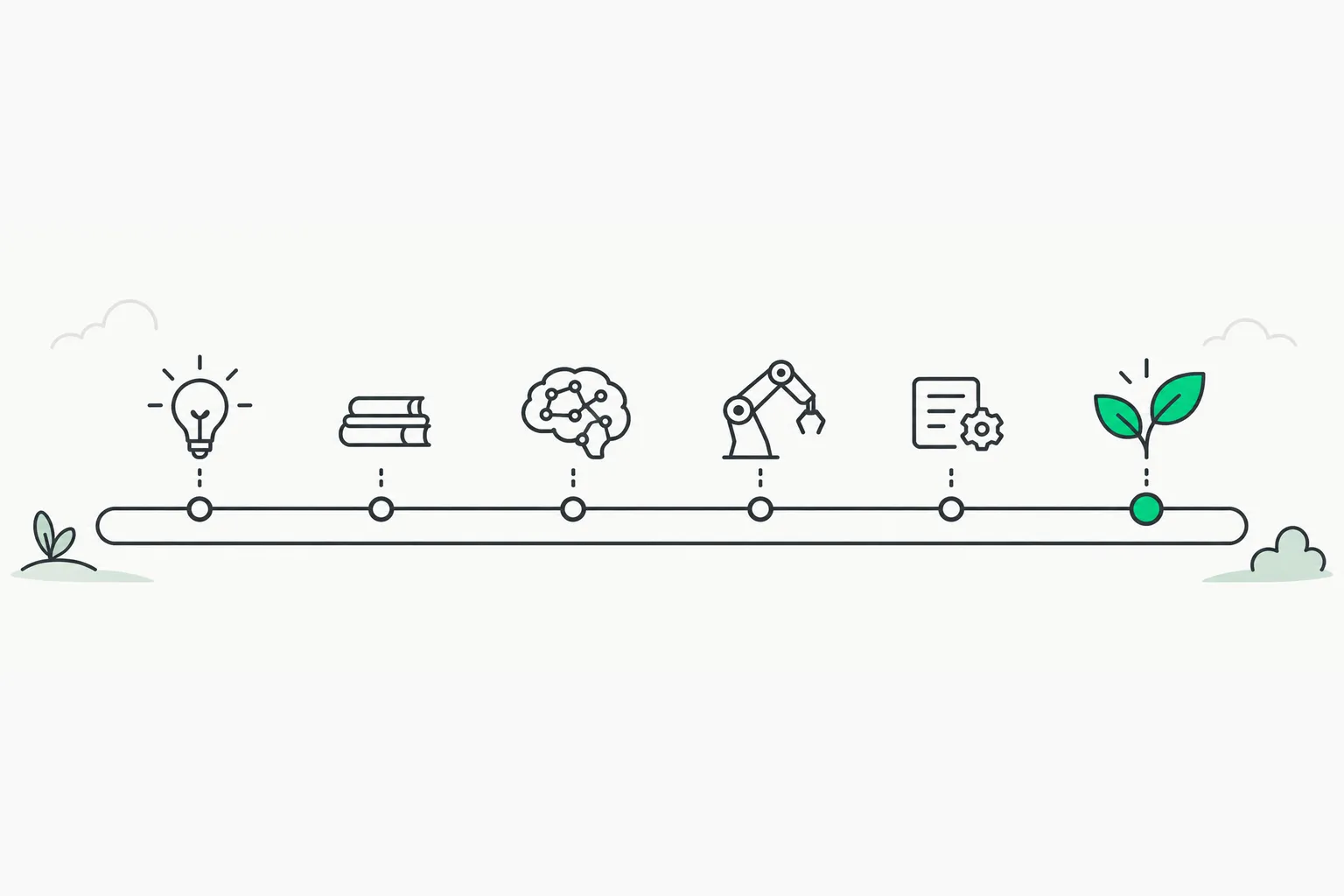 First AI doctor compared with earlier AI refill pilots: a timeline of milestones with the latest in green
Utah has been the testing ground. In late 2025 the state authorized a pilot in which an AI system participates in renewing existing maintenance prescriptions. That pilot drew criticism: reporting says eleven members of the Utah Medical Board demanded a halt, arguing the AI could miss drug interactions, overlook side effects or fail to notice a change in a patient's condition.
The distinction between renewal and initial prescription matters a lot:
| Factor | Refill pilot | Nolla initial prescribing |
|---|---|---|
| Starting point | Patient already on a drug | Patient has no treatment yet |
| Core judgment | Is it safe to continue? | What should this person start? |
| Typical drugs | Maintenance medications | Topical acne creams |
| Main risk | Missed interactions or changes | Wrong diagnosis or wrong drug |
Starting a treatment requires diagnosing the condition first. That is why a narrow condition and a narrow drug class are the sensible way to try it, and why the oversight stages exist.
What people are asking and what we do not know
Is this "the first AI doctor"? No. A doctor diagnoses, treats and takes responsibility across conditions. This is a supervised pilot for one skin condition in one state. Calling it the first end-to-end AI doctor is a founder's headline, not a regulatory finding.
What happens if the AI is wrong? The reporting we reviewed describes escalation and side-effect review, but we did not find details on liability, patient recourse, or what triggers a rollback. Those terms would sit in the agreement itself.
What model is it? Nolla's earlier descriptions mention vision and multimodal models. We found no public detail on the specific system or its validation data for the Utah pilot, and no peer-reviewed results.
Will other states follow? Possibly, but the sandbox structure is specific to Utah's AI policy act. Other states would need their own mechanism or a change in law.
What happens to the data? Patients share facial images and health information. Privacy and retention terms were not in the coverage we reviewed, so read the app's policy before using it. Our guide to health data privacy in ChatGPT Health covers the questions to ask.
What this means for what you build
If you build AI products in a regulated field, the pilot is a template worth studying more than a milestone worth celebrating.
- Narrow scope wins approval. One condition, one drug class, explicit exclusions, one adult population. Broad claims invite refusals.
- Autonomy is earned in stages. Regulators accepted a path from full review to sampled audit. A staged rollout is also easier to defend to your own users.
- Escalation rules are part of the product. Mandatory review of side effects and escalations is a feature, not a cost.
- Measure from day one. The first 100 patients with double review produce the dataset that justifies stage 2. Plan your evaluation before launch, as in the MentalHealthBench evaluation approach with clinicians.
- Keep legal exposure in view. Sandbox protection is not immunity. For a sense of how liability is already being tested for agents, see FelonyBench.
For policy background, our AI regulation guide covers where state and federal rules stand, and our look at OpenEvidence's medical AI results shows how fast clinical AI capability is moving. For the wider picture of AI in hospitals, see ChatGPT's Epic integration.
Bottom line
The substantive news is real: a U.S. state has let an AI start a patient's prescription treatment, under rules, for a narrow case. The sweeping label is not. Watch three things over the next months: the stage 1 results from double-reviewed prescriptions, what the Utah Medical Board and dermatologists say about the pilot, and whether regulators in other states copy the sandbox model.
Related reading on explainx.ai
Details are based on Nolla Health's October 5, 2026 announcement as reported by news outlets and may be revised as primary documents are published. This is not medical or legal advice; talk to a licensed clinician about treatment decisions.