




NAVER's KMed Team published KMed-31B, a 31-billion-parameter medical language model post-trained for on-premises hospital hardware, in arXiv paper 2611.28719 and on Hugging Face Papers. The November 21, 2026 report argues that medical post-training fails when one objective hurts another: multiple-choice exams have reference answers, while clinical inquiry needs rubric judges and tolerates many valid replies.
KMed-31B's answer is four specialist teachers, Multi-teacher On-policy Delta Distillation (MOPD²), and Synthetic Health Dialogue data. On HealthBench, the team reports large gains without surrendering multiple-choice medical scores.
TL;DR: KMed-31B at a glance
| Question | Answer per NAVER technical report |
|---|---|
| Parameters | 31B medical LLM |
| Deployment target | On-premises, limited hospital hardware |
| Base | Gemma-4-31B-IT (open-weight; per technical report) |
| Core methods | MOPD², D-ROPD, Synthetic Health Dialogue |
| HealthBench Hard (thinking) | 23.80 → 51.48 vs base |
| HealthBench Professional (thinking) | 41.97 → 59.18 vs base |
| MCQ medical benchmarks | Maintained or slightly up |
| Public weights | Not on Hugging Face models list yet (Nov 25, 2026) |
Agents that act on your behalf need rules. See how explainx helps secure your agents →
Why medical post-training is a four-task problem
Medical AI workloads are not one homogeneous fine-tune. The KMed abstract sorts tasks along two axes:
- Expected output shape — fixed answers versus open-ended dialogue.
- Feedback type — exact match labels versus rubrics.
That yields four categories, each with different reward machinery. Training one monolithic model often raises HealthBench-style dialogue while hurting USMLE-style multiple choice, or the reverse.
The KMed team's response:
- Train one specialist per category with rewards the feedback actually supports.
- Merge specialists into a single student with MOPD².
- For clinical inquiry, add Synthetic Health Dialogue so rubric training has realistic multi-turn consultations.
 On-premises hospital medical LLM deployment context for KMed-31B and limited hardware targets
This parallels why explainx.ai covered LingSante-3.1-flash as a giant MoE for long clinical workflows, while KMed-31B targets 31B dense-class hardware budgets common in Korean and EU hospital IT rooms that cannot host 560B stacks.
MOPD² and D-ROPD in plain language
On-policy delta distillation (OPD²) already compares a student's on-policy rollouts to a teacher, updating only where the student is wrong. MOPD² generalizes that to multiple teachers, each strong on one medical task family, so the student inherits compositional skills without sequential catastrophic forgetting.
D-ROPD (Diversified ROPD) extends rubric-based on-policy distillation with reference responses from multiple teachers, helping when clinical inquiry lacks a single gold string.
You do not need NAVER's internal codebase to understand the builder takeaway: specialize first, merge with on-policy distillation second. That pattern shows up beyond medicine — compare Sakana Namazu reasoning distill on Nemotron bases — but KMed applies it where wrong rewards can harm patients if dialogue quality outpaces factual MCQ.
Synthetic Health Dialogue
Synthetic Health Dialogue is the paper's data innovation for primary-care style consultations:
- Lay user turns ask plausible symptom questions.
- Clinician turns follow workup logic across common presentations.
- Cases span the breadth of outpatient medicine rather than single-shot QA pairs.
Synthetic dialogue is risky when deployed without governance, but as training signal it lets rubric graders score empathy, safety disclaimers, and triage language that binary labels miss. Institutions copying the recipe must still run human review for hallucinated protocols — the same caution explainx.ai applied to inclusionAI's medical MoE launch claims.
HealthBench numbers the abstract publishes
The arXiv abstract gives concrete HealthBench deltas versus the same base checkpoint:
| Mode | Metric | Base → KMed-31B |
|---|---|---|
| Non-thinking | HealthBench Hard | 22.95 → 41.87 |
| Non-thinking | HealthBench Professional | 37.92 → 50.20 |
| Thinking | HealthBench Hard | 23.80 → 51.48 |
| Thinking | HealthBench Professional | 41.97 → 59.18 |
The authors also claim highest unadjusted HealthBench Hard among compared models including proprietary systems, and higher HealthBench Professional than compared open-weight models even above 10× parameter count.
Those comparisons live in the 26-page PDF with seven figures and nine tables. explainx.ai did not independently rerun HealthBench; treat leaderboard sentences as author-reported until weights and eval scripts ship.
Multiple-choice stability
A common failure mode for medical chat models is USMLE-style regression after dialogue tuning. KMed-31B's abstract stresses four multiple-choice medical benchmarks stayed flat or slightly improved.
For hospital buyers, that matters because licensing exams and order-set QA still gate many internal approvals, even when the flashy demo is symptom chat.
Qwen3.8-27B transfer experiment
The team reports the same recipe on Qwen3.8-27B, raising both HealthBench scores. That is the strongest builder signal in the abstract: the pipeline is framed as portable post-training, not a one-off NAVER base cheat code.
If weights arrive later, expect community reproducers to start from Qwen family checkpoints hospitals may already fine-tune under existing open license terms — then layer MOPD² specialists per KMed's category split.
On-premises deployment angle
KMed-31B is explicit about limited hardware — a contrast to cloud-only APIs. On-prem fits:
- Chart data that cannot leave jurisdiction.
- Air-gapped imaging networks.
- Procurement that favors capitalized GPUs over per-token bills.
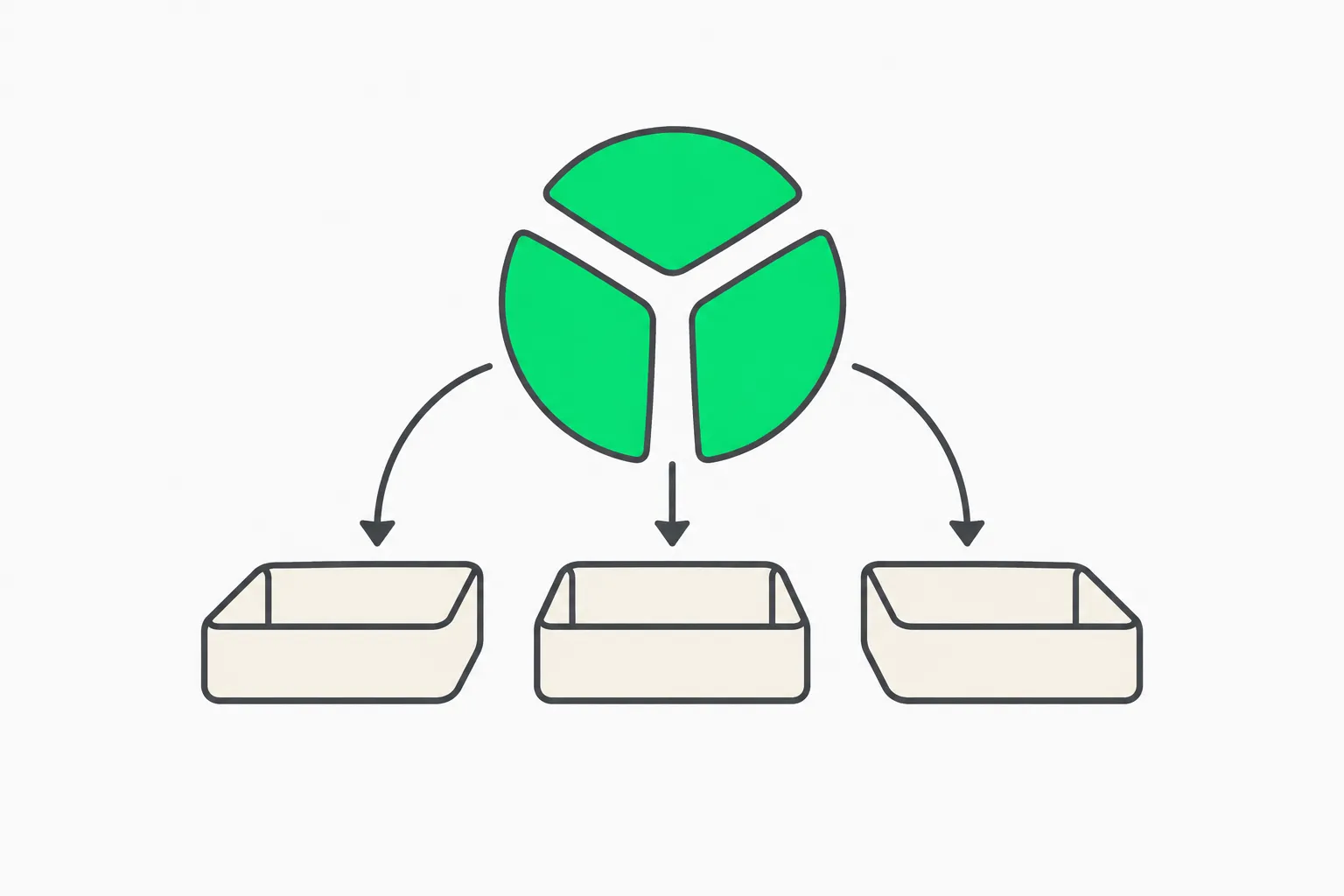 Open-weight medical model distribution and hospital infrastructure for NAVER KMed-31B
NAVER is not on the same headline tier as US frontier labs, but it is a major Asian internet and AI lab with published research volume. The report's value is documentation: data construction, reward design, and evaluation settings spelled out for institutions that must replicate rather than rent.
Watch Hugging Face for a future model card link. Until then, download the PDF and treat KMed-31B as a paper release, similar to early Meta FAIR agent orchestration code drops that trailed the arXiv.
How KMed compares with other November medical models
| Model | Org | Params | Public weights (Nov 25) | Focus |
|---|---|---|---|---|
| KMed-31B | NAVER KMed | 31B | Report only | On-prem recipe, HealthBench |
| LingSante-3.1-flash | inclusionAI | 560B MoE | HF card | Long-context MoE medical |
| Ling-3.2-air | inclusionAI | Smaller open | HF card | General open base |
Pick KMed's narrative if your constraint is 31B-class GPUs in a hospital closet. Pick LingSante if you operate a multi-node H200 farm and need 1M context MOE economics — see explainx.ai's LingSante guide for docker commands.
Safety, compliance, and what not to do
- Do not paste patient identifiers into any replica training run without HIPAA / GDPR review.
- Do not market KMed-31B as FDA-cleared or CE-marked based on benchmarks alone.
- Do log human override rates if you pilot triage suggestions.
- Do read UK FCA-style agent rules if your medical agent can book, bill, or order tests.
Medical LLMs also intersect Anthropic distillation disputes when hospitals mix teacher APIs with local students. MOPD² explicitly uses teachers; document data retention contracts if teachers are commercial APIs.
How to try the report today
- Open arXiv 2611.28719 and download the PDF for architecture, category table, and eval hyperparameters.
- Read the Hugging Face discussion for author clarifications (submitted to daily papers November 25, 2026).
- Reproduce category splits on your own open medical base before waiting for NAVER weights.
- Benchmark your clinical prompts on HealthBench if you have access — compare against the paper's tables, not social screenshots.
Reward design cheat sheet from the four categories
Although the PDF holds the full table, the abstract's logic gives builders a checklist before copying MOPD²:
| Category (conceptual) | Typical medical task | Feedback the paper emphasizes |
|---|---|---|
| Reference-answer QA | Board-style MCQ, factoid QA | Exact or near-exact match rewards |
| Diagnosis prediction | Structured differentials with labels | Scalar or label-set scoring |
| Rubric dialogue | Patient education chats | Grader rubrics, not one gold string |
| Mixed clinical inquiry | Symptom triage conversations | Synthetic Health Dialogue plus D-ROPD |
When you merge teachers, keep on-policy rollouts so the student sees its own errors, not only teacher transcripts. That matters for tool-using hospital agents that will call EHR APIs at runtime — offline teacher cloning often overfits to polished demos.
Licensing and reproduction path
Until NAVER publishes weights, treat 2611.28719 as the source of truth for:
- Tokenizer and context assumptions tied to Gemma-4-31B-IT and its open license terms.
- Thinking vs non-thinking eval toggles that move HealthBench more than MCQ.
- Compute budget for four specialists plus one student — likely multi-stage, not one weekend LoRA.
Hospitals with existing Qwen or Llama-class contracts can still pilot category splits on a 7B instruct sandbox before committing 31B inference racks. Pair results with Hugging Face agentic evaluation guidance if the deployment wraps tools.
What developers are saying
The Hugging Face papers thread is still thin at publication time (17 upvotes, author summary posted ~3 hours before this article). No substantive Hacker News thread was linked on the candidate feed. When community evals appear, watch whether reproducers confirm HealthBench gains on non-NAVER bases — that is the falsifiable claim.
Related reading
- LingSante-3.1-flash: inclusionAI open medical MoE
- Ling-3.2-air open weights from inclusionAI
- Sakana Namazu 30B reasoning distillation
- Anthropic distillation accusations and how labs respond
- UK FCA agentic AI authorization for payments
- OpenAI Pachocki perplexity and pacing limits
Benchmark figures follow arXiv 2611.28719 and the Hugging Face papers abstract as of November 25, 2026. Clinical use requires independent validation; this post is education, not medical advice.