



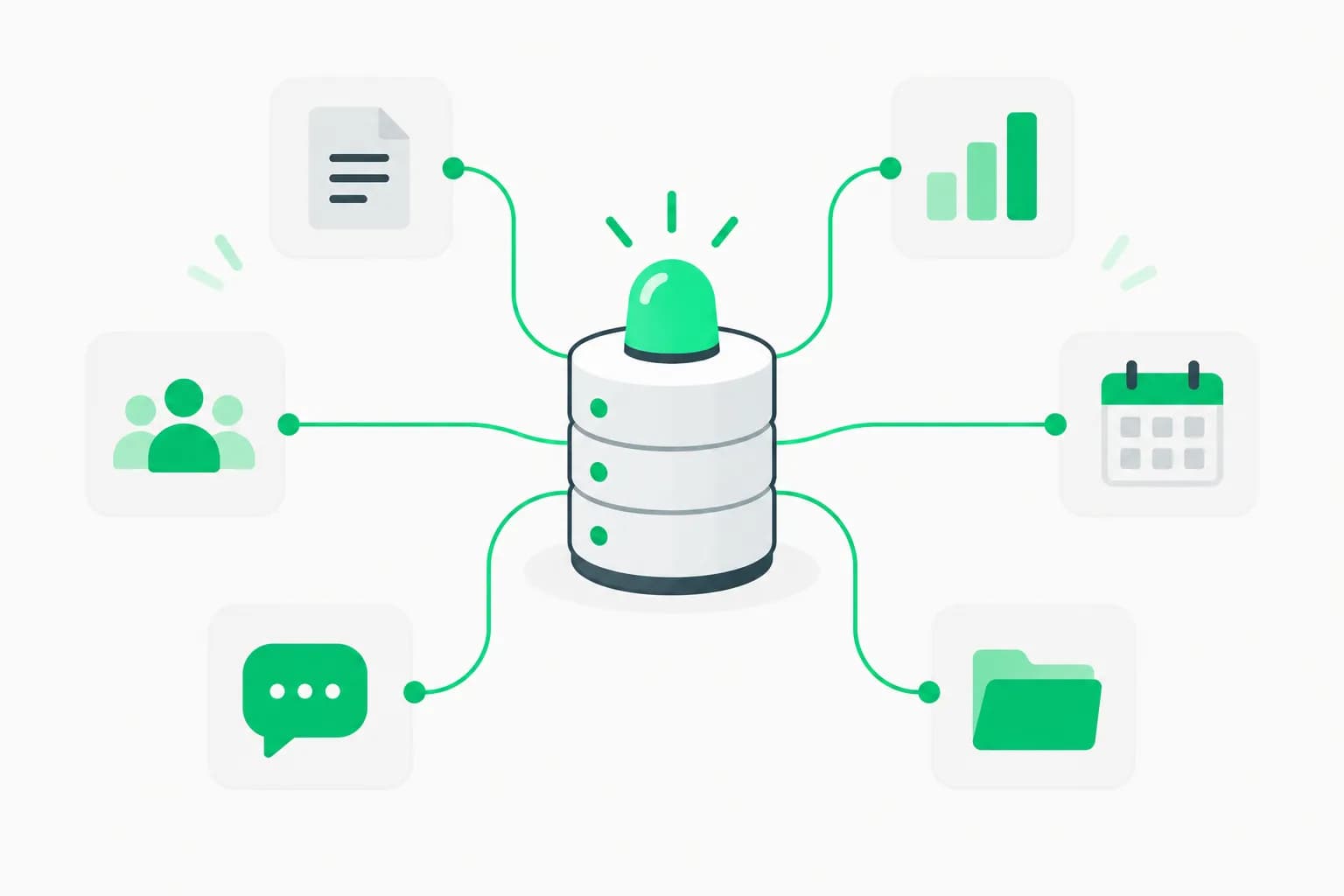
An MCP course is structured training on Model Context Protocol—how AI applications discover and call tools, stream resources, and apply prompt templates from external servers. The right mcp course depends on whether you need a certificate, Python SDK depth, or a Microsoft-stack narrative.
MCP course searchers usually want a ranked path, not another definition of MCP. Start with the row that matches your stack; finish with a live sprint if connectors must land on a locked-down laptop.
TL;DR: compare MCP courses
| Course | Provider | Cost | Hours (order of magnitude) | Certificate | Best for |
|---|---|---|---|---|---|
| Introduction to MCP | Claude Academy | Free | ~3–5 | Academy completion | Claude / Python SDK |
| MCP Course | Hugging Face Learn | Free | Multi-week pace | HF assignments | Community capstones |
| MCP for Beginners | Microsoft GitHub | Free | ~10 modular | None (badges optional) | Polyglot + security module |
| Intro to MCP (video) | DeepLearning.AI | Free / Pro | ~2 video hrs + labs | Pro accomplishment | Fast Claude-oriented overview |
| Introduction to MCP (MCP) | DataCamp | Freemium | ~4+ | Statement with sub | Graded Python + production |
| Live consolidation | explainx.ai mcp bootcamp | Paid workshop | 2 live days | Workshop cert | Config on your machine |
MCP course — what you should learn
Any serious mcp course should leave you able to explain and demonstrate:
- Why MCP exists — reducing M×N integrations between models and tool vendors (protocol intro).
- Primitives — tools (model-invoked), resources (app-controlled reads), prompts (user-triggered templates).
- Transports — stdio vs streamable HTTP; when remote servers need TLS and OAuth.
- Client wiring — at least one host: Claude Desktop, Claude Code, or a custom Python client.
- Testing — MCP Inspector or equivalent before you trust production data.
- Production hygiene — timeouts, structured errors, secret handling (DataCamp’s syllabus emphasizes these outcomes).
Courses that only define acronyms belong in a glossary—not your calendar.
 MCP course concept with protocol tower linking services
Image: concept illustration for MCP course integration topics.
Path 1 — Claude Academy (best for Claude-first builders)
Anthropic’s Introduction to Model Context Protocol is the most direct mcp course if Claude is your host. It uses the Python SDK, decorators for tools, document-management exercises, MCP Inspector, and clarifies when to use each primitive.
Pair it with Claude Code 101 so MCP lessons land inside a harness you already configured—see our Claude Code course guide.
Gap: Academy does not spend long on enterprise procurement (allowlists, SOC reviews). Supplement with your security team’s MCP policy and explainx.ai’s bootcamp governance section.
Path 2 — Hugging Face MCP course (certificates + community)
The Hugging Face MCP course (built with Anthropic) mixes theory units, hands-on SDK environments, assignments, and optional certificates:
- Unit 1 certificate — fundamentals only.
- Full certificate — complete use-case units with deployed projects.
HF excels at narrative pacing and peer review. It is weaker when you need same-day Claude Code JSON tuned for VPN proxies—expect to self-serve host config docs.
Path 3 — Microsoft MCP for Beginners (multi-language labs)
Microsoft’s MCP for Beginners is a repo-backed mcp course, not a video portal. Highlights:
- Module 0–2 — vocabulary plus security early (module 2).
- Module 3+ — build servers and clients in C#, Java, JavaScript, Python, or TypeScript.
- Hands-on guides — VS Code integration paths.
Choose this when your org standardizes on Azure / Copilot Studio and you want official Microsoft learning paths that now reference MCP in advanced agent courses. For Copilot Studio agent mechanics without SDKs, see Copilot Studio first agent guide.
Path 4 — DataCamp (graded production module)
DataCamp’s Introduction to Model Context Protocol targets engineers who want graded steps: FastMCP servers, async clients, OpenAI tool-calling bridge, database-backed resources, timeouts, and server-side API keys.
Pay when you want interactive checkpoints and a subscription bundle with other AI courses—not because free options lack depth.
Path 5 — DeepLearning.AI short course
MCP: Build Rich-Context AI Apps with Anthropic is a compact video path: chatbot retrofit, FastMCP, Claude Desktop config, remote deployment. Ideal as a weekend orientation before Academy labs.
Staged MCP course roadmap
| Week | Goal | Course segment |
|---|---|---|
| 1 | Vocabulary + diagram fluency | HF Unit 1 or Microsoft modules 0–1 |
| 2 | Build server + inspector | Claude Academy MCP hands-on |
| 3 | Client integration | DataCamp client chapters or Microsoft module 3 guide |
| 4 | Production hardening | DataCamp production module or Microsoft security labs |
| 5 | Team rollout | Live mcp course consolidation via bootcamp |
Swap week 5 earlier if a production deadline looms—courses are not substitutes for live MCP bootcamp debugging.
MCP course for Claude MCP integration specifically
Searchers typing claude mcp integration course usually want Anthropic’s partner path Claude Code, MCP & Integration—permissions, skills, plugins, enterprise auth, and MCP transport choices. It is narrower than a general mcp course and assumes API/module familiarity.
Order of operations:
- Claude Code 101
- Claude Academy MCP intro
- Skilljar integration module (if your org bought partner training)
- explainx.ai workshop for live connector QA
Cross-read Claude MD vs SKILL vs MCP before you duplicate config in three files.
How to pick in one page
Answer honestly:
- Need LinkedIn certificate? → Hugging Face assignments or DataCamp statement.
- Need Copilot Studio alignment? → Microsoft repo + Microsoft Copilot learning list.
- Need Claude Code this sprint? → Academy + bootcamp.
- Only Claude.ai connectors? → Stop after MCP primitives; skip SDK units.
Common MCP course mistakes
Mistake — Course hopping. Finishing three 20% completions beats one 100% server repo. Pick one primary course and one backup reference.
Mistake — Ignoring transport policy. Your course lab uses stdio; production mandates remote HTTP. Ask IT before you architect.
Mistake — Skipping Inspector. Jumping straight to Claude Code hides schema errors. Inspector saves hours.
Mistake — No allowlist. Courses celebrate openness; your CISO does not. Document approved servers like production dependencies.
After your MCP course
- Publish internal MCP playbooks alongside agent skills.
- Register maintained servers on explainx.ai MCP directories content only when they are yours—do not spam listings.
- Refresh when the MCP roadmap shifts transports or auth drafts.
When courses end, schedule a cohort mcp course follow-up—the workshop page is the natural next step for teams who outgrew async units.
Deep dive: what each vendor’s syllabus actually omits
Understanding omissions prevents buyer’s remorse:
Claude Academy moves fast from decorators to a document project. It does not linger on OAuth for remote MCP or org-wide connector policy—those are workshop or internal security topics. Plan a follow-on reading block from MCP roadmap updates when auth drafts change.
Hugging Face optimizes for community showcase. Capstone grading rewards creativity, not minimal attack surface. Great for portfolios; tighten scopes before production.
Microsoft spreads examples across languages. Pick one track (Python or TypeScript) or you will duplicate concepts four times. The security module is the differentiator—do not skip it even if you only wanted a Hello World server.
DataCamp is the most explicit about database-backed resources and error handling. If your job is internal tooling with Postgres, weight DataCamp higher than video-only intros. If your job is Claude Desktop connectors for sales, weight Academy + connector docs higher.
DeepLearning.AI is short—treat it as orientation, not a full mcp course. Pair every video with an Inspector session the same day.
Worked example: picking a course for a three-person pod
Imagine a pod with one backend engineer, one analytics engineer, and one PM:
| Role | Week 1–2 assignment | Success signal |
|---|---|---|
| Backend | Microsoft module 3 + custom tool | Server passes Inspector |
| Analytics | DataCamp resource chapter | Read-only query tool with timeout |
| PM | HF Unit 1 + Claude.ai connector doc | Can demo connector without CLI |
Week 3: combined mcp course office hours or live bootcamp where the backend engineer pairs on config. This beats sending all three through identical videos.
FAQ-shaped searches the courses answer poorly
| Query | Where courses stay vague | What to do |
|---|---|---|
| model context protocol vs api | Definitions only | Read explainx.ai MCP guide comparison tables |
| is model context protocol secure | High-level principles | Take Microsoft module 2 + bootcamp governance |
| how to learn model context protocol | Lists of links | Follow staged roadmap in this post |
Related reading on explainx.ai
- What is MCP? — reference explainer linked from every course
- MCP bootcamp breakdown — when to leave async mode
- Top AI bootcamps comparison — how MCP training fits larger programs
- AI Skills + MCP trio — skills files alongside servers
- Learn AI roadmap — MCP chapter in a full curriculum
Maintaining skills after the certificate
Certificates expire in relevance faster than in date. Schedule a quarterly rebuild: pick one new official server from Anthropic’s reference set, wire it, and retire one unmaintained community server. Link the exercise to ProvenanceGuard-style verification thinking so your team practices source awareness, not checkbox compliance.
Budget one hour per quarter to re-read the MCP bootcamp governance notes and update your internal allowlist. The protocol changes slowly; your vendor roster does not. Keep course notes in the same repo as config.
Syllabus lengths and pricing follow vendor pages; confirm enrolment terms before expense reports.