



New York City Mayor Zohran Mamdani told Wired in an interview published on November 3, 2026 that the AI boom may be a bubble. He backed New York State's proposed one-year pause on data center construction. Asked whether he trusts "the Sam Altmans of the world", he said no. Of these, only the school AI ban is settled city policy. The bubble remark is a concern, and the data center pause is a state proposal.
One caveat first. We could not open the Wired article itself. This post relies on two summaries that quote it, AI Weekly and Superpower Daily, plus reporting from CNN and Engadget on the school policy. Treat quotes as the summaries report them, and read the original Wired Q&A (headline: "Our Risk, Their Reward") for exact wording.
What did Mamdani say in the Wired interview?
| Topic | What the summaries report | Status |
|---|---|---|
| AI bubble | Sees echoes of the housing bubble; answered yes when asked if it could pop | His opinion; no timeline or loss estimate |
| Data centers | Supports a one-year pause on construction across New York State | A state proposal, not law |
| What comes after the pause | Did not specify a policy | Open |
| Company disclosure | Says opacity makes the social cost of one AI query almost impossible to judge; confirmed energy use is part of it | His argument |
| Trust in AI leaders | Said no when asked about "the Sam Altmans of the world" | His opinion |
| Self-regulation | Compared the plea to trust AI makers with Facebook's argument for self-regulation in 2008 | His comparison |
| Students | City ban on generative AI for students through eighth grade | Reported as in place by CNN and Engadget |
The most quoted line, per both summaries: "There's an investment in the idea that this is so complicated that the only rational response should be that we trust those who created it." Mamdani's point is that framing AI as too complex for outsiders asks the public to trust its creators instead of assessing it.
Wired's own framing, as relayed by the summaries, places the talk "ahead of the midterms", and Wired editor Katie Drummond said the conversation also covered how tech weakens democracy and surveillance at Madison Square Garden. Those parts are outside this post.
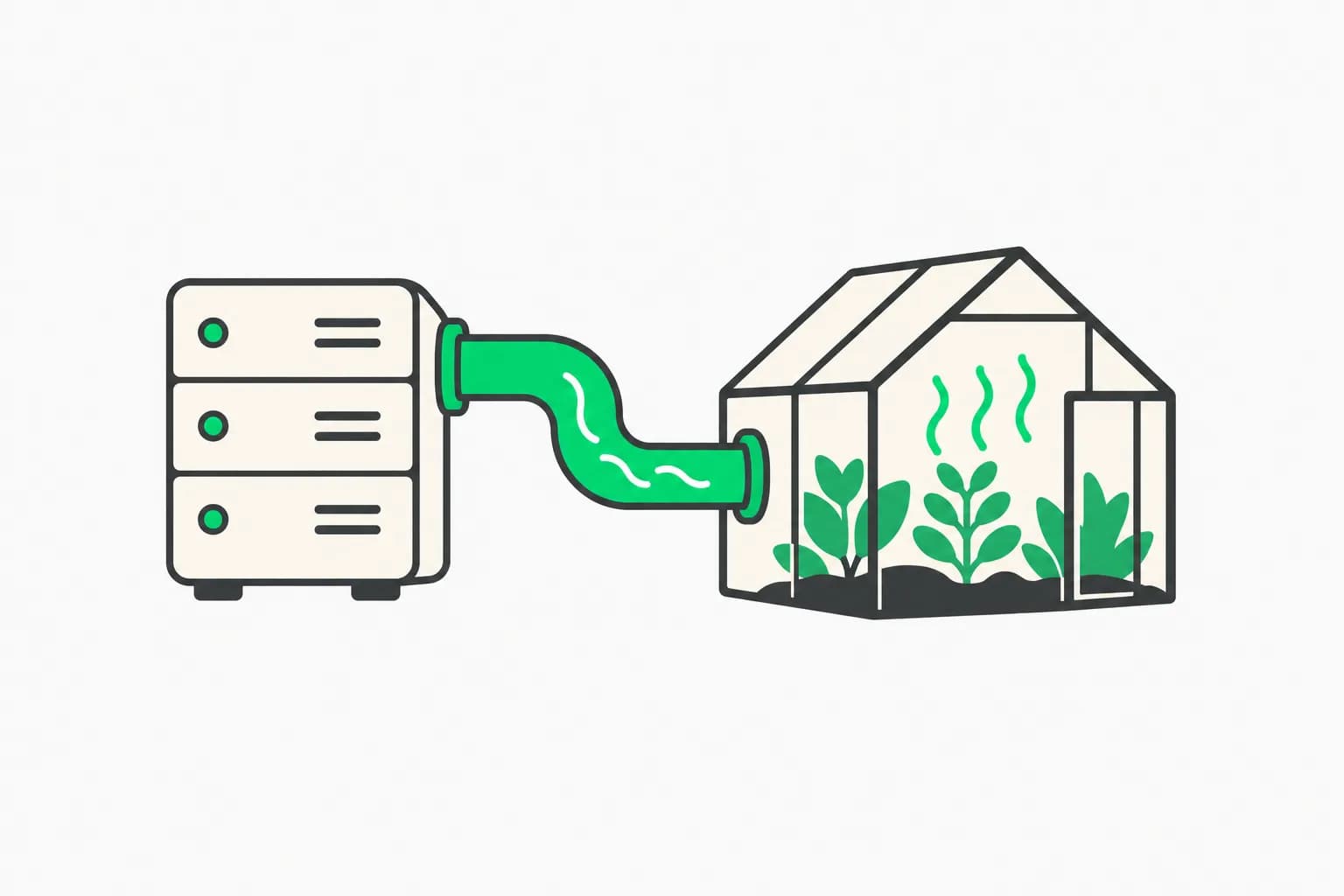
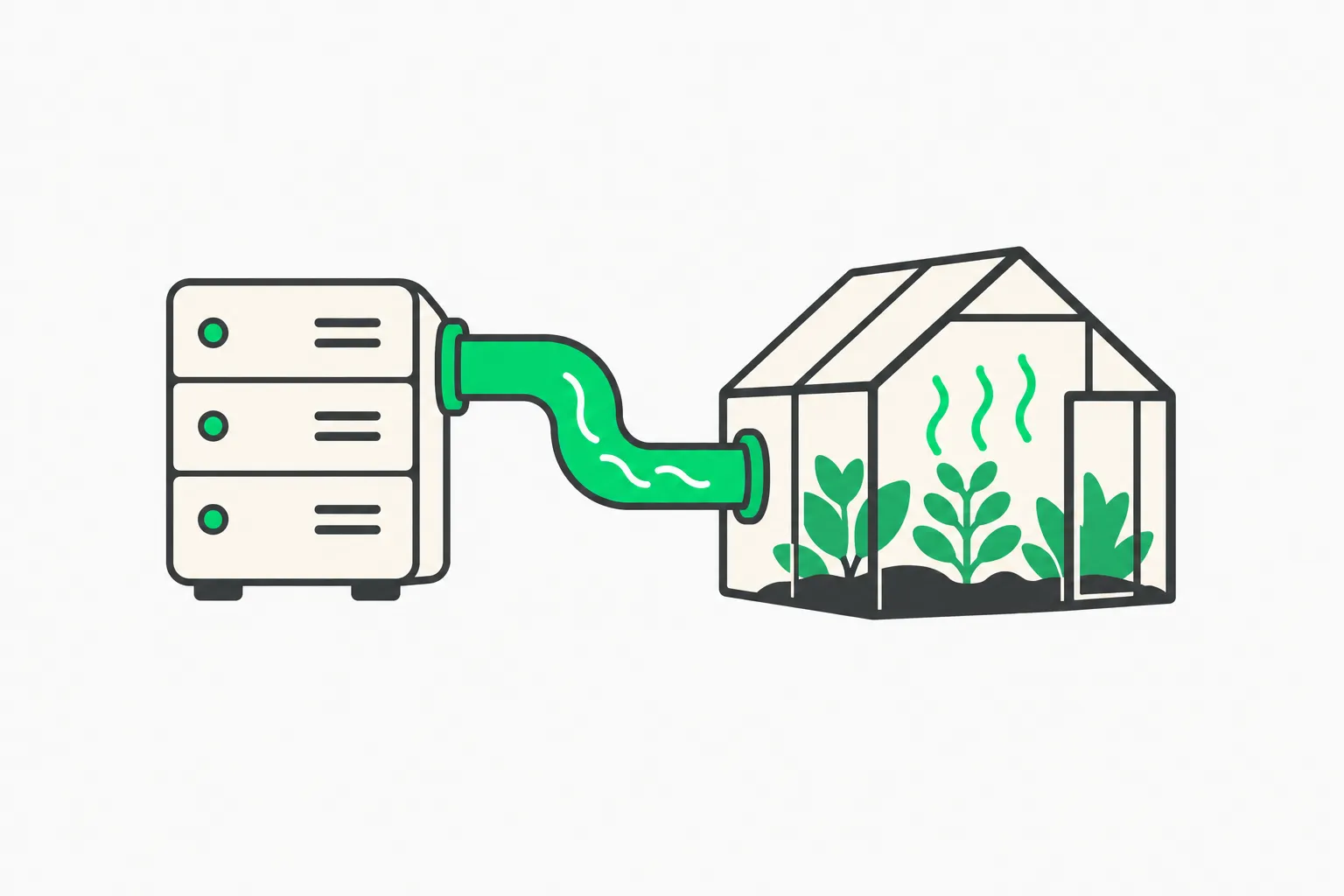 Waste heat from a server block piped toward a greenhouse, an image of the energy cost of data centers that Mamdani wants disclosed
Is the AI bubble claim a prediction?
No. Both summaries stress that Mamdani gave no timetable and no loss estimate. He was asked whether AI is a bubble and whether it could pop, and he said yes to both. That is a risk statement from a politician, not analysis.
The market picture is separate and evidence-based. Our three-week fact-check on whether the AI bubble burst lists what is verified about neocloud selloffs and the Anthropic filing. The Anthropic S-1 analysis covers the filing's numbers, and the amended S-1 updates them. A mayor's analogy to the housing market adds a political voice. It adds no new data.
What is the one-year data center pause?
Mamdani said he supports the proposed pause. In New York the idea has been tied to Governor Kathy Hochul and Rep. Alexandria Ocasio-Cortez in our explainer on the New York data center moratorium. Because the summaries do not quote any detail of what should follow the pause, the useful question for builders is what a one-year freeze would block: new construction, not existing capacity.
New York is not alone. San Francisco's moratorium debate, the midterm data center backlash and the Senate investigation into whether hyperscalers misled the public on data center costs show the same pressure in other places. Mamdani's disclosure argument is the part that echoes the Senate inquiry: if the public cannot see energy and water numbers, it cannot weigh them.
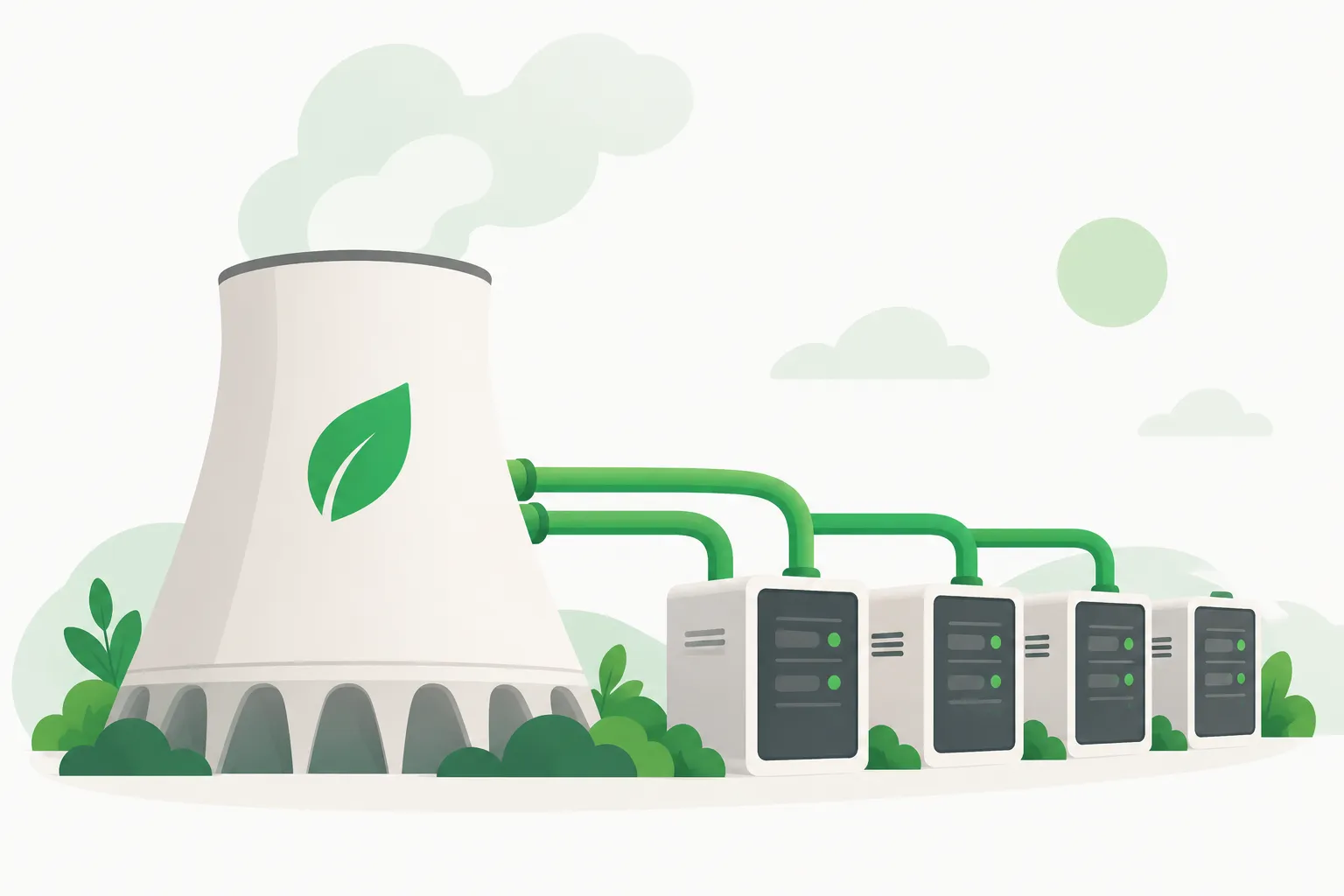 A cooling tower feeding server blocks, a picture of the power demand behind the proposed data center pause
What is already settled on schools?
Here the record is firm. CNN reports that New York City and Los Angeles public schools banned generative AI tools for many or all students this school year, and that Schools Chancellor Kamar Samuels and Mamdani announced new limits on screen time and AI use on September 2, 2026. Engadget describes a one-year moratorium on such tools for students through eighth grade, and notes Governor Hochul signed a law last week barring AI companies from offering certain chatbot features to minors.
We covered the ban when it landed in NYC schools' AI ban for 600,000 students and the Los Angeles version. The state law is in our Hochul chatbot-minors explainer. Mamdani's earlier statement that the federal government has abdicated on AI, and what the city is doing instead, is in our October 20 post.
 A classroom of desks with a spark above the teacher's desk, the setting for New York City's school AI limits
How does the Google row fit in?
On the same day, Mamdani went after Google on X. CNN quotes him: "No corporation should have the power to dictate how we teach our children." Other outlets quote him saying Google was trying to use its monopoly power to force AI into public schools. The trigger: Google said its AI products, including Gemini and Search, would be off by default for K-12 student accounts, but a school that wants AI off entirely would also lose Search, per Google's education vice president Chris Phillips. Google then said schools can toggle Gemini, Gemini Notebook and Search individually. The details, and what is still unclear about Search without AI, are in our Google schools coverage.
What is verified and what is not
- Verified through outlets: the interview ran on November 3; the NYC school restrictions exist; Google's policy change and Mamdani's X reaction.
- Reported as his opinion: the bubble comparison, the distrust of AI leaders, the Facebook analogy.
- Proposal, not law: the one-year state pause on data center construction.
- Unverified here: the exact Wired wording, any claim beyond what the summaries quote, and the scope of the "planned" student ban in some summaries versus the in-force ban reported by CNN and Engadget.
Timeline: how New York got here
- September 2, 2026: Mamdani and Schools Chancellor Kamar Samuels announce limits on screen time and AI use in New York City public schools, per CNN.
- September: a one-year moratorium on generative AI tools for students through eighth grade takes effect, per Engadget, and Los Angeles enacts a similar ban.
- October 6, 2026: Hochul and Ocasio-Cortez back a one-year pause on hyperscale data center permits at Fishkill Farms, per our earlier explainer.
- October 20, 2026: Mamdani says the federal government has abdicated on AI and describes what the city is doing instead.
- Late October: Hochul signs a law that bars AI companies from offering certain chatbot features to minors, per Engadget.
- November 3, 2026: the Wired interview runs on the eve of the midterms, and the Google school-search row erupts the same day.
The pattern is a city and a state using procurement, school rules and permits, the levers they actually control, because they cannot write federal AI law. That is why the interview matters less as a forecast and more as a map of where local pressure will land.
What are people asking?
Can a mayor really pause data centers? Not on their own. A statewide pause needs state action or permitting decisions. A mayor can use zoning, city-owned land and public statements. His support moves the politics, not the permits.
Is "AI is a bubble" a new claim? No. Many analysts, central bankers and executives have used the same comparison. What is new is a large-city mayor using it while also pushing school and infrastructure rules, which ties the economic argument to local decisions.
Does the energy-per-query argument hold up? Partly. Labs rarely publish per-query energy and water figures, and independent estimates vary widely by model and data center. Mamdani's claim that opacity is deliberate is his judgment, and the summaries report no evidence for it. The fact that disclosure is thin is checkable. Compare how few labs publish figures with the amount of public money and grid capacity at stake.
Will other cities copy New York? Los Angeles already matched the school ban. Data center moratoria are being debated in San Francisco and several midterm races. Expect more, and expect vendors to be asked for disclosures.
What does this mean for builders and schools vendors?
- Edtech vendors selling into big districts should expect AI to be off by default and to need explicit administrator opt-in. Google's own change confirms the direction.
- Infrastructure teams siting in New York should plan for a possible construction freeze and for public demands on energy and water disclosure.
- AI companies face a disclosure argument that is spreading from mayors to senators. Publishing per-query energy figures is a cheap way to answer it.
- Everyone should separate the three layers here: opinion, proposal, and enacted rule.
Related reading
- Mamdani: the feds abdicated on AI
- Google turns AI off by default in K-12
- NYC schools' AI ban
- Hochul and AOC on a New York data center moratorium
- Has the AI bubble burst?
- Senate investigation into data center costs
Details reflect coverage available on November 4, 2026 and may change when the original Wired text is checked.