




imozuru is a Claude Code skill that researches an unfamiliar topic by following a trail of citations to the original sources, and then declines to summarize them. The repository by MaryCache shows 1,173 new stars since October 13, 2026, putting it on this week's GitHub trending list. It has 32 commits and installs as a plugin or through the skills CLI.
The name comes from the Japanese idiom imozuru-shiki, things coming up one after another like sweet potatoes pulled up on a single vine. That is the whole pitch: start with one lead, pull the vine, and keep going until every claim you care about has a primary source behind it.
imozuru at a glance
| Question | Answer |
|---|---|
| What does it do? | Maps a field, chains citations and links to original sources, saves them verbatim, builds an extract page |
| What does it not do? | Summarize. It points to the file and lines; you read and judge |
| Where does it run? | Claude Code, as a plugin or a skill folder |
| Dependencies | Python 3.10+ standard library; optional poppler, tesseract, yt-dlp |
| API keys needed? | None. Citation chaining uses the OpenAlex API, which needs no key |
| Language | Instructions and labels are Japanese; only tried with Japanese requests |
| Output | ~/research/TOPIC/ with map.md, log.md, sources/, extracts.json, report.html |
What problem is imozuru solving?
Ask an LLM to "look into" something and you typically get a tidy summary of the top few search results. The README names two weaknesses. First, the details a reader needs for their own judgement tend to fall out of a summary. Second, while you do not know a field's vocabulary you cannot choose good search words, so you never get past the first words that came to mind.
imozuru attacks both. It first finds the field's terms, its central people and the places where knowledge collects, then follows citations, links and authors outward. The design borrows from library and information science: Bates's berrypicking, Ellis's model of information-seeking behaviour and Kuhlthau's Information Search Process, all named in the README.
This is a different philosophy from the one-shot deep-research tools we have covered, such as the agentic model in our Apodex 1.0 Mini deep research write-up. Those aim to hand you an answer. imozuru aims to hand you a reading list with the exact passages marked.
How imozuru works, step by step
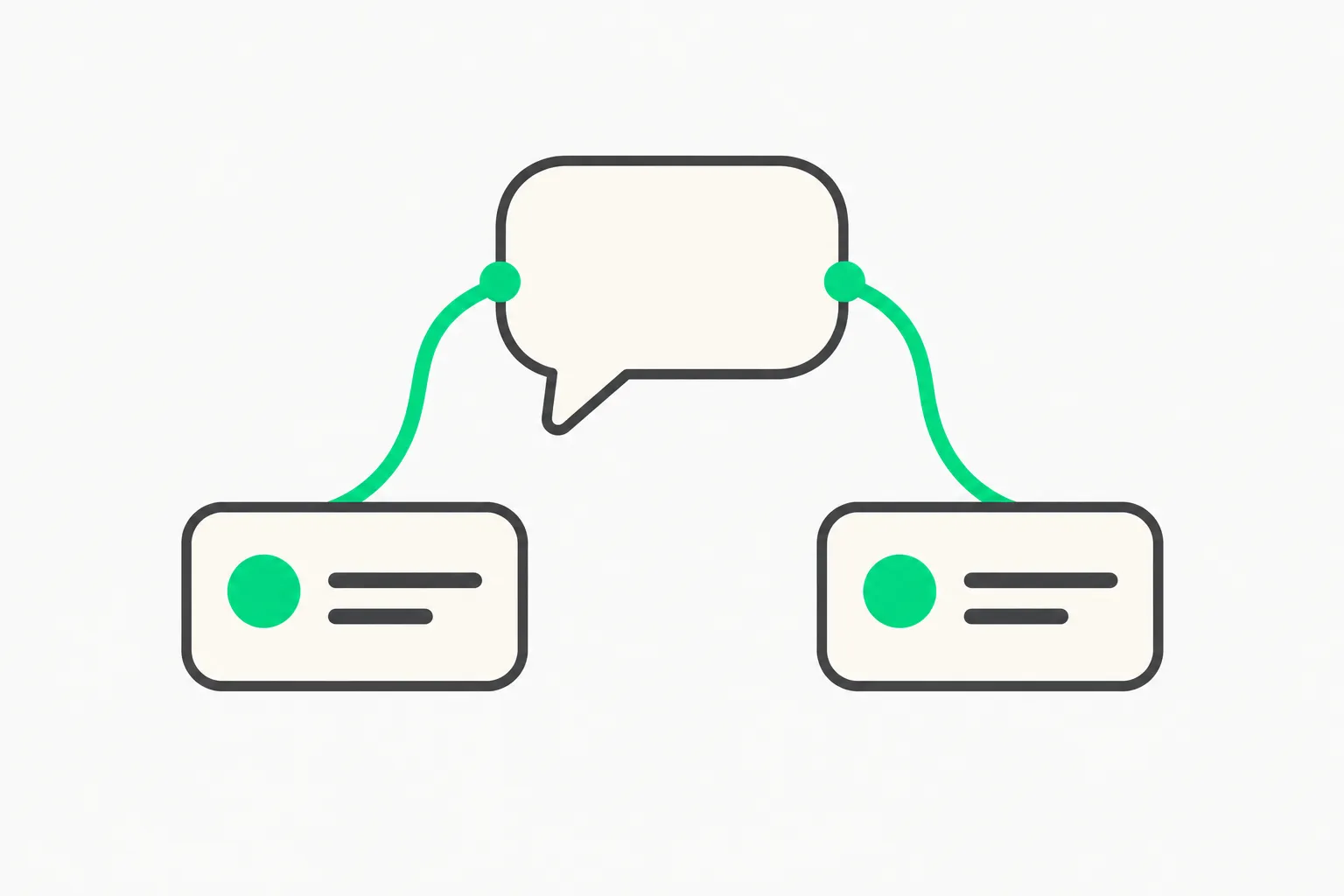 Green dots leading from a paragraph back to source documents, showing how imozuru traces claims to sources
The README describes a loop:
- Write the question and the needed claims. Claude drafts the question and 3 to 6 claims that must be supported to answer it. At least one claim carries a condition from the request's own wording, and more than half cannot be answered without reading a source, which keeps the target from being too easy.
- Map the field. Two searchers, which are web-search subagents with different approaches, collect terms, people and venues into
map.md. - Follow the trail. The skill follows references, citing works and authors. A script called
chain.pyuses the OpenAlex API for citation chaining. In fields without papers, it follows links inside articles and notes such as "I based this on so-and-so's post". - Save the originals. Sources go to
sources/. Dead 404 pages and login walls are dropped after their content is checked. - Stop at the right time. The loop ends when every claim has a located source, or when no new sources appear.
- Build the extract page. A page lists passages cut from the sources, claim by claim.
Every round is written to log.md, so you can see what was searched, what turned up and why decisions were made.
The design choices worth understanding
It does not summarize, on purpose
The README cites Kuhlthau (1991): summarizing in detail during the confused early stage of a search invites premature closure and gets in the way of the search process. So imozuru stops at pointing to where things are. That is a deliberate constraint, and it is the opposite of what most AI research tools optimize for.
Extracts are checked by machine
Dozens of saved sources would leave a reader with no place to start, so the skill builds the extract page. The script report.py checks that each extract appears verbatim at the stated lines of its source. If even one word differs, it does not build the page. This is the most practically useful idea in the project: a mechanical check against fabricated or paraphrased quotes, which is a known failure mode of LLM research output.
 Card catalog drawer representing the verified extracts imozuru saves from original sources
Two stopping rules
The first rule is that every claim has a location in a source, following the HALT idea from Roh and Han (2026) of stopping when the evidence is in. The second is saturation: if 70 percent or more of the sources the two searchers list are already on the map, the search stops. The README says this borrows from estimating a total by the overlap between two independent searches (Kastner 2007), and that the 70 percent figure is provisional, set while trying the skill out.
Two searchers, not one
The README cites Zhou et al. (2026, HypoSearch) for the observation that when several directions are possible, AI search tends to pick one and keep choosing it until it fails. When unsure, imozuru runs two searchers with different hypotheses and compares the results before moving on.
Source labels for fields without papers
In areas such as painting technique or audio mixing, the know-how lives in blogs and videos. Each saved source gets one label, and trusting them is up to you:
| Label | Meaning |
|---|---|
| Paper | Peer-reviewed or conference papers, arXiv preprints |
| First-hand | A record by the person who did it |
| Observation | Notes on someone else's work or methods |
| Roundup | Articles that collect or restate others' findings |
| Official | Documents from the maker of the tool or product |
A watch mode also exists: it collects new posts via RSS from venues a dig uncovered, such as Qiita and Zenn tags, note, YouTube, blogs and arXiv.
How to install it
There are three routes, all from the README. In Claude Code, add the repository as a marketplace and install the plugin:
/plugin marketplace add MaryCache/imozuru
/plugin install imozuru@imozuru
The plugin carries no version number, so every commit to main counts as a new version. Turn on auto-update in the /plugin marketplace screen, or run claude plugin marketplace update imozuru by hand. Auto-update means new code arrives without review, so pin it if you care.
Alternatively use the skills CLI, which we explain in our guide to installing Claude Code skills with npx:
npx skills add MaryCache/imozuru
Or copy skills/imozuru/ into ~/.claude/skills/imozuru/ yourself. To try the report builder alone, the README suggests python3 skills/imozuru/scripts/report.py examples/demo, which renders a sample extract page.
Optional tools improve results: pdftotext for PDF text, pdftoppm with tesseract for scanned PDFs (with jpn and jpn_vert language data for Japanese scans), yt-dlp for YouTube captions, and ax to turn HTML into Markdown. Without them, the affected sources report FAIL rather than silently degrading.
What people will ask next
Does it work in English?
Not officially. The README language note says the skill's instructions, script messages and extract-page labels are Japanese, and it has only been tried with Japanese requests. Claude can read instructions in other languages, so English questions may work, but the author makes no promise. An English README exists, which helps with setup, not with proof.
Is it a replacement for built-in research modes?
No, and it does not claim to be. Built-in research features optimize for a finished answer. imozuru optimizes for traceability and for helping you learn the field's vocabulary. If you need a briefing in five minutes, use something else. If you need to check what the literature really says, this fits.
How much will it cost?
The README does not give a cost figure. Because it runs subagents and many fetches inside Claude Code, expect token use well above a normal chat, like any agentic research loop. Watch your usage on the first run, as we advise in our Claude Code commands reference.
What are the privacy and legal limits?
The README is direct: the searchers search the web, so the content of your question leaves your machine as search terms, and the skill should not be used for research involving confidential or personal data. It also says the skill does not use ways around paywalls. That is a sensible boundary; respect it and the sites' terms.
Can it be trusted to be right?
It reduces one failure mode, paraphrase drift, with the verbatim check. It does not remove others. The searchers can still miss a key paper, the 70 percent saturation threshold is provisional, and labels such as Roundup or First-hand are assigned by the model. Treat the output as a well-organized starting point for your own reading, which is what the author says it is.
Skills like this are a pattern
imozuru is a small example of a wider shift: skills are becoming the way people package a research method, not just a coding tip. Our guide to agent skills explains the format, and a manifest plus a few scripts is enough to encode a procedure with stopping rules, as this project does. The same logic drives larger collections like the one in our gstack skills factory write-up. What sets imozuru apart is that its rules cite specific papers, and a theory file in the repository lists which paper and which part of it each rule comes from, in Japanese.
That traceability is also a good test for any skill you install. Ask whether it says why it stops, what it refuses to do, and how it checks its own output. If it cannot answer, it is a prompt in a folder.
A practical way to try it
- Pick a topic where you do not yet know the vocabulary, such as a research area you keep hearing about.
- Write the request in Japanese if you can, since that is the tested path, or try English and compare.
- Let one full run finish, then open
map.mdbefore anything else. The terms, people and venues list is often worth the run by itself. - Open
report.htmland click through three extracts to their source lines. Confirm the verbatim claim yourself. - Read
log.mdto see which leads were dropped and why. - Decide whether to run a second pass on the venues it surfaced, or switch on watch mode for a feed.
Our read
imozuru is early, narrow in language and light on documentation outside the README, but its core ideas are sound and unusual in the AI tooling space: refuse to summarize, verify every quote mechanically, and stop on explicit criteria. If you teach or learn with AI, it is worth studying even if you never install it. If you do install it, remember that plugin auto-updates run new code on your machine and that your questions leave it as search queries.
Related reading
- What are agent skills? A complete guide
- Install Claude Code skills with npx skills
- Claude Code commands: the complete reference
- Loop engineering for coding agents
- What is MCP? The Model Context Protocol guide
- Apodex 1.0 Mini and deep research agents
- gstack: Claude Code skills factory
- Official: imozuru on GitHub, English README, OpenAlex.
Star counts and repository details are accurate as of October 24, 2026 and change quickly. Check the repository before installing.