



Want a curated system that does this for you? explainx.ai surfaces ranked AI skills, daily news, monthly courses, and an AI chatbot — everything covered in this guide, organized into one subscription. $29/month. Start there.
At some point in the last 12 months, following AI news became a part-time job. A new frontier model every six weeks. A new agent framework monthly. A new benchmark claim almost weekly. LinkedIn full of takes. Every podcast claiming to explain what the new release means for your industry.
Most professionals who care about this space have developed some version of the same quiet anxiety: they feel permanently behind, perpetually catching up, and vaguely uncertain whether they are following the right things.
This guide offers a different frame. Staying current with AI does not require following everything. It requires a filter, a small number of durable skills that do not expire between model generations, and a lightweight maintenance system that compounds without consuming your week.
The Problem with How Most Professionals Follow AI
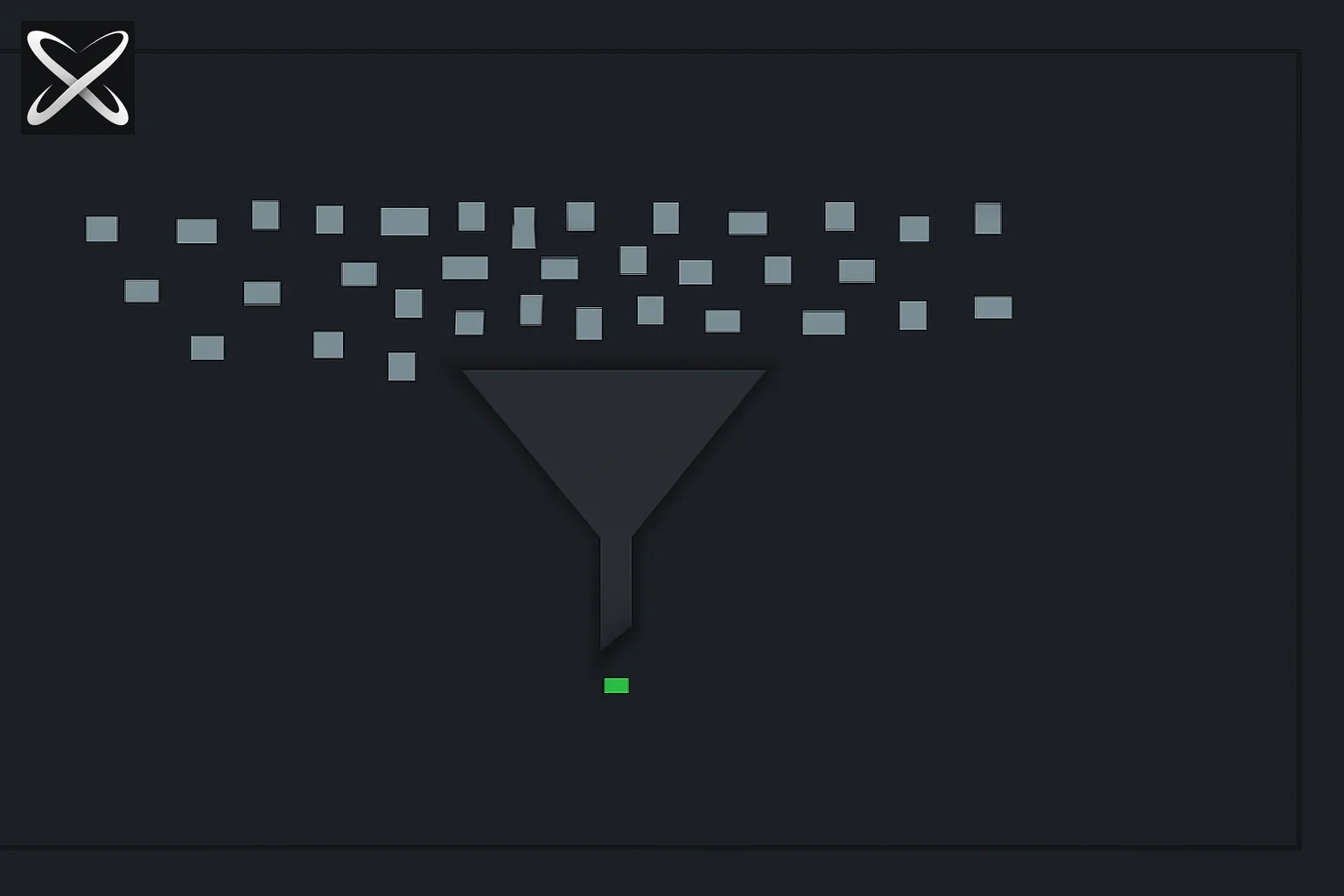
The default approach to staying current with AI is an accumulation strategy: follow more people, subscribe to more newsletters, save more articles. This feels like progress because the reading list keeps growing. But a larger inbox of unread articles is not knowledge.
The accumulation approach has two specific failure modes.
Depth-width confusion: Reading broadly about many AI developments feels like building knowledge, but it often produces a wide shallow layer of awareness rather than any usable understanding. You can recognize the names of every new model without knowing how to evaluate which to use for a specific task, or what changed from the previous version that actually matters for your work.
Half-life neglect: Some AI knowledge has a long shelf life. Some expires within months. If you do not distinguish between them, you end up investing effort in learning things that will be irrelevant in the next model release while underinvesting in the fundamentals that compound over time.
The more productive approach is a two-layer system: foundational skills that you build once (and that have a multi-year shelf life), and current knowledge that you maintain through a lightweight daily or weekly habit.
What Has a Long Shelf Life
These are skills and frameworks worth investing significant time in, because they will transfer across model generations, tool iterations, and industry shifts.
Understanding AI Failure Modes
Every AI system has characteristic failures. Understanding them is foundational and stable — the failure modes that matter do not change when a new model is released, even if their frequency or severity changes.
Hallucination is the tendency of language models to generate plausible-sounding but false content — invented citations, fabricated statistics, confident wrong answers. It is less common in the best models than in weaker ones, but it is never zero, and it is most dangerous when the output sounds authoritative.
Context collapse is the tendency to lose track of earlier parts of a long conversation or document. Models handle this better than they used to, but for long documents or multi-turn conversations with many dependencies, context errors are still common enough to warrant a deliberate checking habit.
Distribution shift is what happens when the model was trained on data that does not match the format or domain of what you are asking it to process. A model trained heavily on clean text may fail on handwritten transcripts, domain-specific PDFs, or specialized professional formats.
Specification gaming is following the literal instruction rather than the intended meaning. If you ask an AI to make a summary shorter, it might delete material you needed rather than compress what was already there. The remedy is not a different model; it is a more precise instruction.
These failure modes apply across generations. Learning to anticipate and check for them is a skill that does not become obsolete.
Writing Precise Task Specifications
The ability to write a clear task specification — inputs, outputs, success criteria, failure conditions, constraints — is the single most transferable AI skill for any knowledge worker. It applies to current tools and to whatever comes next, because the fundamental problem of communicating intent precisely is not solved by making models more capable. A more capable model just makes underspecified instructions more confidently wrong.
This is also a skill that transfers into non-AI contexts: managing people, writing project briefs, designing processes. The AI case just makes the feedback loop faster.
Cost and Capability Intuition
AI has a non-obvious cost structure. Different models differ in speed, accuracy, and price by factors that matter at scale. A task that costs $0.01 per query looks different when you process 100,000 queries per month.
More broadly: knowing that bigger models are not always better for specific tasks (speed, cost, latency often matter more), that inference cost is variable and tied to token volume, and that open-source models are often competitive with commercial models for specific well-defined tasks — this intuition transfers across every generation of tooling.
Evaluation Framework for New Tools
Every few weeks there is a new AI tool claiming to be better than the last. Evaluating these claims requires a framework, not just a benchmark score.
A simple evaluation framework for any new AI tool:
- What specific task is it optimized for, and is that the task I actually need?
- What data did it evaluate on, and how similar is that to my data?
- What does failure look like, and how would I detect it?
- What is the cost at the volume I actually need?
- What are the switching costs if something better comes along in six months?
Running through this takes 20 minutes and is more valuable than reading 10 marketing posts about the tool.
What Expires Quickly
These are areas where deep investment does not pay off, because the specifics will be outdated in a year or less:
Which model is best for which task: The rankings change with every new release. The evaluation framework for making this judgment is worth learning; the current answer to "which model should I use for X" is only worth knowing just-in-time.
Specific prompting tricks: Tips like "write step-by-step" or "think out loud before answering" were useful for a specific generation of models. As models improve, the tricks that compensate for their limitations become unnecessary, and new model behaviors sometimes make old tricks counterproductive.
Tool-specific features: Deep mastery of the exact UI and feature set of a specific AI tool is vulnerable to product updates. Learn tools at the level needed to use them; invest depth in the foundational principles rather than the current UI.
Benchmark rankings: Public benchmarks are designed to be favorable to the announcing company and tested on data that looks nothing like your operational environment. Track them loosely; do not invest in understanding them deeply.
Building a Maintenance System
Once you have invested in foundational skills, the goal is a lightweight maintenance system that keeps you current without becoming a second job. Here is what works.
One High-Quality Daily Digest
Pick one source of curated AI news that is organized around what practitioners are actually using and what has materially changed — not a source that publishes every announcement as breaking news. The key filter: does the source tell you why something matters, not just what happened?
For practitioners focused on the professional and organizational side of AI (rather than research), the explainx.ai daily news surfaces what is being adopted in the field alongside the technical announcements, which is more useful for most knowledge workers than model-focused coverage.
The habit: 10-15 minutes per day, or a weekly digest format if daily is too fragmented. The goal is awareness of meaningful developments, not comprehensive coverage.
One Weekly Experiment
Pick one new tool, capability, or workflow every week and spend 30 minutes actually using it on a real task. Not a demo; a real piece of work from your job. Then evaluate whether the output met the specification you wrote before running it.
This practice compounds over time. Each experiment either adds a new workflow to your toolkit or tells you something meaningful about a tool's limitations — both of which are more valuable than reading about the tool abstractly.
Periodic Structured Learning
The maintenance system handles the tail of weekly developments. Every 6-12 months, a more intensive block of structured learning helps you update the foundational knowledge layer — especially as AI crosses a significant capability threshold that changes what is possible.
Cohort-based bootcamps are better for this than solo self-study for most professionals, because the social accountability and structured application beats the 8% completion rate of solo online courses. The AI Maker Bootcamp is one option if you want live instruction and cohort structure. The key is that the intensive period is structured, time-bounded, and focused on real application rather than abstract knowledge.
How to Actually Read AI News
The way you consume AI news matters as much as what you consume.
Read for implications, not announcements: "OpenAI released GPT-X with 40% better performance on coding benchmarks" is an announcement. "This means the marginal case for a specialized coding tool just narrowed significantly, and here is what that does to the competitive landscape" is an implication. Train yourself to translate every announcement into its implications for your domain.
Maintain a position: The best AI thinkers have a view that can be proven wrong. If your reading is not updating any position you hold — confirming some things, disconfirming others — you are collecting information rather than building knowledge.
Follow the practitioners, not just the announcers: The most useful AI coverage is from people building and deploying AI in real workflows — developers, product managers, operations leads — not from journalists or marketers whose incentive is to make every announcement sound important. Practitioner commentary is harder to find and more valuable.
Give yourself permission to ignore things: You do not need to read every newsletter, follow every researcher, or form an opinion on every new model release. Some percentage of what gets announced each week will matter to your work. The rest can be safely ignored. The cost of missing something important is usually low; the cost of attention fragmentation is high.
The Compounding Advantage
Here is what the difference looks like over 24 months between two professionals with similar backgrounds.
Professional A reads broadly, subscribes to many newsletters, feels perpetually behind, and has not developed a systematic verification habit or a stable set of AI workflows for their actual job. They can talk intelligently about AI trends in a meeting, but their work output has not materially changed.
Professional B invested 6 weeks in structured learning a year ago, built three reliable AI workflows for their core tasks, and maintains a daily 10-minute reading habit from one curated source. They also do one weekly experiment. They do not follow every announcement. But their work outputs are measurably faster and better, and they can evaluate new tools quickly because they have a stable evaluation framework.
The difference is not raw intelligence or technical skill. It is system design. A focused, maintained system beats accumulation and anxiety.
The barrier to entry is low. explainx.ai offers structured learning through courses and the AI Maker Bootcamp alongside a curated skills registry and daily news at $29/month — a manageable starting point for professionals who want the infrastructure without building it from scratch. But the system is what matters, not the specific tools you use to build it.
Build the filter. Invest in what ages well. Maintain through lightweight daily habits. Let the rest go.
That is it. That is the system.