



This is GEO with a think-tank costume, not a new class of model exploit. On August 17, 2026, Responsible Statecraft reported that the Hanover Institute for Public Policy had published 100-plus Israel/Palestine “data reports” in a little over a week, in a register that looks like an American policy shop: red-white-blue, question titles, tables of contents, footnotes. Hacker News put the piece at 700+ points. The technique is what marketers already call getting cited by ChatGPT. The twist is who paid, how fast the corpus grew, and whether a chatbot will print the FARA line.
Piro, Inc. — FARA 7732 — is contracted through Havas Media Germany for the Israel Government Advertising Agency (LaPam). Piro markets “AI Story Optimization”: content “engineered for how LLMs evaluate credibility.” Daniel Rosenberg, in a LinkedIn post RS quotes, asked how to make sure ChatGPT, Gemini, and Perplexity tell the client’s story. That is the product. Calling it LLM poisoning is vivid and usually wrong as a technical term.
TL;DR
| Question | Answer |
|---|---|
| What is Hanover? | High-volume report site on Israel/Palestine, think-tank UX, no bylines |
| Who pays? | LaPam via Havas Germany → Piro, Inc. (FARA 7732) |
| Disclosed? | Yes, in FARA and on About — not the same as “looks independent in a citation card” |
| Cadence? | ≥100 pieces from about August 6, 2026 (RS) |
| Money (this track)? | About $900k digital pilot (+ later $100k materials in some filings coverage) |
| Weights poisoned? | Not shown. Retrieval/citation GEO is the working theory |
| GPTZero 11/12? | Detector score, not a court exhibit |
| Same as Parscale $46.5M sites? | Related genre, different contract — don’t merge the numbers |
What people are asking
Is it a “fake think tank” or just a content brand?
Both, depending on the word. It is not a staffed research org with named fellows. Reports go out under the Institute name; Hanover’s About text (quoted in coverage that bothered to open it) says that is institutional convention and that it does not claim to be independent or nonpartisan. RS is right that the skin mimics a US think tank. Critics of RS are right that FARA is on the page if a human clicks About.
Chatbots often don’t click About. They chunk the Q&A body. That gap is the product.
Is this poisoning?
In ML papers, data poisoning means you get malicious samples into training so the weights change. Hanover is a public website optimized so retrieval systems pick it: question-as-title, concrete statistics, named citations, “neutral” tone — the same filters in explainx.ai’s GEO explainer and GEO for marketers checklist.
If a crawler later dumps the domain into a pretrain mix, then it becomes training data, same as any other blog. That is not a demonstrated 2026 checkpoint event. Jerusalem Post coverage of Politico’s tests said ChatGPT cited Hanover on Gaza/antisemitism questions. That is answer-engine citation, which is GEO’s win condition.
NewsGuard’s Alice Lee, quoted by RS: LLMs favor concrete stats, citations, and sources. That is not a secret Israeli trick. It is Princeton GEO method number one.
Why the question titles?
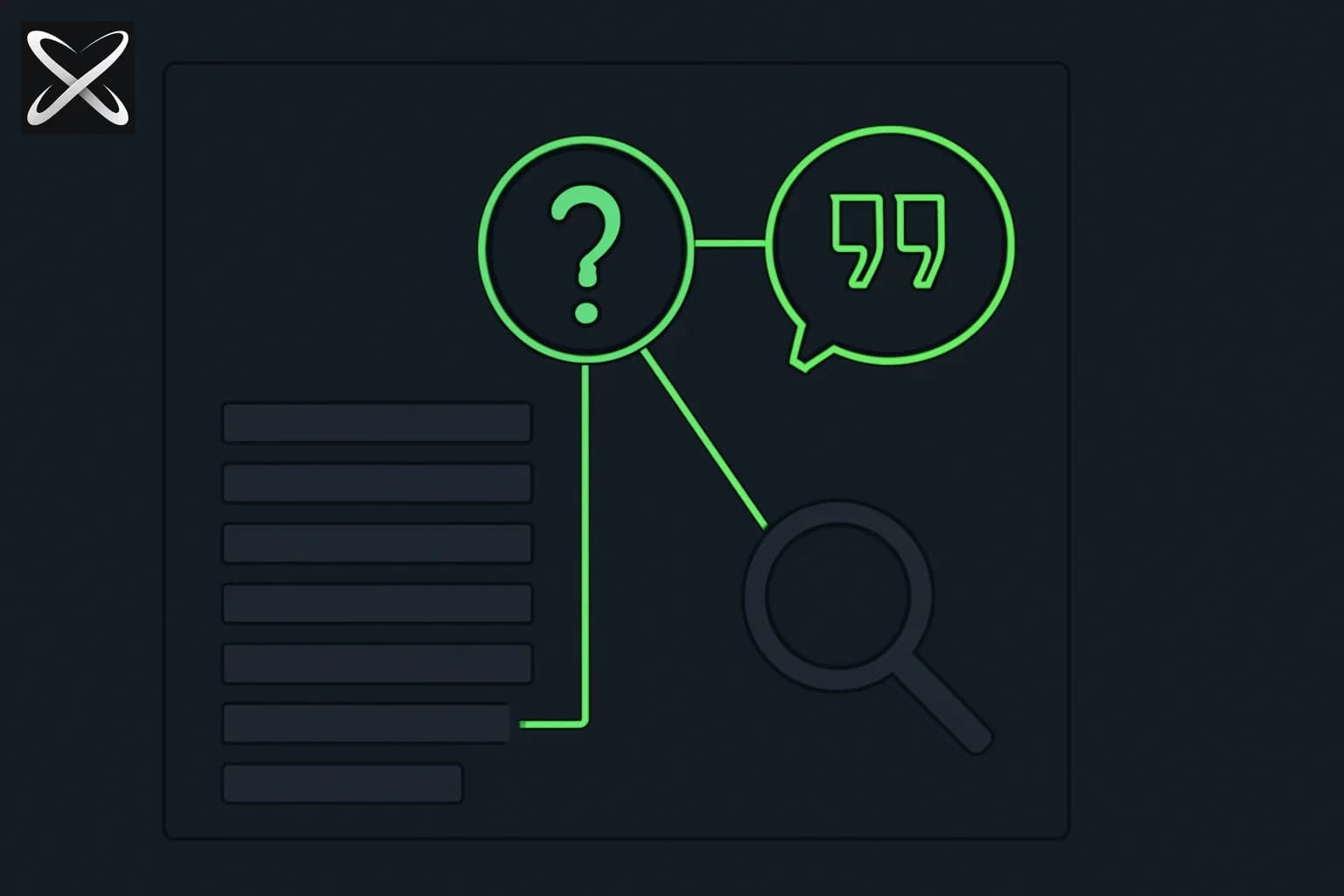
Because they match user queries. “What Caused the Displacement of Palestinians in 1948?” is a retrieval key. explainx.ai’s own posts use question H2s for the same reason. The difference is volume + funder + domain authority theater. One honest explainer is GEO. A hundred near-duplicate reports in ten days is a citation flood.
Does GPTZero prove the copy is slop?
No. We already treat detectors as triage, not verdicts. Eleven of twelve “AI” flags is consistent with a factory. It does not tell you whether a given statistic is true. Judge sources and methods, not the watermark of the prose.
The GEO mechanics, without the culture war
What Hanover is doing that actually moves models today:
- Query-shaped URLs and H1s — one question per URL, the way people type into ChatGPT.
- Cite-able atoms — numbers in-sentence with a named producer and year (Lee’s point).
- Think-tank chrome — ToC, footnotes, “data report,” generic geographic name. Authority by layout.
- Shared citation bank — RS notes repeated antisemitism studies and Israeli government sources even while the site claims peer-reviewed research.
- Burst publishing — enough pages that a retriever sampling “the literature” hits the cluster.
Optional extras reported around the same FARA week: an llms.txt, and claims that a Seattle “get recommended by AI” host (Res) was in the stack. Treat those as unverified unless you fetch the live file; the GEO logic does not require them.
What it is not: a jailbreak, a gradient attack, or proof that Gemini’s next pretrain already contains the lot.
What this means if you build with AI
If you run RAG or an agent with web search
- Log citation hostnames. A new domain with 100 URLs in 10 days is a feature, not a footnote.
- Prefer primary documents (UN, IDF, PCBS, ICJ, peer-reviewed journals) over institutes that only wrap them.
- When a source has a FARA / “on behalf of” line, surface it in the citation UI. Models won’t unless you retrieve the About chunk.
- Don’t confuse tone-neutrality with independence.
If you do GEO for a product
- The checklist is unchanged: answer first, one stat, named source, FAQ. See the marketers’ guide.
- The ethical line is disclosure. Nation-state GEO that looks like a university is the version of AI slop that still passes the citation filter because it is over-structured, not under-structured.
llms.txtis a legitimate spec. Using it to impersonate a research org is a policy problem, not a file-format problem.
If you train
- Burst domains and near-duplicate Q&A clusters belong on the denylist / downweight list the same way SEO farms do. This is closer to Spirit’s bankruptcy dump as a data-market story than to a jailbreak: who gets into the corpus, and under what label.
Honest limitations
- We did not re-crawl Hanover’s 100 URLs or reproduce Politico’s ChatGPT tests.
- GPTZero is not a chain of custody.
- FARA filings describe communications services, not “poison Gemini.” Rosenberg’s line to Politico is facts in the public record; his LinkedIn is make AI tell the story. Both can be true as intent mix.
- RS is published by the Quincy Institute; read it as investigative, not as the last word on every Hanover claim.
- Separate Israeli-funded website programs (Parscale / Drop Site) need their own sourcing. Different dollars, same GEO genre.
- This post is about how answer engines get steered, not a verdict on the underlying war.
Related on explainx.ai
- What is SEO-GEO? — the citation-filter playbook Hanover is executing
- GEO for marketers — same tactics, commercial use
- What is AI slop? — volume without method vs volume with method
- llms.txt specification
- LLM text detectors — why GPTZero is not the story
- AEO measurement tools
- Google’s $10M Spirit data auction — training-time corpus vs retrieval-time farms
- How AI text watermarking works — provenance the other direction
- GEO · LLM poisoning · RAG
Sources
- Responsible Statecraft — Hanover Institute / chatbots (Aug 17, 2026)
- Piro, Inc. FARA Exhibit (registration 7732)
- Politico (first filing coverage); Jerusalem Post summary of FARA dollars and ChatGPT citation tests
- Princeton GEO paper: arXiv:2311.09735
Facts about funding, cadence, and FARA are from August 2026 reporting and public DOJ PDFs. Chatbot citation behavior changes with retrieval indexes. GPTZero scores are not authorship. This article is about information retrieval and GEO, not a position on Israel–Palestine policy. Not affiliated with Piro, Havas, LaPam, or the Quincy Institute.