



July 2026: A growing share of product research now starts inside ChatGPT or Perplexity, not a Google search box — and those answer engines typically cite only two to seven sources per response, as explainx.ai's SEO-GEO explainer breaks down. That's a brutal filter compared to ten blue links. If your content isn't structured to be citable, you're invisible in a growing share of buying decisions — regardless of where you rank on page one of Google.
Most marketing teams' response to this has been "have someone ask ChatGPT to write it" — which is exactly backwards. Generative Engine Optimization (GEO) isn't about using AI to write content faster. It's about structuring content — however it's written — so AI models trust it enough to cite it. This guide covers what that means in practice for a marketing team, and how to do it without your brand voice dissolving into generic AI-speak along the way.
TL;DR — what marketers are actually asking
| Question | Direct answer |
|---|---|
| Is GEO replacing SEO? | No — GEO adds a citation layer on top of ranking. You need both. |
| Does AI-written content rank worse for GEO? | Not inherently — badly structured content ranks worse, AI or not. |
| What's the fastest GEO win? | Answer-first rewrites of existing high-traffic pages, plus FAQ schema. |
| How do we protect brand voice? | Encode it in the prompt as a reusable block, not a style guide PDF. |
| Is this only for big content teams? | No — small teams can move faster since they skip long approval chains. |
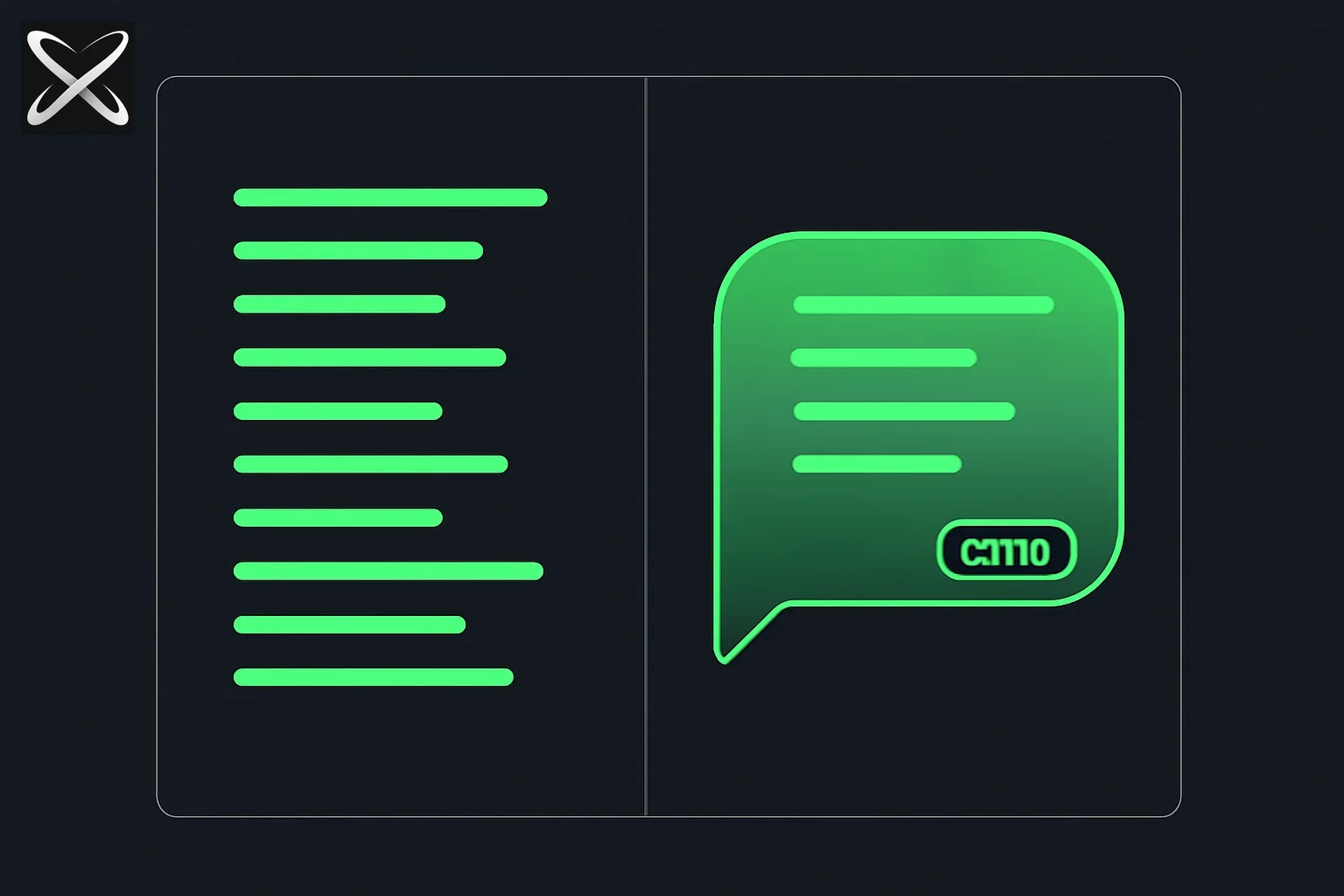 GEO for marketers — a search results list morphing into a chat answer bubble with one citation link highlighted
Why AI answer engines change what "good content" means
Traditional SEO optimizes for a list. A user scans ten results, clicks a few, compares. GEO optimizes for inclusion in a single synthesized answer — the model has already read dozens of sources and decided which two to seven earn a citation. explainx.ai's GEO explainer covers the underlying "four filters" AI answer engines apply, but the marketing-relevant summary is this: generic, unsourced, keyword-stuffed content doesn't survive the filter — clear, specific, cited content does.
That reframes a lot of standard marketing content. A blog post that exists mainly to rank for a keyword, with vague claims and no real data, is exactly the kind of content AI answer engines skip over when picking what to cite.
The GEO checklist for marketing content
1. Answer-first structure. Put the direct answer to the implied question in the first 1-2 sentences of a section, not buried after three paragraphs of throat-clearing. AI models extract answers, they don't read for narrative buildup.
2. Real statistics, not vague superlatives. "Industry-leading" and "best-in-class" get filtered out. "40% faster onboarding based on our Q2 customer data" gets cited. If you don't have a real number, don't claim a comparative one.
3. FAQ sections in natural language. Write questions the way someone actually asks a chatbot — "How much does X cost" not "Pricing Overview." This is also why FAQ schema markup pulls double duty for both classic SEO rich results and AI-engine parsing.
4. Cite your own sources. Link to the study, the internal data, or the original announcement you're referencing. AI models weight content that itself cites sources more heavily — it's a trust signal that compounds.
5. Short paragraphs, one idea each. Two to four sentences per paragraph. Long, winding paragraphs are harder for models to extract a clean citation from.
6. Keep claims narrow and defensible. A specific, narrow claim you can back up beats a broad claim you can't. AI answer engines increasingly weight authoritative, hedge-free — but accurate — tone.
A before-and-after rewrite
Here's what an answer-first GEO rewrite actually looks like against typical marketing copy:
Before (ranks fine, gets ignored by AI answer engines): "Our platform offers industry-leading analytics that help marketing teams make smarter decisions faster than ever before, with best-in-class dashboards trusted by companies worldwide."
After (structured for citation): "Marketing teams using our dashboard cut weekly reporting time from 6 hours to 45 minutes, based on a Q1 2026 survey of 240 customers. The dashboard pulls from Google Analytics, HubSpot, and Salesforce without a data engineer, using pre-built connectors."
The second version has a specific number, a source, a scope (Q1 2026, 240 customers), and a concrete mechanism (pre-built connectors). An AI answer engine can extract a clean, attributable claim from it. It can't extract anything checkable from "industry-leading" or "best-in-class" — so it skips the sentence, and often the whole source, in favor of a competitor's page that made a real claim.
Where GEO and classic SEO structure diverge
Not every SEO best practice transfers directly. A few places marketers should adjust expectations:
| Classic SEO habit | GEO-adjusted approach |
|---|---|
| Keyword density and repetition | Natural language, varied phrasing — repetition reads as stuffing to both search crawlers and AI parsers now |
| Long, comprehensive "ultimate guide" posts | Answer-first sections that stand alone — AI engines extract paragraphs, not whole articles |
| Generic H2s for skimmability ("Benefits," "Features") | Question-phrased H2s that mirror how people ask a chatbot ("How much does X cost") |
| Backlinks as the dominant trust signal | Citations, data sources, and author expertise carry more weight in answer-engine trust scoring |
Where AI content workflows actually go wrong
The failure mode isn't "we used AI." It's no shared workflow, which shows up as three specific problems:
Brand voice drift. Every writer prompts differently, so drafts read like they came from different companies. The fix is a reusable brand-voice block — tone, banned phrases, reading level, point of view — fed into every content prompt, the same way explainx.ai's Claude marketing agent tutorial structures repeatable prompts for campaign work instead of one-off chat sessions.
No repeatable brief-to-published pipeline. AI speeds up the draft step, but if briefing, review, and publishing are still ad hoc, the bottleneck just moves downstream. A documented workflow (brief → AI draft → brand-voice check → GEO structure check → publish) turns a faster draft into a faster overall pipeline.
Treating AI content and human content as separate categories. The best-performing content in 2026 is AI-assisted at the drafting layer and human-reviewed for accuracy, specificity, and brand fit — not one or the other. Fastlane's approach to turning a single site into distributed short-form content, covered here, is a useful example of automation doing the repetitive work while a human still owns judgment calls.
A minimal brand-voice block worth stealing
Teams that solve the drift problem tend to converge on a short, reusable block fed into every content prompt — something close to this structure:
BRAND VOICE
- Tone: [e.g. confident, plain-spoken, no corporate jargon]
- Reading level: [e.g. 8th-9th grade, no exceptions]
- Point of view: [e.g. "we," never "I," never third-person about the company]
- Banned phrases: [e.g. "game-changing," "revolutionary," "seamless"]
- Required: every claim needs a number or a named source
This is deliberately short. A 40-page brand guide nobody reopens produces worse consistency than a 6-line block copy-pasted into every prompt, because the short version actually gets used every time.
Assigning ownership, not just process
A documented workflow still needs an owner for the step most teams skip: the GEO structure check before publish. In practice this is a 5-minute pass — does the piece answer a real question in its first two sentences, does it have at least one sourced statistic, does the FAQ section use natural phrasing — not a full editorial review. Assigning this explicitly to one person (even on a small team) is the difference between a checklist that exists and a checklist that runs.
What people are asking about GEO for marketing teams
"Do we need to rewrite everything?" No — start with your highest-traffic existing pages. Answer-first rewrites and FAQ additions on content that already gets visits are the fastest GEO wins, not a full content overhaul.
"Will this cannibalize our SEO rankings?" Answer-first, well-sourced content tends to perform better for classic SEO too — clarity and citability aren't GEO-only virtues. The risk is keyword-stuffing for SEO in a way that actively hurts GEO, not the reverse.
"How do we measure if it's working?" Track brand mentions inside AI answer engines directly (tools exist for this now), not just organic search rankings. A page can rank fine and still never get cited by ChatGPT if it fails the citability filters above.
How explainx.ai runs this for marketing teams
This exact checklist — brand-safe prompting, content workflows, and AI-assisted SEO/GEO — is the curriculum behind explainx.ai's marketing upskilling program, delivered as live workshops or private cohorts, with a free team assessment that emails a short readiness report based on where your marketing team is today.
Related on explainx.ai
- Hanover Institute — 100 chatbot-shaped reports in 10 days — the same GEO checklist, used as a FARA-registered influence farm
- As AI eats the web, the internet is losing its memory — the archive-decay side of the same shift, and what publishers should control
- Germany ZAK — AI Overviews & Perplexity under media law (Jul 2026) — regulators treat answer engines as publishers, not passive search
- What is SEO-GEO? Generative Engine Optimization explained — the foundational concepts behind this guide
- SEO-GEO for AI search: agent skill approach — a reusable, skill-based approach to GEO work
- What is AI slop? SEO-GEO content quality — why low-effort AI content fails both SEO and GEO
- Build AI marketing agents with Claude — repeatable prompt workflows for campaign work
- Claude for social media: Fastlane — automation at the distribution layer
- How to set up a Claude Project for your role — includes a marketing-specific workflow section
- Top 10 AI Newsletters to Follow in 2026 — how the same GEO discipline shows up in newsletter editorial process
- Google AI Mode shows the same products 21.6% more expensive — a data-backed look at how AI Mode's own selection logic diverges from traditional search, relevant to any e-commerce GEO strategy
Official: Google Search Central on AI features · Schema.org FAQPage
GEO tactics and citation behavior for AI answer engines evolve quickly — verify current guidance from each platform before finalizing a content strategy. Last updated: July 9, 2026.