



A five-person team at SberRoboticsCenter has released GreenWAM, a world foundation model that tries to be two things at once for robots: a simulator that predicts how a scene changes after an action, and a policy that decides which action to take. It covers 20 robot families, from bimanual arms to dexterous humanoids, and the weights for four benchmark setups are already on Hugging Face.
The technical report landed on arXiv on October 13, 2026, and reached Hugging Face's daily papers the next day. This post explains the idea in plain terms, lays out the numbers the authors report, shows how to fetch the checkpoints, and flags what is still unverified.
TL;DR: GreenWAM at a glance
| Question | Short answer |
|---|---|
| Who made it? | Gennady Sidorov, Valerii Kornilov, Denis Grankin, Polina Fedotova and Aleksey Postnikov, published under SberRoboticsCenter |
| What is it? | A world foundation model for robotics that works as both an action-conditioned world model and a policy |
| Base model? | NVIDIA Cosmos 3 Edge |
| How many robot bodies? | 20 robot families mapped to 79 shared joint slots |
| What is released? | Four benchmark checkpoints (RoboTwin, LIBERO, CALVIN, WorldArena) plus evaluation code |
| License? | Weights under OpenMDW License 1.1, per the model card |
| Biggest caveat | All scores are self-reported in a technical report; no independent replication yet |
What problem is GreenWAM trying to solve?
The abstract frames it in two sentences. A robot needs a world model that predicts how its actions will change the scene, and a policy that chooses those actions. Models are usually built and evaluated for only one of those roles, and every robot records its actions in its own format.
That second point is the quiet blocker for robotics foundation models. A language model sees the same tokens whatever the source. A robot arm with 7 joints and a humanoid hand with dozens of joints log very different vectors, so data from one machine rarely helps another. The authors ask whether one robot world model can serve both roles across different bodies, and what makes that work.
If you are new to the term, our explainer on world models and the Starchild-1 launch covers the basic idea. GreenWAM sits in the newer branch the field calls world-action models, which predict future frames and actions together instead of mapping an image straight to a command.
How does the three-part recipe work?
The model card summarizes the recipe in three pieces. Each one targets a specific obstacle.
1. A shared anatomical action space
Instead of giving each robot its own action format, the team describes all 20 families in common joint coordinates. According to the model card, every native joint is mapped to its anatomical role and to one of 79 shared slots. A left wrist on one robot and a left wrist on another land in the same slot, so the model can reuse what it learned about wrists.
This is the part most likely to transfer to other projects. It is a data-formatting decision rather than a new network layer, and it is cheap to adopt if you already log joint states.
2. Joint robotics training in three modes
One model learns all families in visual, action-conditioned and world-action modes. Visual mode is plain video prediction. Action-conditioned mode predicts the next scene given an action, which is the world-model role. World-action mode predicts scene and action together, which is the policy role.
The paper reports a finding here that matters beyond this model: robot specialization improves world prediction and control together. In other words, training on robot data did not trade one skill for the other.
3. An action expert split off the generator
For policies, the team splits an action expert off the video generator. The model card says the expert shares attention with the generator in every layer. The authors' second finding is that an action expert helps when it is split off at the start of adaptation, not bolted on later.
Their third finding is a practical one for anyone fine-tuning: keeping the world-model modes during policy adaptation preserves robustness to scene changes. If you strip them out to make the policy training simpler, the policy gets more brittle when the scene looks different.
What numbers does GreenWAM report?
The Hugging Face model card lists one checkpoint per benchmark, with the reported result next to it.
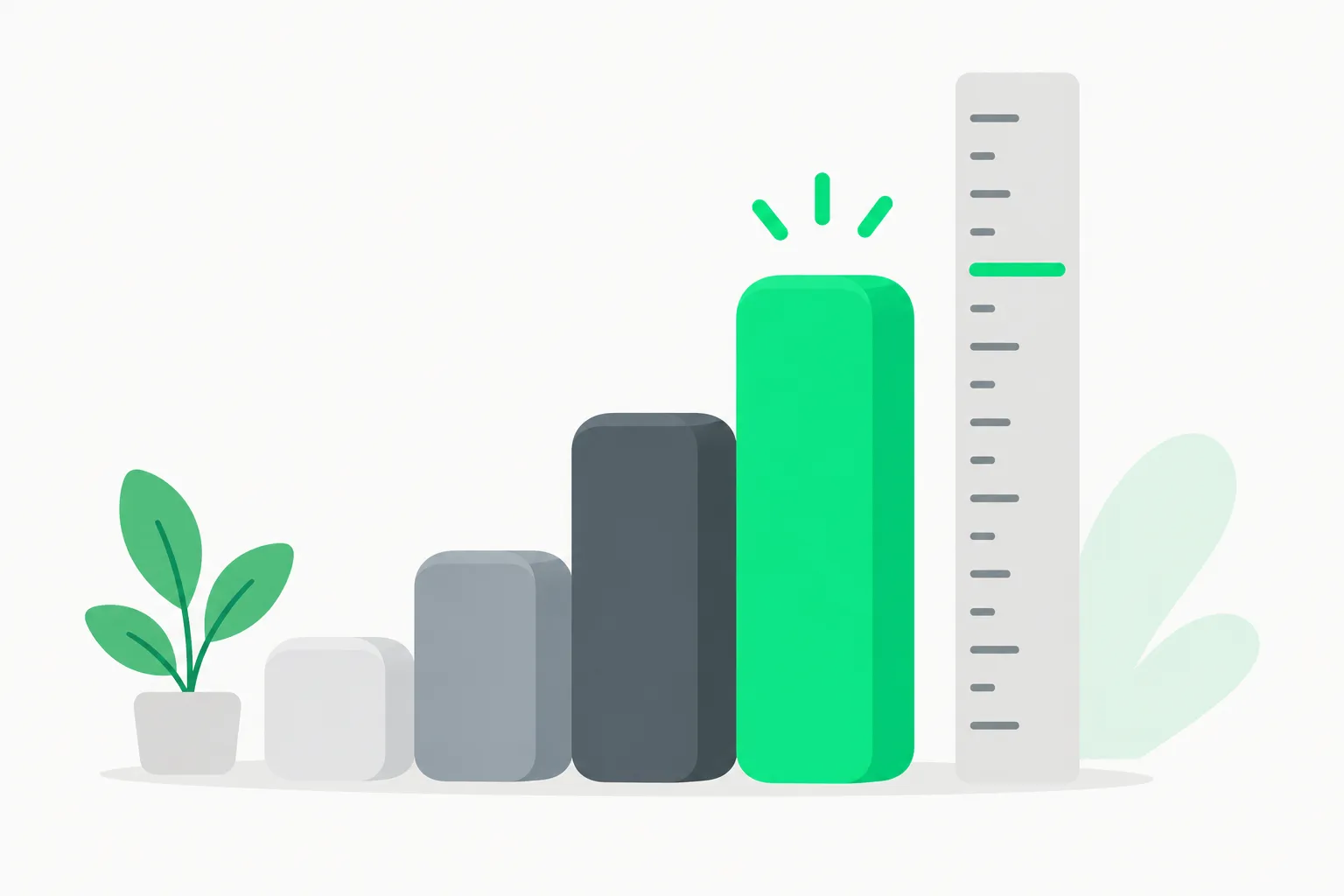 Benchmark ruler comparing GreenWAM robot world model scores across RoboTwin, LIBERO, CALVIN and WorldArena checkpoints
| Checkpoint folder | Benchmark | Role | Reported result |
|---|---|---|---|
| robotwin | RoboTwin 2.0 (50 tasks) | Policy | 67.54 mean, 86.98 clean, 48.10 randomized |
| libero | LIBERO and LIBERO-plus | Policy | 97.4 LIBERO, 86.8 LIBERO-plus zero-shot |
| calvin | CALVIN ABC to D | Policy | 4.64 average length |
| worldarena | WorldArena 1.0, track 1 | World model | 63.31 EWMScore |
Source: the GreenWAM model card on Hugging Face and the arXiv abstract.
The abstract describes these results in relative terms. As a world model, GreenWAM attains top-tier trajectory, depth and 3D accuracy on WorldArena 1.0, ahead of every world-action model and video generator in the authors' comparison. As a policy, it is among the top entries on the RoboTwin 2.0 leaderboard, reaches the highest zero-shot LIBERO-plus success among the compared methods, and is competitive with dedicated vision-language-action and world-action policies on CALVIN and LIBERO.
Read that carefully. "Among the compared methods" means the authors chose the comparison set. The strongest claim, the highest zero-shot LIBERO-plus success, is true only against the baselines they selected. That is normal for a technical report, but it is not the same as a leaderboard maintained by a third party.
Does it work on a real humanoid?
The abstract says the team adapted GreenWAM to a real humanoid, where it succeeded more often than policies adapted from pi 0.5 and from Cosmos 3 Edge. They then distilled it into a single-step policy for real-time control.
The second part is the one that matters for deployment. A video-generating model that needs many denoising steps per action is too slow for a robot control loop. Distilling to a single step is how research teams make these models usable, and it is the same pressure behind NVIDIA's Long-WAM work on real-time world-action models, which reports 107.4 ms per action chunk.
What the abstract does not give is the number of tasks, trials or robots in the real-world test. Until you see those in the full report, treat "succeeds more often" as a direction, not a measured margin.
How does it relate to NVIDIA Cosmos?
GreenWAM is built on Cosmos 3 Edge, and it needs the Cosmos 3 Edge text tokenizer at a pinned revision to run. The weights inherit the OpenMDW License 1.1, which the model card calls the license of Cosmos 3 Edge. Hugging Face lists 17 fine-tunes of Cosmos 3 Edge in the model tree at the time of writing, so this is one of a growing family.
For background on the base model, read our Cosmos 3 open physical AI world model guide and the NVIDIA SIGGRAPH 2026 recap covering Cosmos Edge. The short version: NVIDIA ships the general physical-AI world model, and groups like SberRoboticsCenter specialize it for particular robot stacks.
 World model cube over a grid floor, a simple picture of GreenWAM predicting how a robot scene changes
How do you try the checkpoints?
The model card gives a download command per checkpoint. For example, to fetch only the RoboTwin policy:
hf download SberRoboticsCenter/GreenWAM --include "robotwin/*" --local-dir checkpoints/GreenWAM
The checkpoints also need the Wan2.2 VAE and the Cosmos 3 Edge tokenizer, at the revision the authors evaluated:
hf download Wan-AI/Wan2.2-TI2V-5B Wan2.2_VAE.pth --local-dir checkpoints/Wan2.2-TI2V-5B
hf download nvidia/Cosmos3-Edge --revision a9d944e2c6a1bf9f48b92ad16348e70c5f1836ba --local-dir checkpoints/Cosmos3-Edge
Then set WAN_VAE_PATH and COSMOS3_EDGE_DIR to those local paths. Each checkpoint folder contains the EMA weights in bf16 safetensors, the config.yaml the evaluation reads, the action statistics for its benchmark and a SHA256SUMS file. Verify the hashes before running. Installation, policy servers and per-benchmark evaluation steps live in the GreenWAM code repository linked from the model card.
A practical note: the released checkpoints are the four benchmark configurations from the report, not a single general-purpose "drive any robot" file. If you want to control your own robot, plan on adapting a checkpoint, mapping your joints into the 79 shared slots, and collecting your own data. The paper's real-humanoid result suggests this is the intended path.
What are the limits and open questions?
- Self-reported numbers. Every score comes from the authors. Wait for independent runs of the RoboTwin 2.0 and LIBERO-plus numbers before you rely on rankings.
- Comparison set. "Ahead of every model in our comparison" depends on which models were included. Check the baselines table in the PDF.
- Real-world evidence is thin in the abstract. No trial counts are given in the summary text.
- License. The model card states OpenMDW License 1.1 while Hugging Face's metadata tags it as other. Read the LICENSE file in the repo before commercial use.
- Dependencies. You need two other models' assets (Wan2.2 VAE and the Cosmos 3 Edge tokenizer), so you inherit their terms too.
- Scope of release. Four evaluation checkpoints, not a broad robot-control model you can plug into any arm.
Where does GreenWAM fit among robot foundation models?
Robot foundation models have moved fast in recent weeks. Reka's Rho-1 19B omni model puts text, video and robot actions in one network. Dyna-2 argues for scaling laws in world-action models. Xiaomi's Robotics U0 targets embodied synthesis, and Google's Gemini Robotics 2 aims at whole-body control. Nature Will's Natura-1 focuses on dexterous hands learned from egocentric human video.
GreenWAM's angle is cross-embodiment pooling with open weights. Most of the models above are closed or only partly released. Having four checkpoints you can download and an evaluation harness you can rerun is the main reason a small paper deserves attention: it lets other labs test the claims.
What this means if you build with robots
If you work on simulation or robot learning, there are three takeaways.
- Standardize your action space early. The shared-slot idea is the cheapest lesson to copy, and it works with any model.
- Keep world-model objectives during policy fine-tuning. The paper's robustness finding is a testable claim on your own data.
- Run the released evaluations before trusting rankings. The harness is included, so reproduce one benchmark on your own GPU and compare with the model card.
If you are a learner, this is a good paper to read alongside a world-model primer because it states its three findings plainly and ties each one to an ablation.
Bottom line
GreenWAM is not a finished general robot brain. It is an open, reproducible attempt to show that one video-based world model can serve as both simulator and policy across very different robot bodies, with a data-format trick that makes pooling possible. The released checkpoints and harness are the useful part today. The claims about leaderboard standing and real humanoid performance still need independent confirmation.
We will add an update if third-party results or a fuller real-world evaluation appear.
Related reading
- Long-WAM: NVIDIA scales world-action model context to 78.7% on RoboCasa
- NVIDIA Cosmos 3 open physical AI world model guide
- What are world models? Starchild-1 and Odyssey explained
- Reka Rho-1: text, video and robot actions in one network
- Dyna-2 and world-action model scaling
- Xiaomi Robotics U0 world foundation model
- Primary sources: arXiv 2610.18774, Hugging Face paper page, model card
Details are accurate as of October 14, 2026. Model card contents, licenses and benchmark claims may change after publication.