



Google has an open-source plugin called the Elephant-Goldfish Model (EGM) that splits AI-assisted design work in two. An "elephant" agent remembers your whole project and drafts the specification. "Goldfish" reviewers then read only the written document, with no memory of your chat, and report what is missing or unclear. The repo, google/elephant-goldfish-model, shows about 18,500 stars, with 5,555 gained this week, and it is not an officially supported Google product.
The idea fits a problem anyone who has used Claude Code subagents knows: an agent that wrote a plan cannot see its own blind spots. EGM turns that into a workflow.
TL;DR: what to know before installing
| Question | Answer (from the README and egm.dev) |
|---|---|
| What is it? | A plugin with seven skills for drafting and reviewing documents with agents |
| License? | Apache 2.0 |
| Official Google product? | No. The README says it is not officially supported |
| Which agents? | Claude Code, Codex CLI and desktop, Antigravity, Claude Cowork |
| Hard requirement? | An agent that can create fresh subagents; otherwise review stops |
| Replaces tests? | No. The README says so directly |
| Cost? | Free plugin; your agent's model usage still applies |
How does the elephant and goldfish split work?
The README defines three roles. The elephant has your project, requirements and earlier decisions, and its job is to explore the problem and draft the specification. The goldfish has only the document and its referenced source material, and finds missing assumptions, unclear requirements and implementation risks. You hold the goals and constraints, resolve trade-offs, and approve the design.
The site egm.dev gives a small example. A plan says "Volunteers staff the desk during opening hours. We keep the Friday rule." The author knows who the volunteers are, when the space opens and what the Friday rule is. A reader without the conversation asks exactly those three questions. That is the whole trick: a reviewer with no context cannot silently fill in gaps.
The method comes from Dave Rensin's article "Elephants, Goldfish, and the New Golden Age of Software Engineering", which the README credits as the original essay.
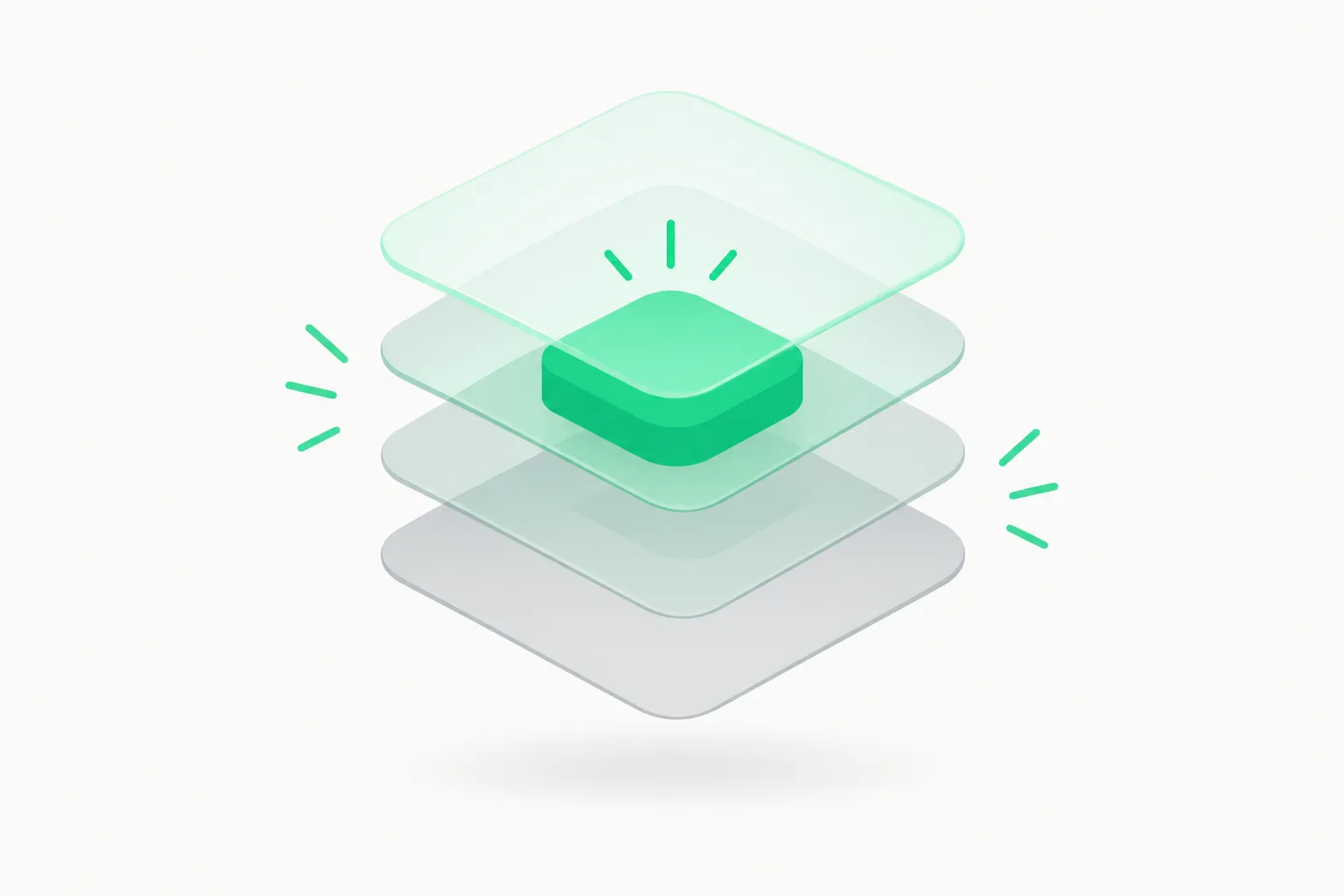 Stacked context layers around a core, showing how the elephant holds context the goldfish reviewers never see
Which skills does EGM include?
| Skill | Use it to |
|---|---|
| Brainstorm | Test an idea and write a concept brief (concepts_brief.md) |
| Draft | Turn a brief or notes into a design document (design_draft.md) |
| Resolve | Work through review findings and agree on changes |
| Bootstrap | Create or update documentation for an existing codebase |
| Review | Review a design with fresh agents across five stages |
| Review loop | Run a configured group of reviewers for a specific task |
| Drift report | Compare checked-in documents with the current source code |
You do not have to follow the sequence. The README says you can use each skill when you need it. The built-in draft and review workflow targets software specifications. For other documents, you choose reviewers and standards with /egm-review-loop, and bootstrap and drift reports apply to software codebases.
How do I install it?
The README lists one route per agent. For Claude Code:
claude plugin marketplace add google/elephant-goldfish-model
claude plugin install egm@egm
For Codex CLI:
codex plugin marketplace add google/elephant-goldfish-model
codex plugin add egm@egm
For the Antigravity CLI: agy plugin install https://github.com/google/elephant-goldfish-model. Codex and ChatGPT desktop have a published plugin listing that is desktop-only, and Claude Cowork adds the marketplace google/elephant-goldfish-model in its plugin panel. Start a new session after installing. The README says to install the complete plugin so the skills can read the reviewer prompts and document standards.
Prefix rules differ. In Antigravity and Claude Code, commands use the /egm: prefix, for example /egm:egm-brainstorm. The README notes that on agy CLI 1.4.10 an unprefixed name is completed to the prefixed command, but 1.4.8 does not, so keep the prefix. In Codex, you select the matching skill from the skill picker.
What is a 60-second first try?
The quickest test needs no new spec. Point the reviewer at a document you already have:
/egm:egm-review docs/designs/webhooks.md
Fresh reviewers check the design, its clarity, its fit with the code and its implementation plan. Then try drift detection on a folder of designs:
/egm:egm-drift-report docs/designs/
The agent compares each document with the current source and reports where they diverge. You decide whether to change the document or the code.
For a full run, the README's example adds webhook delivery: brainstorm the idea, draft the specification section by section with your feedback in chat, review the draft, choose which findings to address, and only then ask your coding agent to implement it.
How does it compare with other review habits?
EGM sits between two things we have covered. Plannotator lets you, the human, annotate an agent's plan. EGM adds machine reviewers that deliberately lack context before you look. They are complementary: a goldfish pass can find the gaps, then you annotate and decide.
It also relates to context engineering. Most advice there is about giving an agent more of the right context. EGM argues for withholding context from a second agent so it behaves like a new reader. And as a plugin it uses the same packaging idea as agent skills, which are also how Matt Pocock's skills for real engineers ship.
What are people asking about EGM?
Why not just ask the same agent to review its own plan? Because it already knows what you meant. A reviewer that shares the conversation tends to read the plan through that memory and skip the same gaps the author skipped. Goldfish reviewers get only the document and the source material it references, so a missing detail stays missing.
Does it only work for code? The built-in draft and design-review workflow targets software specifications. The site egm.dev also suggests class projects, design briefs and delivery plans, and the README says other documents can use /egm-review-loop with reviewers and standards you choose. Bootstrap and drift reports apply to software codebases only.
Do I need to write software to use it? egm.dev says you do not. It runs as a plugin in ChatGPT and Codex desktop or Claude Cowork too, though review support differs between applications, and the site points to an install guide for the details.
Why does the repo have so many stars? The README does not say. The repo sits under the google organization, supports four major agent platforms at once, and has 202 commits and about 1,400 forks, so it looks actively maintained. Stars are attention, not proof that the method works.
How should you write a document so goldfish can review it?
Because reviewers see only the page, the page has to carry the load. egm.dev tells you to write down the goal, the constraints and the decisions a reviewer needs to understand. A practical checklist:
- State the goal in one paragraph. What problem does this solve, and for whom?
- List constraints explicitly. Deadlines, budgets, platforms and anything that is off limits.
- Record decisions and their reasons. The Friday rule in the egm.dev example is a decision the reader cannot see, so the reviewer flags it.
- Reference the source files. Reviewers read referenced source material, so name the paths the design touches.
- Resolve findings one at a time. The Resolve skill exists for this: you choose which findings to address and which to dismiss.
If a finding surprises you, that is useful signal that the document, not the reviewer, was incomplete.
What are the limits and open questions?
- Subagents required. If your agent cannot create fresh contexts, EGM stops the review instead of faking it.
- Cost. Each review spawns several subagents across five stages, so token use goes up. The README publishes no figures, so we cannot state a number.
- Not a test suite. The README says a review does not replace tests or human judgment, and a separate TESTING.md describes checks and verification limits.
- No published effectiveness data. We found no benchmark showing how many real defects goldfish reviews catch. Treat the idea as plausible and try it on one design.
- Unsupported status. It is not an officially supported Google product, so do not plan around Google support.
- Interest is thin on Hacker News. The story had 2 points and 1 comment on Hacker News when we checked, so most of the attention is GitHub trending.
The project's own AI policy is also worth a look. It welcomes AI tools but requires a human author who has reviewed every line, and it asks contributors planning large changes to submit an EGM design document first, using the plugin's own commands. That is the maintainers using their own workflow.
What this means for what you build or pay
If you write design docs before letting agents implement, try the review command on your last document and count how many of the reviewer's questions you could not answer from the text alone. Those are your real gaps. The plugin is free, so the cost is tokens and time.
If you build agent workflows, note the pattern: an independent reviewer with deliberately limited context is cheaper to reason about than a long self-critique in the same conversation. You can copy the idea without EGM.
Related reading
- Claude Code subagents and multi-agent workflows
- Plannotator: annotate agent plans before they run
- Context engineering and clean prompts
- What are agent skills? A complete guide
- Matt Pocock's agent skills for real engineers
- Antigravity CLI: features, sandbox, plugins and subagents
- External: EGM website
Star counts, versions and commands are accurate as of November 13, 2026 and may change.