



Google's AI search now has a second German court telling it the same thing: what its AI writes is Google's own statement, and Google answers for it. The Aachen Regional Court issued a preliminary injunction on September 24, 2026, after AI Mode falsely tied a physician to a criminal case that involved someone else, and it explicitly followed the Munich ruling on AI Overviews from May. The Decoder's report frames it as a consistent legal view forming across German courts. This post sets out what each court actually decided, what remains open, and what it means for anyone shipping generated answers.
If you follow our earlier coverage of Germany's ZAK media regulator, which classed Google AI Overviews and Perplexity as subject to national media law, this is the court-side counterpart of that regulatory move.
TL;DR: the two German rulings at a glance
| Question | Munich Regional Court I | Aachen Regional Court |
|---|---|---|
| Date | Judgment of May 28, 2026 (reported as 26 O 869/26) | Injunction of September 24, 2026 (reported as 8 O 268/26) |
| Google product | AI Overviews | AI Mode |
| Who sued | Two Munich-based publishers | A physician from Aachen |
| What the AI got wrong | Linked the publishers to fraud schemes | Attributed a sexual-coercion case, dismissal and settlement to a doctor; the events involved a different former professor |
| Core holding | AI Overviews are Google's own statements, not neutral search results | Followed Munich: Google is responsible for AI answers it generates |
| Status | Google announced an appeal, then settled; no higher-court ruling | Preliminary injunction, Google can challenge it |
| Terms of the outcome | Settlement terms unknown | Ban on three disputed text variants; fines of up to 250,000 euros per violation, per The Decoder |
What happened in the Aachen case
The claimant was chief physician and professor of neuroradiology at a university hospital from 2010 until late June 2026, according to The Decoder. On August 28, a colleague told him that Google's AI Mode was citing an alleged sexual assault against his secretary to explain why he had left. Follow-up searches using terms like suspension, termination and court proceedings produced more detailed fabrications, including an invented legal aftermath.
The underlying events were real, but they concerned a different former university professor. The criminal case was brought against that other person, which the court confirmed from its own records. The AI had merged two people into one story, a failure mode that language models are known for when a source text does not name the person clearly. beck-aktuell, a German legal news service, describes the same facts: the false claims were that the doctor had been convicted of sexual coercion, dismissed and given a settlement.
The doctor emailed Google in late August asking for removal. In mid-September Google said it would take no action. A formal legal demand sent the same day also produced no result, and Google confirmed receipt while the texts stayed live, The Decoder reports. That chain of notice and refusal matters, because it is what let the court find urgency for emergency relief.
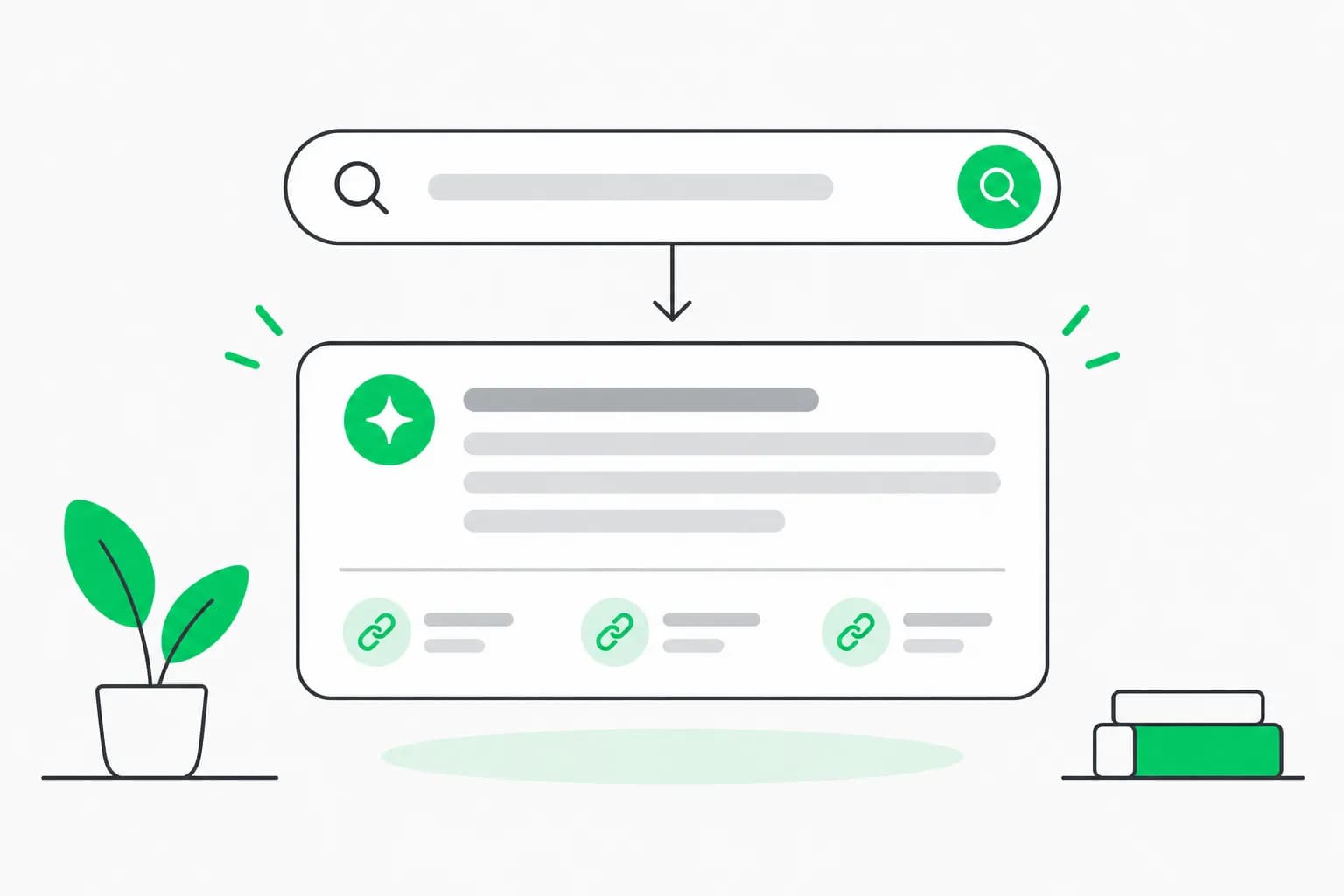
 Search bar feeding a single generated answer card with source markers, illustrating Google AI Mode liability
What the court actually said
The decision is a Beschluss, an injunction order in summary proceedings (einstweilige Verfügung). According to beck-aktuell, the court found that the AI-generated statements violated the doctor's general right of personality by attributing criminal allegations and employment consequences that concerned someone else, and it held Google Ireland Limited liable as a Störerin, an interferer under German law. It found urgency because the content was publicly visible and Google did not act after being warned.
The Decoder adds the court's key sentences. Google's AI produces what the court called independent, new and substantive statements based on an evaluation and combination of content from third-party sites. Google is therefore responsible for the answers generated in this context. The court also observed that Google could have checked its outputs against the source sites, and that confronting the AI with the doctor's objections would likely have exposed the errors.
It acted without hearing Google first, because the claims could seriously damage the doctor's professional reputation. The order bans further spread of three disputed text variants, and violations can carry fines of up to 250,000 euros each.
Note what is not in the order: it does not ban AI Mode in Germany, does not require Google to stop summarizing people, and does not decide damages. It targets specific false texts about one person.
How Munich set the template
The Munich case, decided at the end of May, involved Google's AI Overviews wrongly connecting two Munich publishers to fraud schemes. The court found Google directly liable and classified AI Overviews not as mere search results but as Google's own statements. Google publicly announced an appeal and then settled. Neither side has said why or whether money changed hands, and the court declined to comment on the broader significance, The Decoder notes.
That settlement is the strategic point. A settled appeal means no higher court has tested the Munich reasoning, so it stands as a first-instance view that other courts are now free to adopt, as Aachen did. The Decoder argues that repeated settlements let Google avoid binding precedent, while a pattern of regional courts converging on the same view makes the position harder to dismiss as an outlier.
What is still unsettled
Careful readers should keep four limits in mind.
- It is interim relief. Summary proceedings test whether the claim is plausible and urgent, not every defense Google might raise at a full hearing.
- Other courts have been more cautious. A Frankfurt court in 2025 rejected an injunction request from an association of medical practices over an AI Overview, according to a lawyer's summary of the Frankfurt decision. It found the false statement was not recognizable as false in isolation but that the overview's context in effect corrected it, and it left open whether AI Overviews count as Google's own statements.
- Scope is narrow. The two German cases are about false statements concerning identifiable people or businesses. Generic inaccuracy about the world is a different question.
- Cross-border effect is limited. These are German regional-court decisions, not EU law. They can influence regulators and other national courts but bind no one outside their case.
Google had not commented in the coverage we reviewed, so treat any statement of its position as unconfirmed.
Why this matters beyond Google
For years, search engines relied on a simple split: we show links, third parties wrote the content. Generative answers collapse that split. The model reads several pages and writes a new sentence nobody else wrote. The Aachen court's logic is that the new sentence has an author, and the author is the company that ships the system.
That logic is not specific to Google. Any product that generates claims about real people can be treated the same way: a chatbot that summarizes news, a recruiting tool that writes candidate background notes, a due-diligence agent. We have seen the same pattern of AI-written falsehoods causing real-world harm in cases like an Anthropic model's false homicide tip to Philadelphia police, and the question of who pays when that happens is exactly what insurers are wrestling with in the WSJ report on AI-lab liability and coverage limits.
There is a second-order effect for publishers. The Decoder points out that if AI answers count as Google's own content, publishers whose texts feed those answers might bring their own claims. The Munich case did not address that, but it is the direction litigators will probe, as is the possibility that targeted probing of AI search for false statements becomes a business. For the wider picture of how answer engines are changing what the web is for, see our piece on AI eating the web and search decay.
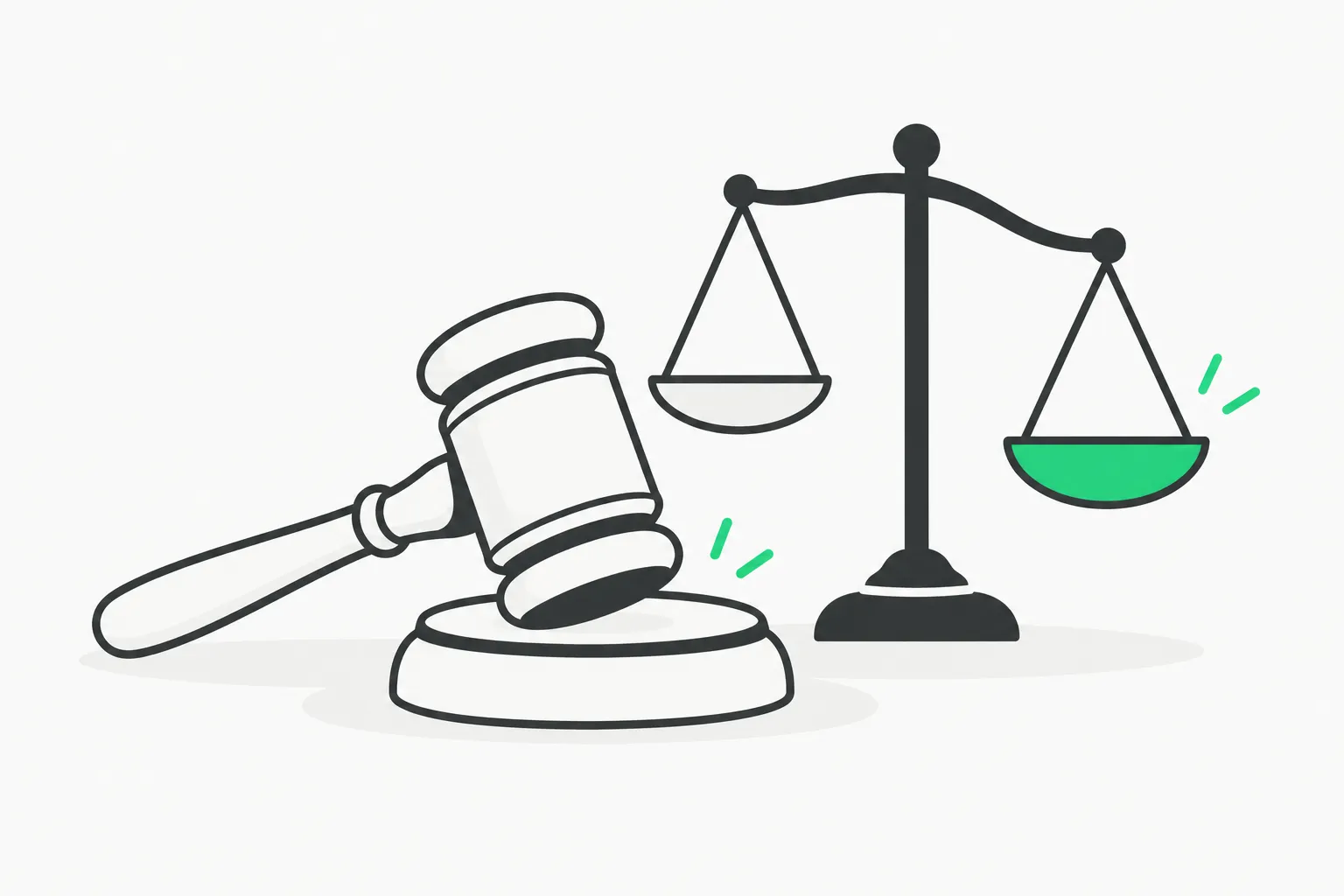 Gavel beside a scale, representing a court weighing AI search liability for Google
What this means if you build or run generated answers
You do not need to be Google for the lessons to apply. A practical checklist drawn from the facts of the Aachen case:
| Risk shown by the case | Practical response |
|---|---|
| Two people with similar histories merged into one story | For answers naming a person, require the cited source to name that person; otherwise omit the claim |
| Source linked but did not support the claim | Verify claims against the cited page before display, not just attach a link |
| Notice sent, no action | Run a legal and trust inbox with a clear response time; ignored notices help claimants show urgency |
| Same false text regenerated in variants | Block the claim, not only one string; test paraphrases after a takedown |
| Users cannot flag errors | Add a visible report path on answers about people and businesses |
Security and misuse teams should also note that AI-agent systems that publish text about third parties are exposed to the same theory. If you are reviewing how your agents act on the open web, a runtime guardrail layer such as AgentBeam from the explainx.ai team can help stop agents before they take risky actions, but a legal-notice process is a separate and equally necessary control.
If you are an individual affected by a false AI answer, the Aachen facts suggest a sequence: capture dated screenshots of each variant, notify the provider in writing with specific URLs or queries, keep proof of receipt, and seek advice quickly, since the court treated the provider's refusal as part of the urgency. This is general information drawn from the reported case, not legal advice, and German procedure differs from other countries.
Where this fits in the regulatory picture
Europe now has three overlapping pressure points on AI search. Regulators like ZAK argue that generated answers are provider content under media law. Courts in Munich and Aachen apply personality-rights liability to specific false statements. And competition law is being tested, as the Frankfurt case shows. The pieces do not fully agree yet, and Google has not had a final appellate ruling on any of them.
In the US the picture is different and slower. Questions of whether a platform's generative output is protected as third-party content are still moving through courts, and our recent coverage of a court revisiting a sentence over an AI-generated victim video shows how differently courts treat AI-made statements depending on the right at stake. Meanwhile, Google continues to push AI Mode deeper into commerce, as in the Universal Cart launch, which raises the stakes of getting generated claims right.
What to watch next
- Whether Google challenges the Aachen order. An objection or appeal would move the case to a hearing where Google can argue its position.
- A higher-court ruling. Because Munich settled, an appellate decision on whether AI answers are Google's own statements would be the first binding test.
- More claimants. Doctors, lawyers, and businesses can now point to two decisions. Expect copycat applications.
- Regulatory follow-through. Whether ZAK or other authorities cite the court rulings in later decisions about AI Overviews and Perplexity.
- Product changes. Any change to how AI Mode treats named individuals or accepts correction requests would be a signal of how seriously Google takes the exposure.
Bottom line
Two German courts, in two different cases and with two different Google products, reached the same conclusion: when an AI search feature writes a new statement about a real person, the company behind it is the speaker. That is a first-instance, partly interim view, and Google may yet get a different answer from a higher court. But the direction is clear enough that anyone shipping generated answers about people should treat them as publications, with verification, logging and takedown processes to match.
Facts reflect reporting available on October 18, 2026. Case numbers and details come from The Decoder and German legal press and may be corrected as the proceedings continue.
Related reading
- Germany's ZAK rules Google AI Overviews and Perplexity subject to media law
- AI labs, liability and insurers: claims versus coverage limits
- Anthropic model's false homicide tip to Philadelphia police
- AI eating the web: collective memory and search decay
- Google Universal Cart in AI Mode
- Arizona appeals court vacates sentence over AI victim video