



CNN has signed a multiyear partnership with Google to let its journalism feed Google's AI products, with credit and payment, but with no terms made public. The announcement landed on October 15, the same day Google said more than 400 publications are now in its News AI pilot. Here is what is confirmed, what is claimed, and what nobody has said yet.
The short version: CNN and Google publicly agreed that CNN's reporting will help power AI answers to news queries, that stories will be credited, and that CNN will be paid. Beyond that, the scope, the price and the question of AI training rights are all open. If you follow how Google is handling publishers, this builds on our earlier coverage of Germany's ruling that AI Overviews fall under media law.
Quick reference: confirmed vs not
| Question | Status |
|---|---|
| Is there a CNN and Google deal? | Confirmed by CNN's announcement, per Deadline and Variety |
| Is it multiyear? | Yes, per both outlets |
| Are terms public? | No. Financial terms were not announced |
| Will CNN be paid? | CNN says it will be compensated for delivery and use of its IP in AI products. Amount unknown |
| Will stories be credited in AI answers? | Per an internal CNN email reviewed by Variety, yes |
| Does it include AI training rights? | Not disclosed |
| Which Google products are involved? | Not disclosed |
| How big is the News AI pilot? | Google says 400+ publications, per Unite.AI's summary of Google's blog update |
What CNN said
According to Deadline, CNN said it will "provide enhanced content rights enabling experimental features in Google products to help explore how generative AI can further drive engaged audiences across CNN's journalism." It added that the agreement fits an AI strategy "that ensures the safeguarding of its intellectual property."
Variety reports that Sam Felix, CNN's senior vice president of strategic partnerships and business development, said the partnership would unlock "new pathways for audiences to access CNN's unparalleled journalism while being compensated for the delivery and use of our unique intellectual property in connection with AI products."
In an email to staff that Variety reviewed, Felix said CNN articles would power Google's AI responses to users' news-related queries, with the respective stories credited. The two will also "collaborate on new AI features, search experiences, tools for our teams and marketing initiatives." He wrote that CNN is "protecting our work and ensuring we're compensated for, and granting permission for, the use of our intellectual property in AI models and products."
Variety also notes that the deal appears to be in its early stages and that neither side has said how CNN will incorporate Google's AI efforts.
What nobody has said
Three gaps matter more than the headline.
The money. No figure was announced. Deadline says the terms were not announced, and Variety says both sides have not revealed how CNN will incorporate Google's AI efforts.
The rights. "Enhanced content rights" for "experimental features" is deliberately broad. Neither Deadline nor Variety says whether the agreement covers AI training. Compare that with the verbs in Felix's quote: "delivery and use" suggests serving answers, and "granting permission for the use of our intellectual property in AI models and products" points toward models. Without the contract, you cannot tell which is meant.
The products. The announcement does not say whether this shapes AI Overviews, AI Mode, Gemini, or Google News features. Our post on Google's AI search changes in July shows how differently regulators treat those surfaces.
The 400-publication pilot
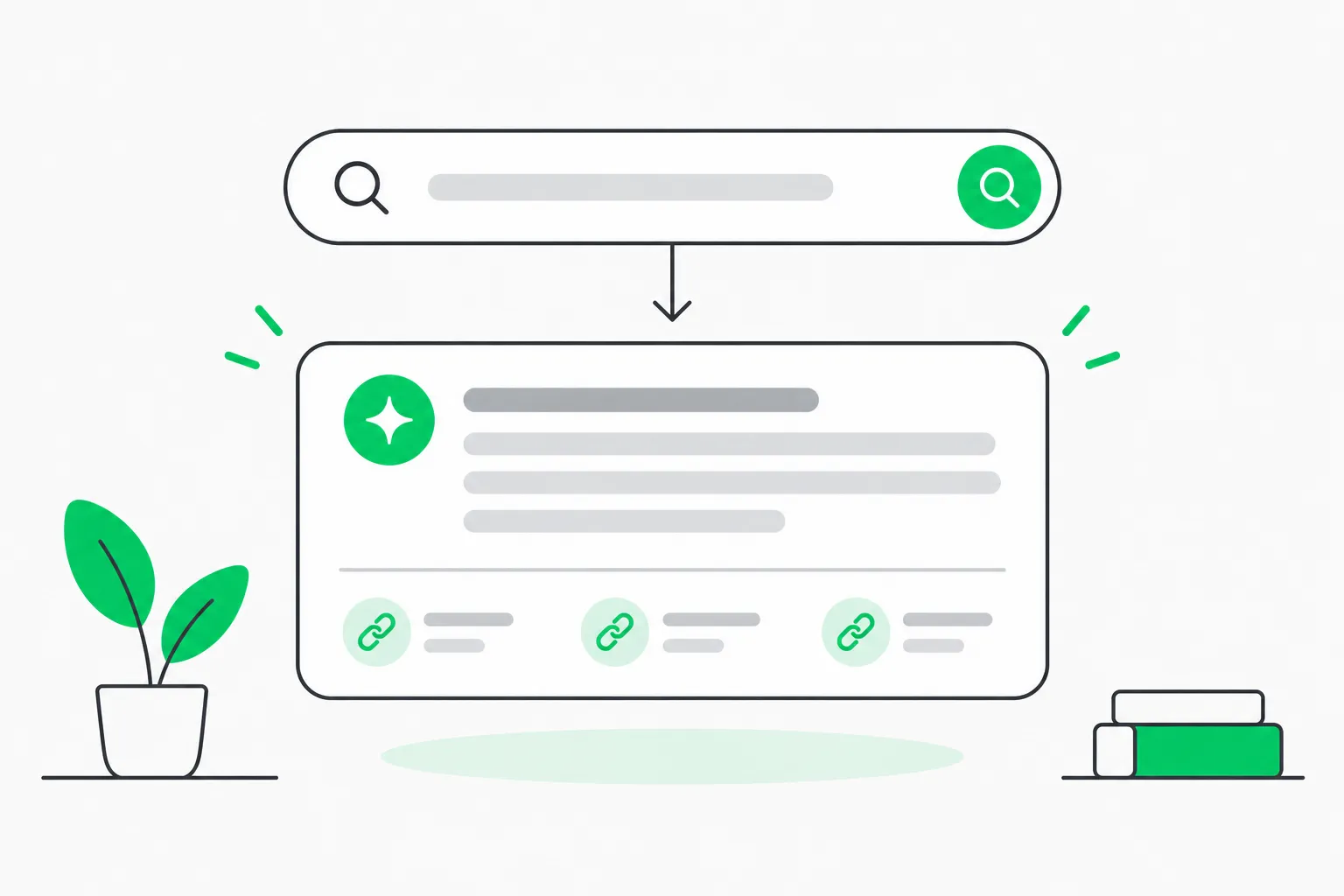 A search bar feeding one answer card with green source markers, picturing credited AI answers in the Google News AI pilot
Variety links CNN's deal to a Google pilot program that "incorporates its AI to help boost engagement to news organizations' websites," naming outlets such as Der Spiegel, El País, The Guardian, the Times of India, the Washington Examiner and the Washington Post. The same set of names appeared in TechCrunch's December 2025 report on Google testing AI-powered article overviews on publishers' Google News pages, which also described direct payments to participants and audio briefings.
The new number comes from Google. Unite.AI reports that on October 15 Google said more than 400 publications are in the pilot, a licensing initiative under which it pays publishers for the delivery and use of enhanced content to build AI features such as article overviews on Google News publisher pages and audio briefings. Newest partners named include Axios, CNN, The Financial Times, Forbes, Post and Courier and The Texas Tribune. We read Unite.AI's summary, not Google's blog post itself, so check the original for the exact wording.
The scale is the news. TechCrunch's December report named nine participants "among others" and did not give a total. If the reported 400-plus figure holds, the program is a broad enrolment rather than a handful of partnerships, which changes the bargaining picture for every publisher not in it. The question each publisher faces is the one CNN answered: take payment and credit in exchange for rights, or stay out and hope the traffic holds.
Why CNN, and why now
Variety puts the deal in context. CNN sued Perplexity for copyright infringement months ago after the two failed to agree a licensing deal, its first legal case against an AI company over the unauthorized use of its journalism, and said then that it "actively embraces the opportunities AI creates." The Google deal is the other half of that posture: sue the answer engines that will not pay, sign with those that will.
Variety also notes that Google's AI summaries have eaten into news organizations' web traffic, and that Penske Media, Variety's parent, sued Google over that decline last year; a federal judge dismissed the case earlier this month. For a publisher, a license that promises credited answers and payment is a hedge against a search page that increasingly answers the question without a click.
The pattern is wider than Google. Rights holders are litigating and licensing at the same time: see our coverage of USA Today's $250 million suit against OpenAI, the Sony and Warner suit against Anthropic, and the Suno settlement with Warner and BMG. In each, the live question is the same: what exactly was licensed, and for training or for serving answers?
How to read a deal like this
Announcements of this kind tend to use a small set of phrases, and each one hides a different question. A short decoder, based on the wording quoted above:
| Phrase in the announcement | What it could mean | What to ask |
|---|---|---|
| "Enhanced content rights" | More than the standard crawl and snippet permissions Google already has | Which uses exactly: summaries, full text, images, video, archives? |
| "Experimental features" | Pilot products that may change or end | What happens to the license if the experiment is dropped or becomes a core product? |
| "Compensated for the delivery and use" | Payment tied to serving answers, possibly also to model use | Is pay flat, per use, or per click, and is there an audit right? |
| "Granting permission for the use of IP in AI models" | Possibly model training or tuning | Is training covered, for which models, and for how long? |
| "With attribution" or "credited" | Links or names shown in answers | Does the link sit above the fold, and how are clicks measured? |
None of these answers is public for the CNN deal. That is not unusual for a first announcement, but it is why a comparison with other publishers' agreements with Google cannot be made on facts yet. Treat any detailed description of the structure as reporters' inference until a contract term or a filing appears.
What this means for readers and builders
- If you read news through AI answers, expect more of them to cite CNN and other pilot publishers, and fewer to rely on scraped copies. Whether that improves accuracy is untested. Attribution is a promise in the announcement, not a measurement.
- If you build products on top of search or news, paid pipelines will increasingly sit alongside the open web. Terms like "enhanced content rights" are worth watching because they determine what downstream developers may do with the same content.
- If you publish, the deal sets a reference point: payment plus credit, with the scope hidden. Ask what is licensed, for how long, for which products, and whether training is included, before comparing offers.
- If you evaluate AI answers, test them on topics where a partner publisher and a non-partner have covered the same story, and check whether credit links go to the original reporting.
What to watch next
- A Google statement or blog post naming the products and features covered.
- Whether other large publishers, including those that have sued AI companies, announce similar terms.
- Whether the pilot's payment structure becomes public, or leaks through filings and reporting.
- Whether the 400+ publication figure is confirmed by Google directly and what share are paid.
- Any evidence that credited AI answers send readers back to publishers' sites, which is the claim the deals rest on.
Related reading
- Germany's ZAK rules Google AI Overviews subject to media law
- USA Today sues OpenAI for $250 million
- Sony and Warner sue Anthropic over music training
- Suno v6: Warner and BMG licensing settlement
- Big Five publishers quietly using AI for covers and copy
- Anna's Archive and the Anthropic fair-use ruling
Details are accurate as of October 15, 2026, based on reporting by Variety and Deadline. Terms of the deal are undisclosed and may change as more is reported.