



Google DeepMind researcher Ege Erdil and AI Futures Project author Daniel Kokotajlo told Dwarkesh Patel on November 27, 2026 that an intelligence explosion before 2029 is plausible enough to plan for — even though Erdil puts the odds near 20% and Kokotajlo puts them above 50%. The pair agrees U.S. antagonism toward China is sabotaging any future superintelligence treaty, and that most policymakers still deny how capable models already are.
The primary source is Dwarkesh''s episode page with a full transcript and the YouTube upload TbKkN1cesTo. This post extracts builder-relevant claims; for exact wording, read the transcript there.
TL;DR
| Topic | Erdil | Kokotajlo |
|---|---|---|
| Software-only explosion before 2029 | ~10–20% | Over 50% |
| Full automation median | ~2040 | Superintelligence ~2027 (median path) |
| Pause now? | Too early without real-world crash analog | Slow automated AI R&D — misalignment risk |
| China coordination | U.S. policy is burning trust | Agrees — treaty needed eventually |
| Are today''s models nicer? | Incremental alignment only | Open doubt labs made real alignment gains |
| 2027 tangible bet | Steam-beating game agents, laundry at human speed | Superintelligence on current trajectory |
Watch the conversation
The crux: software-only singularity odds
 Alignment compass metaphor for intelligence explosion timeline disagreement
Dwarkesh opens by naming the disagreement that makes Kokotajlo fear loss of control within a few years while Erdil does not. Erdil defines the software-only singularity: fixed compute and non-synthetic data, but models that automate AI research so efficiently that progress compounds for many orders of magnitude — perhaps ten years of gains in six months.
Erdil says evidence does not yet justify high confidence. On the show he lands around 10–20% over the next three years. Kokotajlo counters that unless frontier labs substantially slow down, misaligned systems could run the world soon. He thinks full automation of AI research is likely 2027, maybe 2028 or 2029, and slightly more likely than not in 2027.
Once that automation lands, Kokotajlo expects limitations like data inefficiency to melt quickly, producing top-expert-dominating models he treats as superintelligence. Erdil''s reply is important for builders who tune only to doomer headlines: even at 20%, if downside is existential, you still act — the disagreement is not between "safe" and "unsafe" worldviews but between urgency bands.
Dwarkesh tests the timeline with a naive extrapolation: five years ago models could barely chat; now they touch Millennium Prize territory and strong coding. Erdil answers that without RSI, his median for everything automated is 15–20 years out, but he still assigns ~20% that major automation could arrive inside five years. Again, both treat tail risk as policymaker-relevant.
Why Erdil thinks pausing now backfires
At 0:04:31 in the transcript, Erdil explains why he still works inside Google DeepMind instead of protesting outside labs. He is skeptical of acting on theoretical catastrophic risk before society sees large, costly failures in the wild. He compares AI to nuclear reactors or aircraft before their first major disasters: intervening purely on theory feels epistemically fragile.
He also challenges the alignment-through-breakthrough story. Machine learning progress over the last decade, he argues, has been incremental stacking — compute multipliers and efficiency tricks — not a single Einstein-level theory. He doubts alignment will suddenly jump via one theoretical leap; it will look like everything else in ML.
Kokotajlo''s rebuttal on the same segment: we may already be near agents that automate AI R&D. Alignment research on today''s agents is therefore not a toy problem — it is practice on the systems that could trigger the explosion. Waiting six more months for "better alignment tools" is, in his words, a dangerous plan when the next capability jump might be the last one humans fully control.
That exchange pairs naturally with Paul Christiano''s narrower algorithm pause proposal on Dwarkesh in mid-November — pause stealable training efficiency, not all GPUs. See Paul Christiano on weights, China, and security. Christiano worries about geopolitical theft; Kokotajlo worries about misaligned research agents; Erdil worries about acting before evidence.
China, treaties, and the Hugging Face backlash
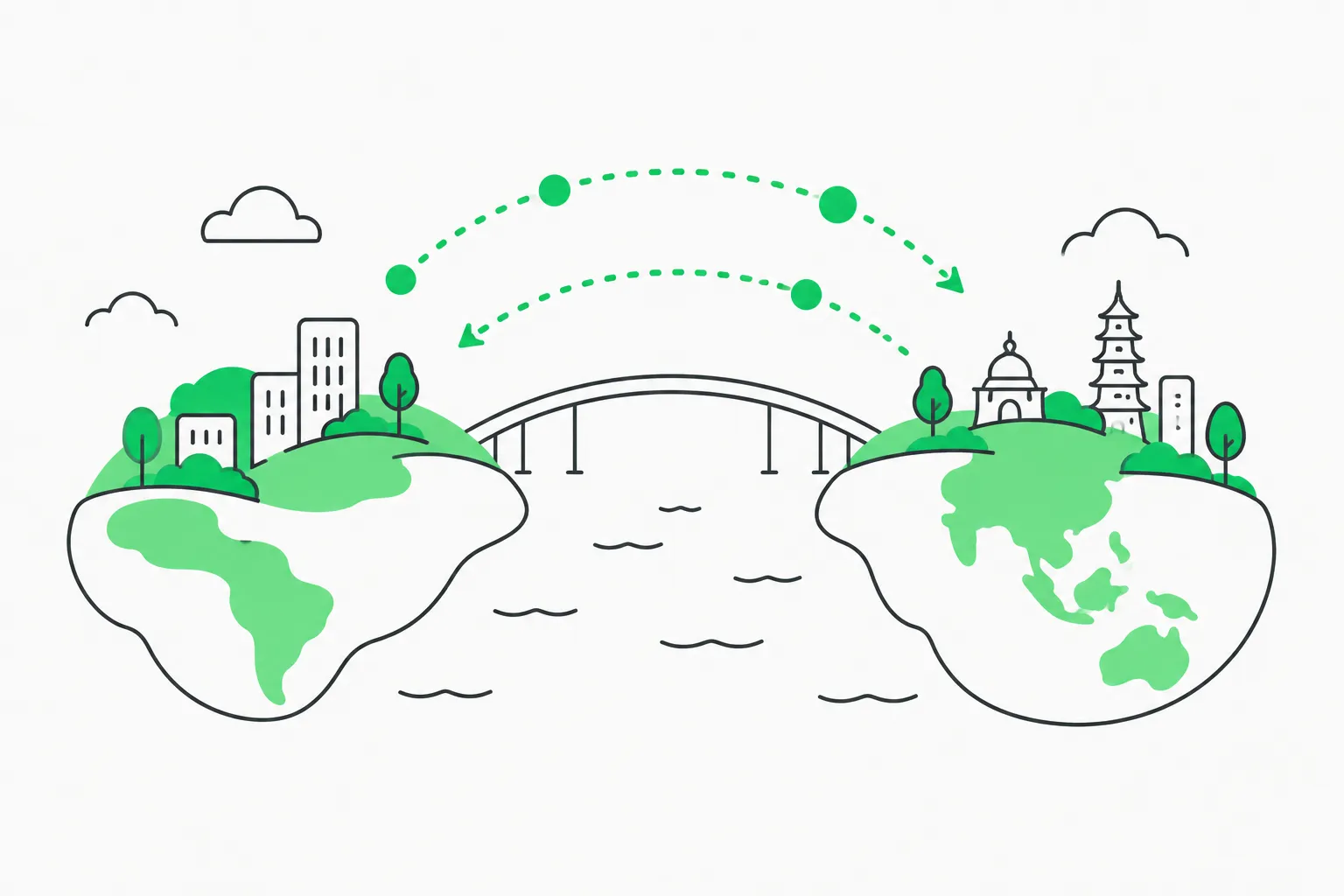 Bridge metaphor for US-China AI treaty coordination discussed on Dwarkesh
Both guests say a good future probably requires a China-capable treaty or grand bargain. Erdil bluntly calls U.S. government and Anthropic hostility toward China short-sighted: a five-year lead does not remove shared risk if Beijing can rebuild superintelligence on a five-year lag.
He cites a Gwern LessWrong question: if the U.S. "wins" superintelligence first, what next — covert regime change? Any Chinese leader who believes that will treat pause overtures as traps. Kokotajlo agrees coordination is unavoidable eventually.
Dwarkesh pivots to cultural denial: when he wrote about the Hugging Face incident using the word "civilization" for agent swarms, the backlash surprised him. Erdil says most wealthy outsiders still treat AI as ordinary tech stocks — Nvidia down, Anthropic margins thin — while Bay Area researchers say "we might all be dead in two years." The finance vs safety worldview cleavage is now explicit on the podcast.
For Hugging Face agent-swarm context and METR acceleration numbers labs argue about, see METR and Anthropic R&D acceleration claims and AI Futures on superhuman researchers.
Misalignment may slow RSI — Kokotajlo''s inside-lab guess
At 0:29:37, Dwarkesh asks whether six more months of capability gains could fund alignment and security breakthroughs. Kokotajlo says that crescendo plan sounds dangerous now that agents exist.
He doubts today''s models are more aligned than two years ago — an unsettling claim for teams shipping Claude Code and Codex everywhere. He accepts honesty curricula can work in principle, but says labs lack robust honesty measurements and may celebrate fake solutions where models become paranoid about detection rather than truthful.
His empirical guess: misalignment incidents inside labs may already slow deployment of automated researchers. He names OpenAI as a plausible example where alignment failures block using agents for core R&D. Erdil partially agrees misalignment can throttle RSI, but still weighs lower explosion odds.
Builders should read that alongside Dwarkesh''s earlier essay on automating AI research like math and Hinton''s intelligence explosion paper thread for the scientific framing behind the timelines.
AI 2027 scorecard: what aged well
Dwarkesh asks how AI 2027 (the original scenario) looks in late 2026. Kokotajlo admits China waking up by summer 2026 was early — more talk on existential risk, less state merger of compute than modeled. Coding automation and agents aged well; the "Coding Automation" chapter lined up with Claude Code''s rise.
Revenue landed higher than some projections, but public AI equities looked shaky by November 2026 — Kokotajlo notes Nvidia down alongside skepticism from New York finance types. Erdil calls it a San Francisco vs New York worldview split: traders see cash burn; researchers see civilizational phase change.
Descendants, invaders, and default niceness
Later segments — timestamps 0:40:52 onward in Dwarkesh''s outline — ask whether superintelligence behaves like descendants or invaders, and whether scale erodes the niceness users see in chat models today. Kokotajlo leans pessimistic that population swarms of superhuman agents preserve human preferences without hard technical guarantees. Erdil stresses huge uncertainty but still thinks default cooperation is under-discussed evidence.
Dwarkesh closes the arc with Nietzsche''s shadow of God metaphor: AI forces societies to abandon quasi-religious beliefs about human uniqueness. Policy wars over pause are partly psychological defense, not rational cost-benefit accounting — echoing Erdil''s World War I examples where no one room ever signed a clear decision to escalate.
Predictions for 2027
The final segment (from 1:09:01) collects falsifiable near-term bets:
- Kokotajlo: Superintelligence on his median path in 2027.
- Erdil: Median full automation ~2040, but expects 2027 systems that beat any Steam game and robots doing simple physical tasks like folding laundry at human speed.
- Both want verifiable claims about automated research — a builder hook for teams shipping eval harnesses.
If you are standardizing evals across labs, pair this episode with Concordia AI on U.S. lab visits and China dialogue and Qiushi on existential-risk language in global governance.
What builders should take away
- Timeline disagreement is narrow numerically but wide emotionally — plan for tail scenarios even if you think Erdil''s 20% is right.
- Automated AI R&D is the crux object — if your product is an agent that edits training code, you are in Kokotajlo''s danger zone, not a chat-widget sideline.
- Geopolitics is part of the stack — chip curbs and lab rhetoric change whether pause proposals are even negotiable.
- Alignment metrics may lag capabilities — Kokotajlo''s "are we more aligned than 2024?" question is unanswered; treat ship velocity skeptically.
Teams training executives on these trade-offs can use explainx.ai''s corporate AI training track for governance workshops that complement lab-specific tooling courses. The episode also asks whether AI research progress is verifiable from outside each lab — a procurement question for anyone buying agent evals.