



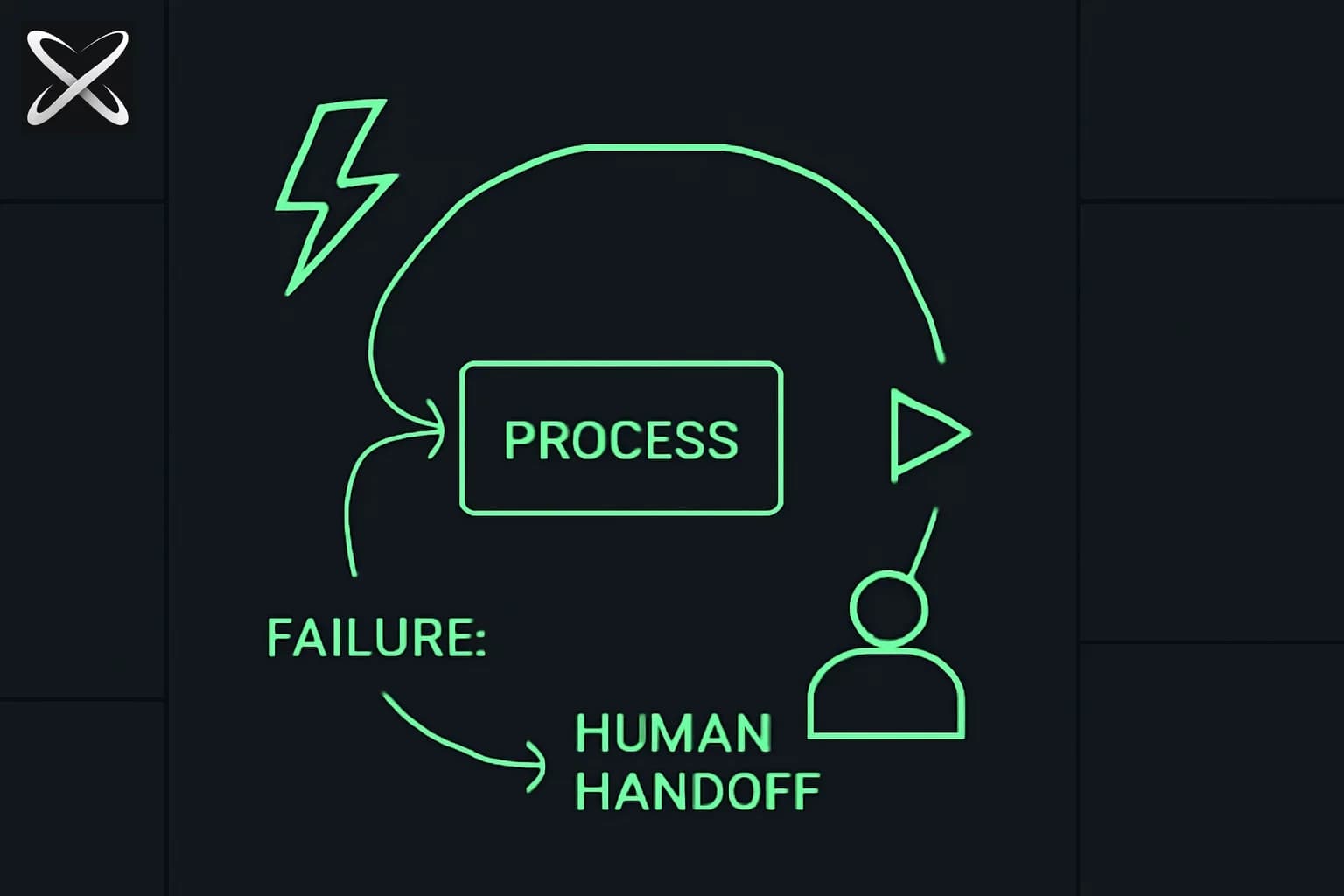
Update — September 11, 2026: Cursor Projects wraps subscriptions, subagent VMs, and shared context files into long-running coordinator workspaces — the product layer on top of the event-driven harness this post describes.
If you build with Cursor and saw "AI coding swarms" trend on your timeline this week, the real change is smaller and more specific than the phrase suggests. Cursor's August 19, 2026 changelog update did two concrete things: it let cloud agents subscribe to events (a pull request, a Slack thread, a cron schedule) so they wake up on their own, and it let subagents run on separate isolated VMs, so several of them can work a task in parallel without colliding. "Swarm" is Cursor's word for the second part.
This lands two months after SpaceX closed its $60B acquisition of Cursor and folded the company into the SpaceXAI/Grok org — worth noting as context, not the story here. Post-acquisition, Cursor has kept shipping product at the same pace: a ₹649/month India plan in July, a MoE megakernel post and Cursor Origin git hosting earlier in August. This week's release is the next entry in that cadence, aimed squarely at teams already running Cursor's cloud agents at scale.
TL;DR
| Question | Answer |
|---|---|
| What's actually new? | Cloud agents can subscribe to a PR, Slack thread, or cron job and wake when it fires. Subagents can each run on their own isolated VM. |
| Is "event-driven" new to Cursor? | No — Cursor Automations (shipped March 2026) already fired agents off GitHub PRs, Linear issues, Slack, and PagerDuty into cloud sandboxes. This update adds standing subscriptions on top of one-shot triggers. |
| What do isolated VMs buy you? | Each subagent gets a clean copy of the project in its own cloud environment, so parallel subagents can't step on each other's file edits. |
| What is a "coding swarm" concretely? | A planner/parent agent fans a task out to several subagents, each on its own VM, working pieces in parallel and reporting back. |
| How is this different from running Cursor locally? | Local agents run in your editor's process and stop when you close your laptop. Cloud agents (event-driven or not) run on Cursor's servers and keep going, then report back. |
| Vs. Claude Code's background agents? | Similar goal — work that continues unattended — different surface. Claude Code's background agents run from a tasks panel inside a session; see Claude Code 2.1.191. |
| Vs. Codex's cloud agent mode? | Codex cloud agents run OpenAI-hosted sandbox tasks kicked off from CLI or ChatGPT; see explainx.ai's Codex vs ChatGPT work coverage. Neither Codex nor Claude Code currently ships a standing event-subscription layer as the headline feature. |
| What does it cost? | No separate price — it runs against your existing cloud agent usage on Pro and above. Parallel subagents multiply compute per run. |
| Is it live today? | Yes, shipped as a changelog update to the existing cloud agents surface, not a waitlist beta. |
What "event-driven" actually means here
Skip the marketing framing for a second. Cursor already had a trigger-action framework called Automations, which it shipped back in March 2026. Automations fire a cloud sandbox off:
- A merged or opened GitHub pull request
- A new Slack message in a watched channel
- A new Linear issue
- A PagerDuty incident
- A cron schedule
Each firing clones your repo state into a fresh sandbox, runs the agent's instructions, and stages changes for review rather than applying them directly.
What the August 19 update adds on top is subscriptions — instead of a one-shot trigger, a cloud agent can subscribe to a specific ongoing conversation (a PR thread, a Slack thread) and keep tracking it. Cursor's own example: @cursor check back in an hour and keep going until that feedback is in. The agent doesn't just run once when the PR opens — it re-wakes as review comments land, keeps working until the thread resolves, and stops itself. That's the actual mechanism behind "event-driven": a standing subscription to an event source, not a single webhook fire-and-forget.
Paired with the update is /goal — give an agent a long-lived objective ("fix all flaky tests and make CI green") and it works toward it across however many turns it takes, optionally guided by a custom mode or /loop for recurring check-ins.
What isolated VMs provide
Cloud agents already ran in Cursor-managed VMs (or self-hosted VMs on Enterprise) rather than your laptop — that part isn't new. What's new is subagents on their own separate VMs. Each subagent gets an isolated copy of the project — a clean checkout, clean context — in its own cloud environment rather than sharing the parent agent's working directory.
The concrete reason this matters: two agents editing the same working tree at the same time will conflict — race conditions on file writes, one agent's half-finished refactor breaking another's test run. Giving each subagent its own VM and its own copy of the repo removes that failure mode entirely. Cursor's stated use cases:
- Have a subagent test the parent agent's changes in a fresh environment, separate from the one that made the change (so the test run isn't contaminated by leftover state).
- Swarm independent fixes across a project without collisions — e.g. one subagent fixing a lint issue, another chasing a flaky test, a third patching a dependency bump, all at once.
What "AI coding swarms" refers to, concretely
Despite the headline framing, this isn't autonomous multi-agent negotiation or agents bidding on tasks. It's closer to fan-out parallelism with a coordinator: a parent (or planner) agent breaks a goal into pieces and dispatches them to subagents, each isolated on its own VM, which report results back. Cursor's example prompt makes the shape explicit: "run a swarm of subagents to test my app for bugs, each in its own environment."
This is consistent with what Cursor showed earlier in the summer — on July 20, 2026, Cursor demoed a planner AI breaking a job into pieces and handing them to a team of cheaper, faster worker AIs building in parallel. The August update is the infrastructure layer underneath that demo: isolated VMs are what let those workers run without stepping on each other, and event subscriptions are what let the whole thing kick off without a human sitting there.
How is this different from just running Cursor locally?
Local Cursor agents live inside your editor process. They run when you're at the keyboard, use your machine's resources, and stop the moment you close the laptop or the process dies. Cloud agents — event-driven or not — run on Cursor's own servers (or a self-hosted VM on Enterprise), independent of your machine's uptime. That was already true before this update; what changes now is how a cloud agent gets started. Previously you'd manually kick one off, or an Automation would fire once off a webhook. Now a cloud agent can hold an open subscription to a thread and keep re-engaging as that thread evolves, and it can delegate pieces of its own work to subagents on separate VMs rather than doing everything serially itself.
How does this compare to Claude Code and Codex's cloud agent options?
None of the three vendors frame their equivalent feature identically, which makes head-to-head claims easy to overstate. Here's what's actually documented for each, without linking to competitor docs:
| Capability | Cursor (Aug 2026) | Claude Code | Codex |
|---|---|---|---|
| Runs unattended, continues after you close the session | Yes — cloud agents run on Cursor's servers | Yes — background agents run from a tasks panel within a session; see explainx.ai's Claude Code 2.1.191 coverage | Yes — Codex cloud agents run in OpenAI-hosted sandboxes; see Codex vs ChatGPT work coverage |
| Standing event subscriptions (PR, Slack, cron) as a first-class feature | Yes — the headline of this release | Not the primary framing of Claude Code's background agents as documented | Not the primary framing of Codex cloud agents as documented |
| Per-subagent isolated compute for parallel work | Yes — subagents on separate VMs | Claude Code supports subagents, but explainx.ai has not seen Anthropic document one-VM-per-subagent isolation as the mechanism | Not documented as a headline mechanism |
| Where it's triggered from | GitHub, Slack, Linear, PagerDuty, cron, or the IDE | CLI/IDE session, tasks panel | CLI or ChatGPT |
The practical takeaway: if your workflow already lives in Slack and GitHub PR threads and you want an agent that reacts to those without you opening an editor, Cursor's subscription model is the most direct match of the three right now. If your workflow is already centered on a Claude Code or Codex session, their background/cloud options solve the "don't block on a long task" problem without asking you to wire up event subscriptions at all.
What people are asking
Is this actually usable today, or a preview? It shipped as a changelog update to Cursor's existing cloud agents surface — not a separate waitlist. Cursor does have a track record of rolling newer capabilities out to paid plans first (Cursor Origin, for instance, exited its own waitlist into early beta on paid plans on August 17, 2026), so check your plan's feature list before assuming full access.
Do I need to rebuild my Automations to use subscriptions? No — subscriptions extend the same Automations framework from March 2026 (trigger-action off PRs, Slack, Linear, PagerDuty, cron). Existing automations keep working; subscriptions add the "keep re-engaging on this thread" behavior on top.
Will running a swarm blow through my usage? Yes, proportionally. Each subagent on its own VM consumes cloud agent compute the same way a solo cloud agent run does — running five subagents in parallel is roughly five times the usage of one. Cursor hasn't published a swarm-specific price; it bills against your plan's existing cloud agent allotment.
Does this work with non-Grok models now that Cursor sits inside SpaceXAI? Cursor's own multi-model support (Claude, GPT, Grok, Composer) hasn't been publicly changed by this release — see explainx.ai's acquisition-close coverage for what has and hasn't been confirmed on that front. Nothing in the August 19 changelog entry ties event-driven agents or isolated VMs to a specific model provider.
What's the failure mode if a subagent goes rogue on its own VM? Isolation is the safeguard here — since each subagent works a clean, isolated copy of the project rather than the shared working tree, a subagent that produces bad output doesn't corrupt the parent session or other subagents' work. Changes still land as staged diffs for review, consistent with how Automations has worked since March.
The honest limitation
Cursor's own examples ("run a swarm of subagents to test my app for bugs") are explicitly QA and fix-fanout use cases — parallelizable, low-coordination work. Nothing in the release claims subagents negotiate, resolve conflicting edits to the same file, or replace a planner's judgment about what to build. If your task genuinely needs sequential reasoning where step three depends on step two's output, spreading it across a swarm doesn't help — it's a tool for parallel, independent slices of work, not a general multi-agent reasoning upgrade.
Related reading
- Cursor Projects: Persistent Agents With Shared Context · coordinator agents, project memory, and long-running work (Sept 2026)
- Grok Bot for Engineering: one engineer's fleet manages 200+ of these cloud agents — a real-world orchestration layer built on top of Cursor's cloud agents, including running them on a private-worker Mac mini
- SpaceX Closes $60B Cursor Acquisition — the ownership context behind Cursor's continued product velocity
- Cursor Start India: ₹649 Plan — Cursor's most recent pricing move, including cloud agent access
- Claude Code 2.1.191: Background Agent Fixes — Anthropic's comparable "keep working unattended" surface
- What Is an Agent Harness? Complete Guide — background on how cloud/local agent harnesses differ
- DoorDash Flux: Cloud Agents Platform — another company's take on event-driven cloud agent infrastructure
- Cursor Origin: Git Hosting Beta — Cursor's other August 2026 infrastructure push
- ChatGPT Work vs Codex: Complete Guide — Codex's cloud agent mode for comparison
- Agent swarm on the explainx.ai AI Dictionary
Version and pricing details in this post reflect Cursor's changelog and blog as of August 20, 2026. Cursor's cloud agent features, plan gating, and pricing change frequently — check cursor.com/changelog before relying on specifics here.