



Bolt launched Bolt Forge on September 14, 2026, as a new open-weight coding agent inside Bolt.new. The eye-catching promise is up to 50x more usage for individual Pro subscribers at no added charge—but the real product is a trade: cheaper models and infrastructure give builders more room to experiment, while opted-in Forge sessions become training data for future open models.
That is more interesting than a routine quota promotion. It turns the open-weight versus closed-model decision into a visible product mode: use Forge for high-volume exploration, then switch to Bolt's Standard or Max agent when privacy, maturity, or frontier capability matters more than volume.
TL;DR: what does Bolt Forge actually offer?
| Question | Direct answer |
|---|---|
| What changed in Bolt.new? | Forge joins Standard and Max as a third selectable agent, dedicated to open-weight models. |
| Which models are available? | GLM 5.3 Flash by default, GLM 5.3, plus experimental Kimi K3 and DeepSeek V4 Pro options. |
| Who gets 50x usage? | Individual Pro accounts get up to 50x more Forge usage at no extra cost through October 14, 2026. |
| Is the offer permanent? | No. Forge continues after the preview, but Bolt only promises the 50x allocation for the September 14–October 14 window. |
| What is the exchange? | Each time users enter Forge, they can opt in to share anonymized prompts, code, and fix traces for training with Arcee AI. |
| Why are GLM models the default? | Bolt says GLM consumes less of the Forge allocation; Kimi K3 and DeepSeek V4 Pro burn through it faster. |
| How capable is it? | Bolt reports 92.2 on its internal Bolt Build Index versus 101.0 for its top paid model, or roughly 91% of that score. |
| Is it ready for critical production work? | Bolt calls the models experimental and recommends duplicating serious projects before switching. |
What Forge adds to the existing Bolt.new product
Forge is not a standalone model and it is not a replacement for Bolt.new. It is an agent configuration inside the same app builder, available through the agent picker beside Standard and Max. That distinction matters because the agent owns the broader build loop—reading the project, proposing changes, generating code, running it in Bolt's environment, observing failures, and iterating—while the selected model supplies the reasoning and generation engine.
The new lane gives Bolt a clean way to separate workloads. Standard and Max remain the premium, private paths. Forge becomes the experimental path for brainstorming, rough prototypes, UI iterations, failed approaches, and other work where developers want many attempts without treating every prompt as scarce inventory. This resembles model routing by task and cost, except Bolt exposes the choice as an agent in its product rather than asking users to construct routing rules themselves.
Forge currently includes four named options:
| Model | Forge status | Practical role in the preview |
|---|---|---|
| GLM 5.3 Flash | Default | The volume-first option and the least expensive against the Forge allowance |
| GLM 5.3 | Available | A stronger GLM option for coding and agent tasks |
| Kimi K3 | Experimental | An alternative open-weight frontier model that consumes usage faster |
| DeepSeek V4 Pro | Experimental | A coding-focused alternative that also consumes usage faster than GLM |
This model menu is why the digest headline needs correction. The launch is not simply “50x usage for GLM and DeepSeek.” The offer applies to the Forge allocation, the lineup also includes Kimi K3, and the models do not spend that allowance at an equal rate. For context, explainx.ai has separately examined GLM-5.3's coding claims and DeepSeek V4 Pro's agent features and pricing; Forge packages those model families behind one builder interface.
Why can Bolt offer up to 50x more usage?
The tempting explanation is simply “open weights are cheaper.” That is directionally right but incomplete. Bolt describes a cost stack with three distinct levers: model economics, reserved inference capacity, and browser-side application execution.
First, Forge uses open-weight models rather than paying a closed-model provider's retail API price for every request. Open weights do not make inference free—the GPUs, power, orchestration, and operations still cost money—but they let the serving company choose the hardware and avoid a third-party per-token markup. That is the same economic distinction behind self-hosting and open-model selection, even though Bolt is operating the infrastructure here rather than handing it to the user.
Second, Bolt says Forge runs on reserved hardware. Dedicated capacity converts an unpredictable per-request bill into a more predictable infrastructure cost. If Bolt can keep that capacity well utilized, it can sell or allocate far more attempts without paying the marginal price of a premium hosted model each time.
Third, Bolt projects execute through StackBlitz's WebContainers in the browser. The model still needs hosted inference, but the code-running environment does not require Bolt to provision a conventional remote development server for every user and every experiment. Moving that part of the loop onto the user's device reduces the server-side cost of each build.
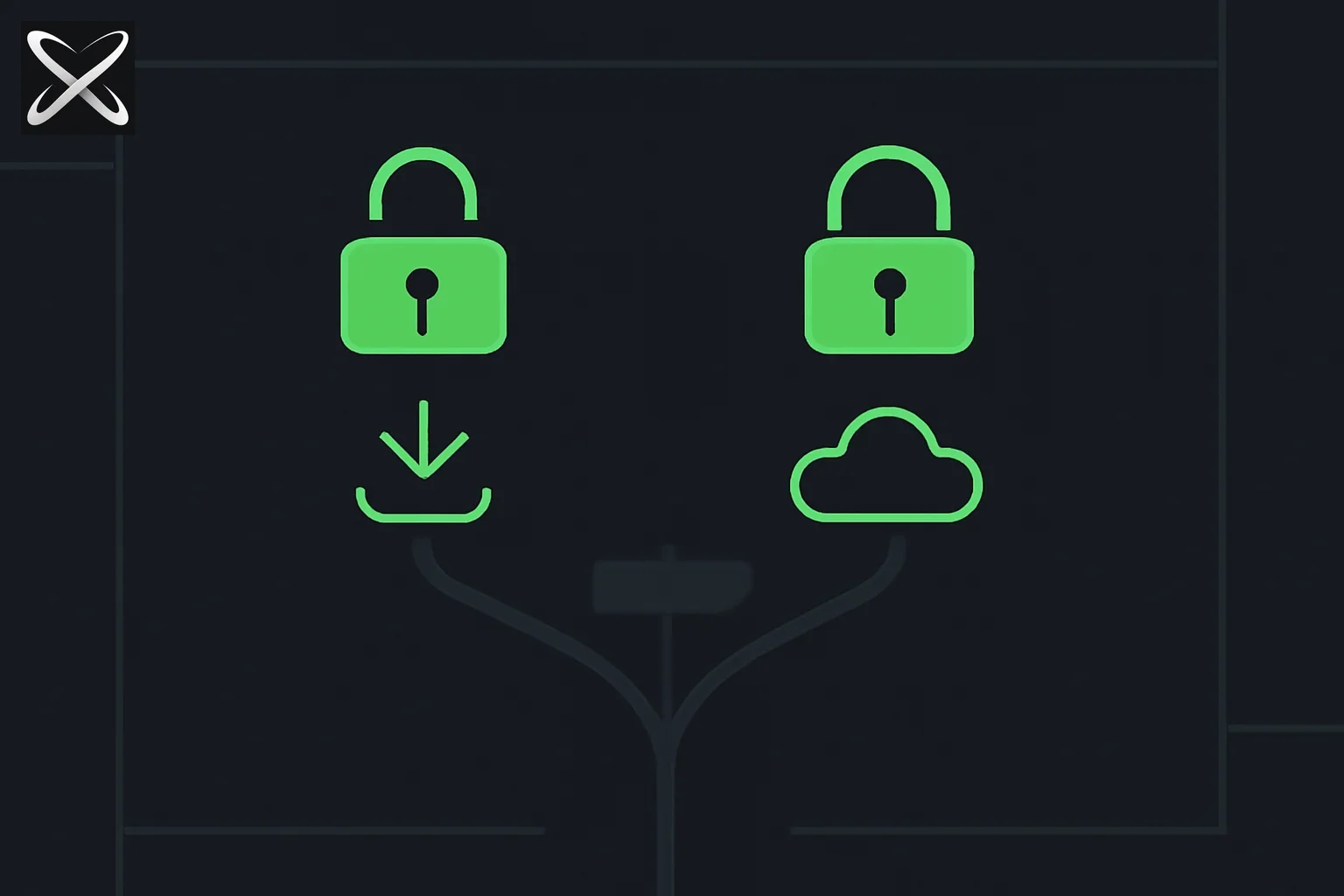 Open-weight and hosted-model paths illustrating Bolt Forge's model-cost tradeoff
Bolt also points to Stanford HAI's finding that inference cost for a GPT-3.5-level system fell by more than two orders of magnitude between late 2022 and late 2024. That industry trend makes larger allocations plausible, but it does not prove Bolt's specific unit economics. The 50x figure is a product allowance, not a published measure that GLM inference is precisely 50 times cheaper than Bolt's premium stack.
The 50x allocation is payment for useful training data
Forge's unusually large quota is not only a cost story. It is also an incentive for developers to contribute a kind of dataset that model labs struggle to obtain from public code: the sequence of prompts, edits, errors, corrections, and retries that turns an initial request into a working application.
Bolt says consent appears each time someone switches into Forge. If accepted, Bolt can collect prompts, code, and the repair traces created during the session. The company says it removes secrets, sensitive data, and personal information before transferring the anonymized material to Arcee AI under a data-processing agreement. Arcee will use the sessions in training work for open-weight models whose weights are intended to be published.
There are meaningful boundaries:
- Standard and Max sessions are not included in the Forge training program.
- Declining consent keeps the user out of Forge rather than silently collecting the session.
- Switching back to Standard or Max stops new Forge sharing.
- Data already incorporated into training cannot be pulled back out of a trained model.
- Teams and Enterprise workspaces are excluded from Forge and its collection program.
Those safeguards make the exchange clearer than a buried, one-time terms change, but “anonymized” should not be interpreted as “risk-free.” Development sessions can contain proprietary business logic, customer identifiers, unpublished product ideas, credentials pasted into prompts, and distinctive code that may be difficult to de-identify perfectly. Secret scanning is useful; it is not a contractual substitute for deciding whether a repository is suitable for contribution.
For an indie developer working on a throwaway prototype, open-source demo, or generic landing page, the exchange may be attractive. For client work, regulated data, employer-owned code, or a defensible algorithm, the safer decision is to stay in Standard or Max—or use an environment where the team controls model serving and retention. Forge makes that choice explicit, but the builder still owns it.
Is Forge's open-model quality close enough?
Bolt reports that the Forge lineup scored 92.2 on its internal Bolt Build Index, compared with 101.0 for the best paid model in Bolt at launch, Claude Opus 5. Bolt describes that as 91% of the top score. The arithmetic is straightforward, but the benchmark is Bolt's own and its methodology is not an independent standard.
That means builders should read the result as evidence Bolt tested the lineup for its own workflows—not as proof that Forge will deliver 91% of premium quality on every repository. A web-app benchmark can reward the exact tasks, tools, and scaffolds Bolt optimizes. Your application may stress database migrations, unusual build systems, accessibility, test repair, or long-running refactors differently. As our guide to reading AI benchmarks argues, a single aggregate score cannot replace a small eval built from your own work.
The useful calculation is not capability alone but completed useful work per allowance. A cheaper model that needs three attempts can still beat a premium model if it costs one-fiftieth as much against the user's quota. Conversely, fifty times more turns do not help when the model repeatedly misunderstands a critical architecture constraint or introduces subtle regressions.
A simple Forge evaluation can use three representative tasks:
- Ask it to build a small, reversible feature in a duplicate project.
- Give it a real failing test and measure whether the fix passes without unrelated changes.
- Ask for a refactor with explicit acceptance criteria, then review the diff and run the full relevant test suite.
Track attempts, elapsed time, regressions, and how much of the Forge bar each model consumes. The winning model is the one that produces reviewed, working outcomes for the least real cost—not the one with the largest headline quota.
What people are asking about Bolt Forge
Do GLM and DeepSeek each get 50x more tokens?
No. Bolt describes up to 50x more Forge usage, not a transferable bucket of raw tokens guaranteed equally for every model. The Forge UI uses one monthly allocation bar, and different models draw against it at different rates. Bolt specifically warns that Kimi K3 and DeepSeek V4 Pro consume usage faster than the GLM pair.
This is common in flat-price AI products: the interface sells requests or usage units while the provider internally weights models by cost. Token price alone can also mislead, because tokenizers, reasoning traces, retry rates, and output length all change the actual price of finishing a task.
Will Bolt charge an overage when Forge reaches 100%?
Bolt says no. The allocation is a monthly bar tied to the subscriber's renewal date, with no daily cap. When it reaches 100%, Bolt switches the user back to Standard rather than adding an overage charge. That is friendlier than an unexpected bill, but builders should remember that Standard then draws from its separate, smaller allocation.
What happens after October 14?
Forge itself is supposed to continue as an open-model lab. The research-preview incentive—the up-to-50x Pro allocation—and the first Arcee training-data window run from September 14 through October 14, 2026. Bolt has not announced the post-preview multiplier, so annual-plan buyers should not value the subscription as though 50x were guaranteed for the full term.
Can Forge handle every Bolt project?
Not yet. Bolt says Forge cannot accept PDF uploads at launch, labels the model options experimental, and advises users to duplicate serious projects before switching. The absence of an overage bill lowers financial risk; it does not lower the cost of a broken branch, leaked secret, or unreviewed production change.
What this means for indie developers
For independent builders, the most valuable part of Forge is not access to a previously unavailable model. GLM and DeepSeek already have direct APIs, and open-weight deployment is possible for teams with the hardware. The gain is integrated cheap iteration: those models now sit inside the same visual app-building loop as Bolt's premium agents, with code execution and project state already wired in.
That lowers the activation energy for a practical two-tier workflow:
| Stage | Suggested lane | Why |
|---|---|---|
| Idea exploration | Forge with GLM 5.3 Flash | Maximize inexpensive attempts and discard weak directions quickly |
| MVP construction | Forge with GLM 5.3 or a tested alternative | Spend the larger allocation on visible product progress |
| Difficult bug or architecture decision | Compare Forge with Standard or Max | Pay for premium reasoning only when it changes the outcome |
| Sensitive client or company code | Standard, Max, or controlled infrastructure | Avoid contributing the session to the training pipeline |
| Release candidate | Human review plus deterministic tests | No model tier makes generated code self-verifying |
This is the broader trend worth watching. AI coding subscriptions increasingly bundle several cost classes rather than promising one unlimited frontier model. Products can route easy tasks to inexpensive models, meter expensive reasoning more aggressively, and present the result as separate agents or effort modes. Builders get more total work for a fixed price, but “usage” becomes less comparable across products. Our coding-subscription comparison is therefore a snapshot, not a permanent ranking; features like Forge can change the useful-work equation without changing the headline subscription price.
The practical verdict
Bolt Forge is a credible cost-access experiment, not a permanent 50x price cut. It gives individual Pro users a high-volume open-model lane for one month, backed by reserved inference hardware and browser-based execution. In exchange, consenting users supply anonymized development trajectories that Bolt and Arcee believe can improve future open models.
The best use is deliberate: duplicate the project, exclude sensitive work, begin with the lower-consumption GLM default, and measure completion quality on representative tasks before trusting a larger build. Save premium agents for the moments where fewer, better attempts matter more than a larger budget.
For the market, Forge is another sign that coding tools will compete on model-specific usage economics, not just model leaderboards. The product that wins an indie builder may be the one that combines a good-enough open model with enough affordable attempts to reach a working result—and explains the data trade clearly enough for the builder to make an informed choice.
Related on explainx.ai
- Open models are now 78.4% of Vercel AI Gateway token volume — the platform-level data behind the trend Forge is riding
- How to Choose Open-Weight vs Closed AI Models
- GLM-5.3's Coding Benchmark Claims Explained
- DeepSeek V4 Pro: Agent Features, Codex Setup, and Pricing
- How Enterprises Use Model Routing to Control LLM Cost
- Why Price Per Token Can Mislead Model Buyers
- How to Run Open-Source Models Locally in OpenCode
- How to Read AI Benchmarks Without Getting Fooled
- Cheapest Frontier AI Coding Subscriptions Compared
Primary sources
- Bolt, “What is Bolt Forge?” — launch details, model lineup, allocation, benchmark, consent, infrastructure, and limitations
- Stanford HAI, AI Index Report 2025: Research and Development — the inference-cost trend Bolt cites to explain the broader economic shift
Bolt Forge features, model availability, allocation rules, benchmark figures, and privacy terms are accurate as of September 15, 2026. The up-to-50x launch allocation is scheduled to end October 14, 2026, and Bolt may change the model lineup or post-preview limits.