



Instagram head Adam Mosseri says anger and anxiety about AI will keep growing, and that platforms like his will bear some of it. In an interview on the Colin and Samir podcast, reported by The Verge on October 28, 2026, he said: "It's not only getting worse, it's going to continue to get worse." The remark came as he promoted widescreen and long-form video on Instagram.
This is an interview, not a policy change, so there is no new rule to apply today. What makes it worth reading is how it connects to decisions Instagram has been making about AI labels, ranking, and AI accounts, and to a backlash that has been visible since spring.
TL;DR: what Mosseri said and what it means
| Topic | What he said (as reported) | Status |
|---|---|---|
| AI negativity | Will continue to get worse over the next couple of years, some of it founded, some not | Opinion, forecast |
| Ranking | Instagram does not rank AI creators differently; ranking AI as well as non-AI content is "probably not" the case | Self-assessment |
| Slop | Great AI content exists, so does AI slop; the word "slop" is used "too liberally" | Opinion |
| Labels | Instagram is "now starting to require AI accounts to label themselves" | Policy in rollout |
| Banning AI | "I don't think it's practical for us to try and ban AI content" | Stated earlier this month |
| Root cause | Fear "of being left behind in some way" | Opinion |
What exactly did Mosseri say?
According to The Verge's Stevie Bonifield, Mosseri was asked about AI and the trend of college students booing tech CEOs at graduation ceremonies. He acknowledged that many people dislike AI, and not only young people and creatives, and described a trend of "more anxiety and more frustration and more anger about AI," particularly in creative industries.
His fuller quote, as published: "I think we're going to see more frustration and anger, some of it founded, some of it unfounded, over the next couple of years, and that's going to make it hard for a lot of people, not just in the industry."
On ranking he said Instagram does not rank AI creators differently, but raised the quality question himself: "There's a lot of great AI content out there, there's also a lot of AI slop. Do we rank AI content as well as we rank non-AI content? Probably not." He added that he thinks the word "slop" is used "too liberally."
On the root of the fear, he listed concerns about owning content and models being trained on it, about safety, and about job displacement for "a content creator or an engineer or a mathematician." Then: "what I think it comes down to when you really have, like, a heart-to-heart with someone is a fear of being left behind in some way."
What has Instagram already done about AI content?
The Verge notes that Instagram began cracking down on AI-generated profiles in August, after launching a label for AI accounts earlier this year, and that misleading AI content such as celebrity deepfakes remains an issue. In the new interview Mosseri said Instagram is "now starting to require AI accounts to label themselves, because we think it's important that people know if what they're looking at is real or not real."
That fits what he said weeks earlier. Social Media Today reported on October 19 that after an artist complained about AI content replicating his work, Mosseri said it is not practical to ban AI content but that Instagram wants to stop people using AI to rip off creators. In a weekly Q&A he said: "We do not throttle the reach of AI content just for being AI content." He added that Instagram plans more labels and wants to incentivize creators to tag AI content voluntarily.
In a Threads post he wrote: "I am very worried about this trend. We are actively working out what to do, it's just a tricky problem." He noted that people can already make copyright claims, but that this is not enough because many comedians and dancers have never registered their material, and that Instagram must help them "without letting bad actors make more fake claims."
Put together, the position is consistent: label rather than ban, rank on interest rather than origin, and look for ways to protect creators from copying. The approach carries a tension that Social Media Today points out: Meta is promoting its own AI generation tools in-stream while worrying about the slop those tools can produce.
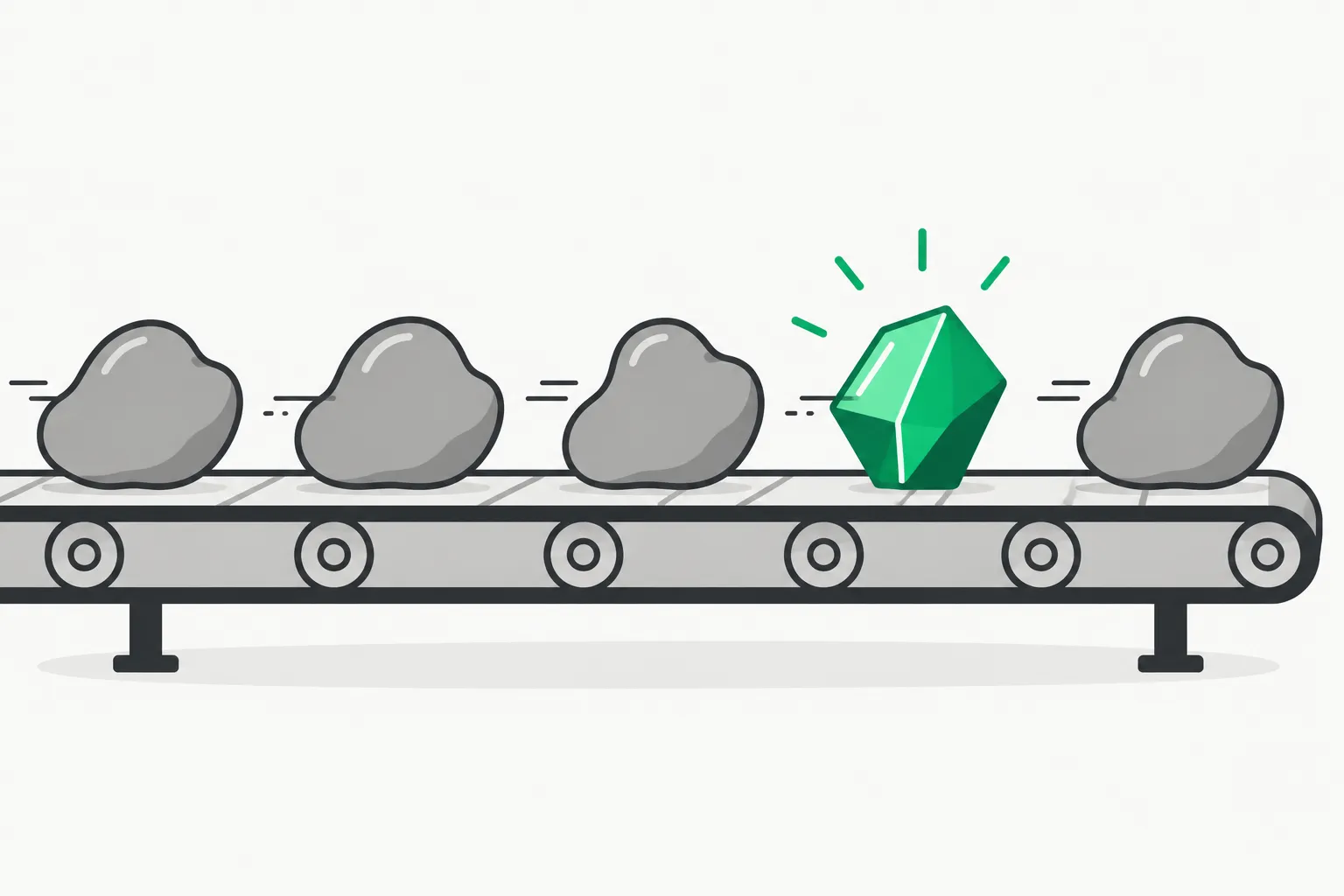 Identical gray blobs on a belt beside one green gem, picturing AI slop in an Instagram feed
Why is the backlash growing?
Mosseri's question was prompted by graduation season. In mid-May 2026, Fox Business reported that former Google CEO Eric Schmidt was booed at the University of Arizona commencement when his speech turned to AI, and other outlets described similar pushback at other schools. Treat the list of schools as reported rather than confirmed.
Mosseri's list of worries matches what shows up elsewhere in our coverage: training on creators' work, deepfakes, and jobs. Examples on explainx.ai include celebrity AI deepfakes on Instagram and platform likeness detection, the shift to model-ranked feeds in Facebook's "Your Algorithm" controls, and AI-made campaign ads that went undisclosed.
Timeline: how Instagram's stance developed in 2026
 Faint green pattern in the corner of a sheet, picturing the AI label Instagram requires on AI accounts
Pieced together from the reports above, the sequence looks like this:
- Earlier in 2026: Instagram launched a label for AI accounts, per The Verge.
- May 2026: commencement crowds boo AI boosterism, per Fox Business, setting the public mood Mosseri was later asked about.
- August 2026: Instagram begins cracking down on AI-generated profiles, per The Verge.
- Mid-October 2026: an artist complains that AI content replicates his work; Mosseri replies on Threads that he is "very worried" and that banning AI is not practical, per Social Media Today.
- October 19, 2026: in a weekly Q&A he says AI content is not throttled for being AI and that more labels are coming.
- October 28, 2026: on Colin and Samir he says Instagram is starting to require AI accounts to label themselves and that the negativity will get worse.
Read in order, the line moves from voluntary labels to required labels for AI accounts, while ranking stays origin-neutral. The open question is enforcement: a requirement to self-label only works if Instagram can detect accounts that skip it, and none of the sources describe how that will work. Until that is explained, treat the rule as a stated direction.
Is "probably not" a big admission?
It is a notable sentence from the person who runs the product. Saying Instagram probably does not rank AI content as well as other content concedes that the ranking models were trained mostly on human-made content and may misjudge quality in AI-heavy niches. He did not say AI is penalized, and he did not say it is boosted. He said quality may be uneven.
For creators, the practical meaning is that neither labeling AI nor hiding it is guaranteed to change reach, based on his statement that origin is not a ranking input. That is a claim from the company, not an audited fact. If you want to know, test: post comparable content with and without labels over several weeks and compare reach.
What should builders and creators do with this?
- Label proactively. If you publish AI-assisted work on Instagram, use the AI label where available. Mosseri says accounts will be required to label themselves, and voluntary tagging is being incentivized.
- Keep provenance. Keep original files, drafts and timestamps. Copyright claims are the tool Instagram currently points to, and proof of authorship speeds them up. Content credentials are covered in LinkedIn's Content Credentials rollout and Google's SynthID verification site.
- Do not assume a ban is coming. Mosseri says it is not practical. Plan for a feed where AI content is labeled and ranked on interest.
- Expect more friction. If his forecast is right, brands that use AI imagery will face audience pushback regardless of platform rules. Disclose, and make the human input visible.
- Report copies. Use impersonation and copyright reporting, and document repeated cases, since he says Instagram is still working out a better path.
What is confirmed and what is not
Confirmed by the published reports: the quotes above, the October 19 statements about not throttling AI content, and the August crackdown on AI-generated profiles as described by The Verge. Not confirmed: when exactly AI-account labeling becomes mandatory everywhere, how Instagram will detect unlabeled AI accounts, and any numbers on how AI content performs. We were also unable to access the full podcast during this write-up, so the quotes come from The Verge's transcript excerpts.
His forecast is a prediction, and predictions about public mood are weak evidence. Still, the direction matches what researchers and journalists have reported for months, and it matters because the people running distribution platforms are the ones who will have to set the rules.
Related reading
- Celebrity AI deepfakes on Instagram and likeness detection
- Facebook Your Algorithm: AI feed controls
- AI campaign ads and the undisclosed 220 ads
- LinkedIn Content Credentials for AI images
- Google SynthID verification website guide
- AI-generated posters, slop and prompting style
- Sources: The Verge and Social Media Today
Quotes and policies are accurate as of October 29, 2026 and may change.