Connect to Lark Base for seamless spreadsheet and database management, including data retrieval and field edits with sec
 by lark-base-team·
Enable Claude to query your database directly using natural language
Example: Ask 'Show me top 10 customers by revenue this month' and get SQL results instantly
Eliminate manual SQL writing for ad-hoc queries, get insights 10x faster
Generate complex reports and analytics without leaving conversation
Example: Analyze sales trends, cohort retention, user behavior patterns conversationally
Democratize data access—non-technical team members can query databases
Understand database structure, relationships, and data models
Example: 'Explain the user_orders table schema and its relationships'
Onboard engineers faster, explore unfamiliar databases efficiently
Run data quality queries to catch anomalies and inconsistencies
Example: Find duplicate records, missing values, orphaned foreign keys automatically
Maintain data integrity with less manual SQL work
Supabase MCP Server
Connect Supabase projects to AI with Supabase MCP Server. Standardize LLM communication for secure, efficient developmen
Airtable MCP Server
Airtable MCP Server: programmatically manage Airtable bases, tables, fields, and records via Claude Desktop or other MCP
SingleStore
Interact with SingleStore databases using natural language to run SQL queries, manage workspaces, create environments, a
Redash
Integrate Redash data visualization software for seamless natural language querying, dashboard creation, and data analys
AACT Clinical Trials
Integrate with AACT Clinical Trials for robust querying and analysis of large-scale clinical trial data for research and
Useful MCP listing: Lark Base is the kind of server we cite when onboarding engineers to host + tool permissions.
I recommend Lark Base for teams standardizing on MCP; the explainx.ai page compares cleanly with sibling servers.
I recommend Lark Base for teams standardizing on MCP; the explainx.ai page compares cleanly with sibling servers.
Lark Base reduced integration guesswork — categories and install configs on the listing matched the upstream repo.
Lark Base is among the better-indexed MCP projects we tried; the explainx.ai summary tracks the official description.
Strong directory entry: Lark Base surfaces stars and publisher context so we could sanity-check maintenance before adopting.
Strong directory entry: Lark Base surfaces stars and publisher context so we could sanity-check maintenance before adopting.
Lark Base is among the better-indexed MCP projects we tried; the explainx.ai summary tracks the official description.
Strong directory entry: Lark Base surfaces stars and publisher context so we could sanity-check maintenance before adopting.
Lark Base is among the better-indexed MCP projects we tried; the explainx.ai summary tracks the official description.
showing 1-10 of 53
Share your MCP server with the developer community
Select a client to integrate this server.
Claude Desktop configuration
{
  "mcpServers": {
    "base-mcp-server": {
      "command": "npx",
      "args": [
        "@lark-base-open/mcp-node-server",
        "-a",
        "appToken of base",
        "-p",
        "personalBaseToken of base"
      ]
    }
  }
}Connects to Lark Base (formerly Feishu Bitable) collaborative spreadsheets and databases to read, write, and manage data programmatically. Provides full CRUD operations on tables, fields, and records.
Lark Base is an official MCP server published by lark-base-team that provides AI assistants with tools and capabilities via the Model Context Protocol. Connect to Lark Base for seamless spreadsheet and database management, including data retrieval and field edits with sec It is categorized under databases. This server exposes 13 tools that AI clients can invoke during conversations and coding sessions.
You can install Lark Base in your AI client of choice. Use the install panel on this page to get one-click setup for Cursor, Claude Desktop, VS Code, and other MCP-compatible clients. This server runs locally on your machine via the stdio transport.
A Model Context Protocol server that provides read and write access to Feishu Base (飞书多维表格) databases. This server enables LLMs to inspect database schemas, then read and write records.
Make sure Node.js is installed on your machine.
Get the appToken and personalBaseToken for your base account.
Install the MCP server package globally using npm:
npm install -g @lark-base-open/mcp-node-server
In your MCP server configuration file, add the following:
{
  "mcpServers": {
    "base-mcp-server": {
      "command": "npx",
      "args": [
        "@lark-base-open/mcp-node-server",
        "-a",
        "appToken of base",
        "-p",
        "personalBaseToken of base"
      ]
    }
  }
}
Note: If you are using Claude, you will need to add the MCP configuration through the Developer option in the Claude client settings. You can access this in the Settings menu, and then add the MCP server details under the relevant section.
You need get two tokens before using this mcp server.
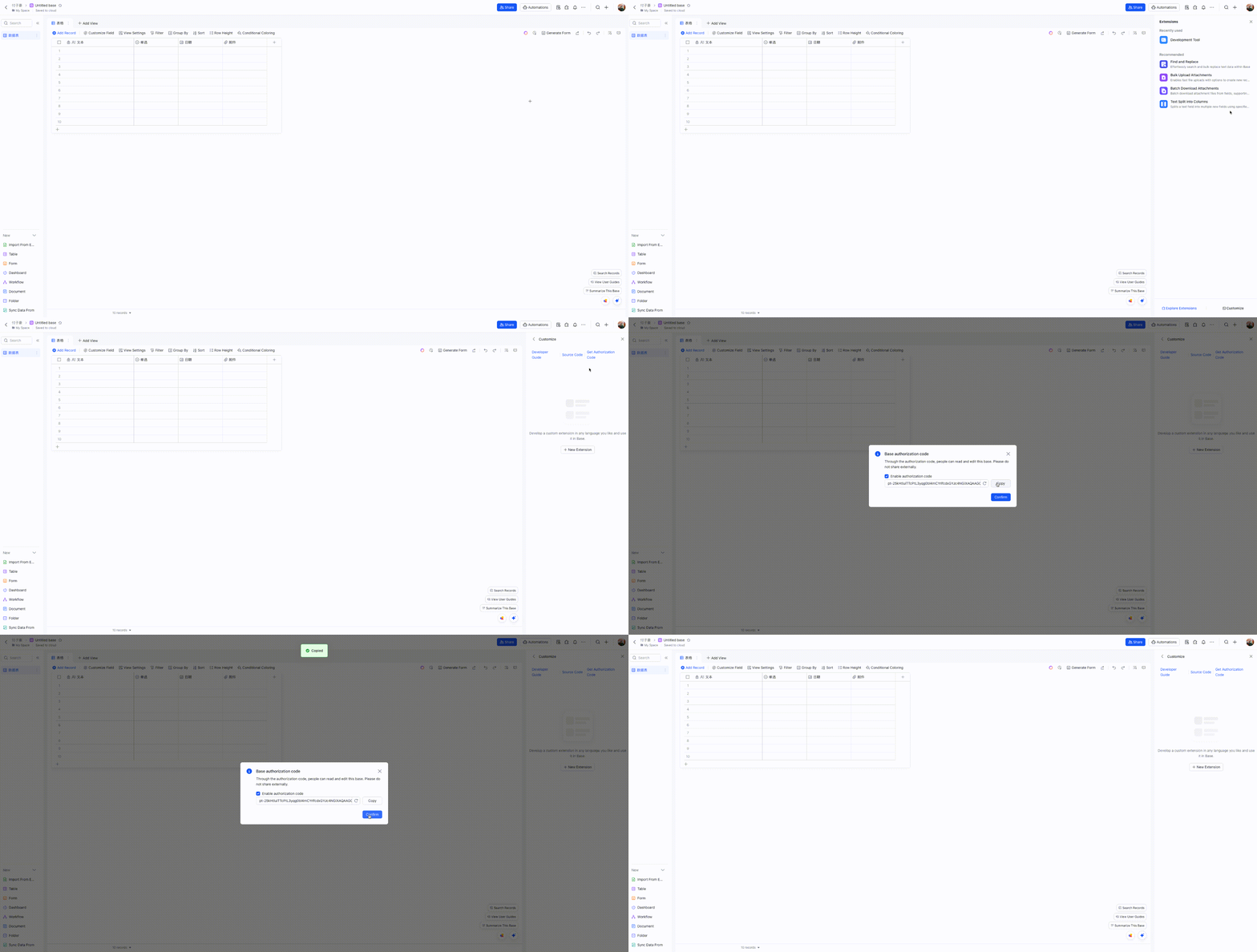
personalBaseToken: find Base Plugin UI in your base, and access Custom Plugin->Get Authorization Code
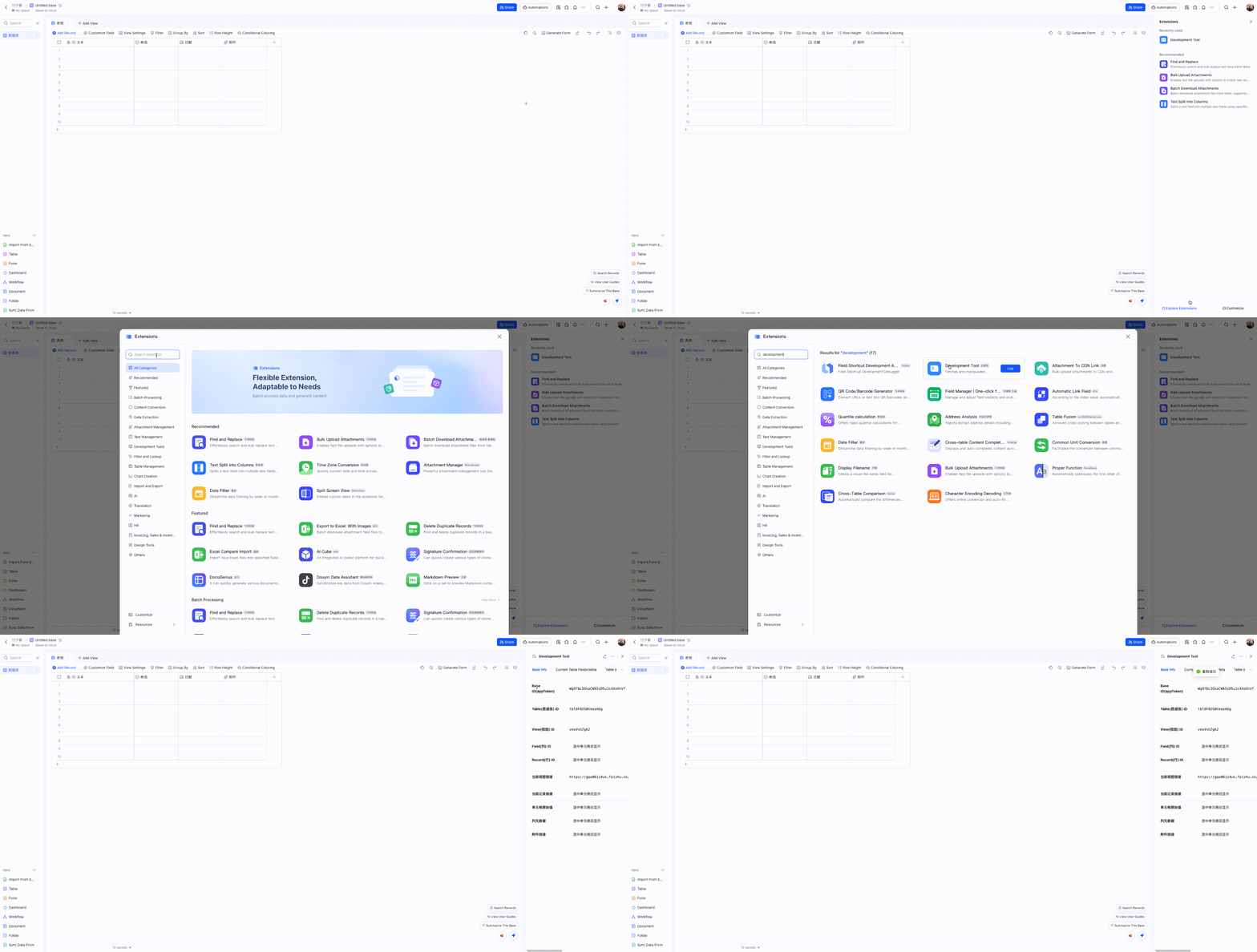
appToken: You can obtain the appToken quickly through a Developement Tool plugin. Here’s a simplified step-by-step process on how to do it:
list_tables
list_records
tableId (string, required): The ID of the table to queryget_record
tableId (string, required): The ID of the tablerecordId (string, required): The ID of the record to retrievecreate_record
tableId (string, required): The ID of the tablefields (object, required): The fields and values for the new recordupdate_record
tableId (string, required): The ID of the tablerecordId (string, required): The ID of the recordfields (object, required): The fields to update and their new valuesdelete_record
tableId (string, required): The ID of the tablerecordId (string, required): The ID of the record to deletecreate_table
name (string, required): Name of the new tablefields (array, required): Array of field definitions (name, type, description, options)update_table
tableId (string, required): The ID of the tablename (string, required): New name for the tabledelete_table
tableId (string, required): The ID of the table to deletelist_fields
tableId (string, required): The ID of the tablecreate_field
tableId (string, required): The ID of the tablenested (object, required): Field configuration object containing:
field (object, required): Field definition with name, type, and other propertiesupdate_field
tableId (string, required): The ID of the tablefieldId (string, required): The ID of the fieldnested (object, required): Updated field configurationdelete_field
tableId (string, required): The ID of the tablefieldId (string, required): The ID of the field to deleteTo get started with development:
npm installnpm dev to start the development servernpm test to run testsnpm buildAvailable scripts:
npm dev: Build and run the server in development modenpm start: Run the servernpm test: Run testsnpm test:watch: Run tests in watch modenpm lint: Run ESLintnpm build: Build the projectnpm build:watch: Watch for changes and rebuild automatically.
├── src/ # Source code
│ ├── index.ts # Main entry point(stdio)
│ ├── index.sse.ts # SSE entry point
│ ├── service/ # Service implementations
│ ├── types/ # TypeScript type definitions
│ ├── utils/ # Utility functions
│ └── test/ # Test files
├── dist/ # Compiled output
Main dependencies:
@lark-base-open/node-sdk: Feishu Base Node.js SDK@modelcontextprotocol/sdk: Model Context Protocol SDKexpress: Web frameworkzod: Schema validationMIT
Time estimate: 15-30 minutes including configuration and testing
Prerequisites
Steps
Troubleshooting
✓ Do
✗ Don't
💡 Pro Tips
Architecture
MCP server acts as bridge between Claude and database, translating natural language to SQL queries and returning results in structured format.
Protocols
Compatibility
✓ Use when
Use for ad-hoc data queries, exploratory analysis, report generation, schema exploration, and democratizing data access. Best for read-heavy analytics workloads.
✗ Avoid when
Avoid for production write operations, mission-critical transactions, real-time OLTP workloads, or when database contains sensitive PII without proper access controls. Use read replicas, not primary.



