



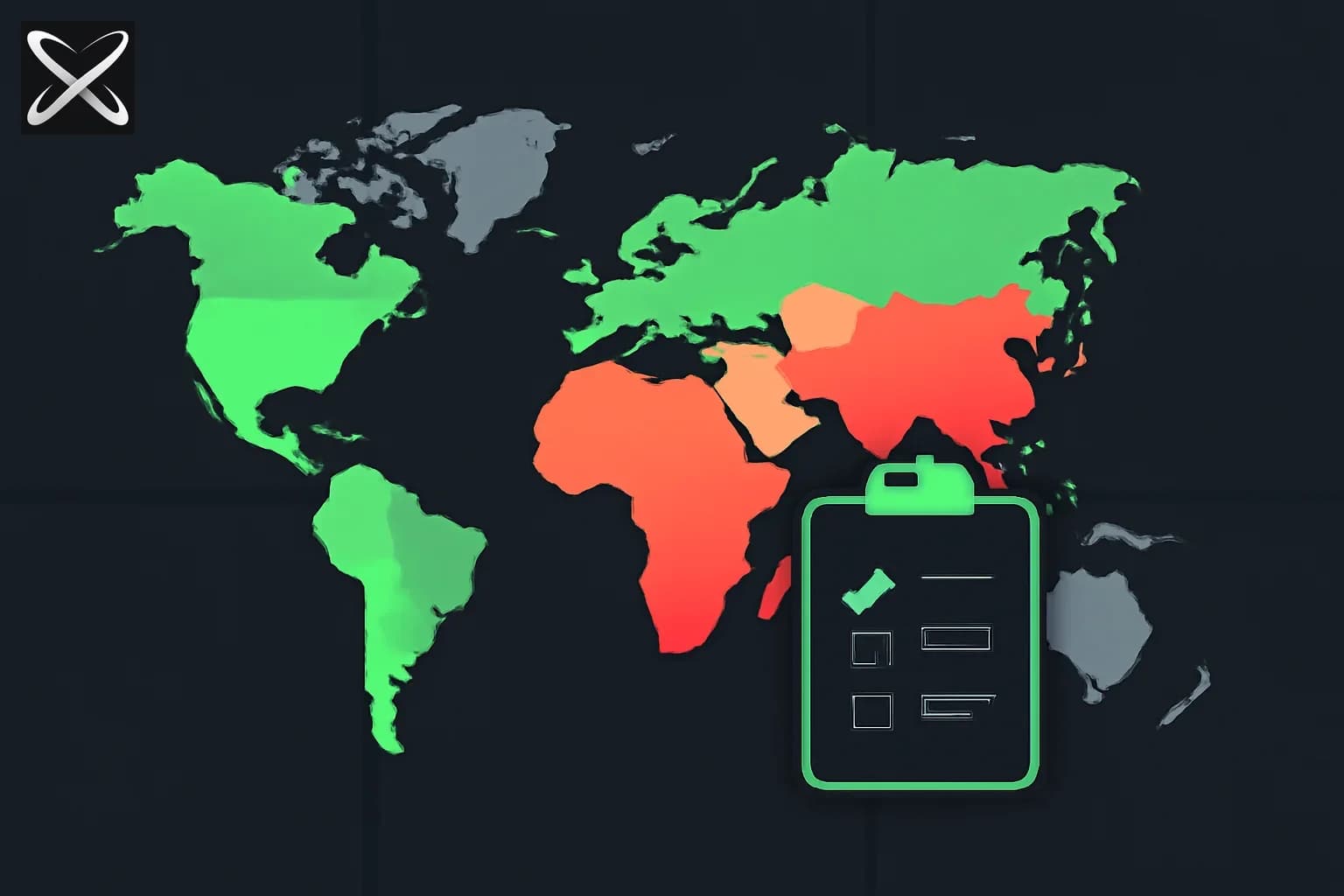
On August 25, 2026, UN Secretary-General António Guterres and ICRC President Mirjana Spoljaric renewed an urgent appeal: negotiate legally binding rules on lethal autonomous weapon systems (LAWS) before autonomous human targeting becomes normalized. Their line — "We are now dangerously close to crossing a moral red line: the autonomous targeting of humans by machines" — lands ahead of CCW Review Conference talks in November 2026 and amid unconfirmed reports of AI-guided drones on battlefields from Ukraine to Gaza.
Agent builders are not drafting weapons specs — but classification, escalation, and human-override design in your harness are the same policy fault lines Geneva is arguing over.
TL;DR — what people are asking
| Question | Direct answer |
|---|---|
| What's new today? | Renewed joint UN/ICRC appeal — Aug 25, 2026 |
| Core ask? | Start binding treaty negotiations now |
| Ban tier 1? | Unpredictable autonomous weapons |
| Ban tier 2? | Anti-personnel — systems targeting humans directly |
| Restrict tier? | Other LAWS — limits on targets, geography, duration, human control |
| Existing law enough? | IHL applies but ICRC says insufficient clarity for AWS |
| Next forum? | CCW Review Conference — November 2026, Geneva |
| Deployed anti-personnel LAWS? | Not confirmed at scale; preventive urgency |
The two-tier framework ICRC has been building
The ICRC advocacy paper ahead of the CCW Review Conference (updated through 2025–2026) proposes a two-tier instrument — not a ban on all military autonomy:
Prohibit:
- Unpredictable autonomous weapons — operators cannot understand, predict, or explain effects sufficiently to comply with IHL.
- Anti-personnel autonomous weapons — systems designed or used to attack humans directly (distinct from object-targeting systems common today).
Restrict (all other autonomous weapons):
- Target-type limits (e.g., constrain to situations without civilians present where feasible)
- Geographic, temporal, and scale caps
- Requirements for human supervision, timely intervention, deactivation, or self-neutralization
ICRC's December 2025 position paper stresses anti-personnel bans are most effective before such systems are widely developed — mirroring historical bans on blinding lasers and similar preemptive treaties.
Why distinction fails faster with autonomy
UN News and ICRC experts emphasize a battlefield reality coding agents echo in safer domains: state changes mid-task.
Laurent Gisel (ICRC arms unit) listed scenarios autonomous classifiers mishandle:
- Combatants surrender or become hors de combat
- Civilians enter the operational area after deployment
- Unanticipated configurations break training distributions
Replace "lethal force" with "delete production database" and you have the same alignment under distribution shift problem — which is why outer/inner alignment guides treat specification drift as engineering, not philosophy.
Connection to frontier AI policy explainx.ai already covers
Dario Amodei's policy essay proposed domestic bans on fully autonomous weapons while noting foreign-defence contexts differ — see Dario Amodei policy and exponential AI. OpenAI's Preparedness Framework elevates autonomous cyber against hardened systems to Critical — parallel escalation logic in a different domain (Astra cyber capability).
Anthropic's drone bench (Project Pilot) measured targeting reliability — explicitly not a deployment green light. Geneva's debate is whether deployment gets banned before benchmarks look "good enough" on paper.
What people are asking about enforcement
"Will a treaty stop bad actors?" — ICRC argues clarity helps law-abiding militaries and developers first — reducing legal risk and costly redesigns — while outliers remain a separate enforcement problem.
"Does this affect my coding agent?" — Indirectly via export controls, cloud AUPs, and defence-adjacent dataset sharing (UK-Ukraine Avengers access). Corporate buyers increasingly ask autonomy questions borrowed from LAWS language — human initiation, override latency, logging.
"How is this different from EU AI Act?" — EU AI Act targets civilian product risk tiers; CCW track is weapons-specific IHL. Both converge on human oversight language — see AI regulation EU vs US guide.
Honest limitations
- Battlefield drone claims in August 2026 reporting are unconfirmed — treat as urgency rhetoric, not verified order of battle.
- CCW consensus historically moves slowly; 128 states in GGE talks may settle non-binding text before binding protocol.
- US/China/Russia positions may block strong prohibitions — the appeal is norm-setting as much as immediate law.
- Anti-personnel definition drafting is contested — edge cases (human-on-the-loop vs in-the-loop) still unresolved in rolling text.
What this means for what you build or pay
If you ship perception + action loops — robotics, drones, security agents — document human initiation, stop conditions, and audit logs now; procurement templates will ask. If you ship pure software agents, expect refusal policies to cite autonomous-weapons adjacency for dual-use tooling — same channel as cyber guardrails debates.
Update — September 20, 2026: The accountability gap this post warned about surfaced concretely — a Pentagon probe reportedly blamed AI overreliance for a deadly strike, and Senate Democrats are now demanding a broader investigation into AI errors in US military targeting.
Related on explainx.ai
- Pentagon probe: AI overreliance and the Senate's demand for a broader investigation
- AI regulation — EU AI Act vs US policy complete guide
- Dario Amodei — autonomous weapons and civil liberties policy
- OpenAI Astra Critical cyber preparedness
- Anthropic Project Pilot drone bench
- UK-Ukraine battlefield AI data partnership
- Can governments ban AI models and tools?
- World Humanoid Robot Games — physical autonomy norms
- AI alignment introduction — outer vs inner goals
Sources: UN News (August 25, 2026), ICRC advocacy papers on autonomous weapon systems, Reuters Geneva GGE reporting (March 2026), The New Arab on the joint statement. Diplomatic timelines and treaty text status are accurate as of publication — verify CCW documents before citing in policy submissions.