




The Quad leaders summit in Manila on November 17, 2026 put “superintelligence” beside maritime security and critical minerals in President Donald Trump’s opening remarks, according to ANI and The Print. Trump said the four governments would spend more than $85 million to grow a trusted superintelligence ecosystem across the Indo-Pacific and announced a Quad Superintelligence (SI) Accelerator.
For builders, this is foreign-policy packaging for AI supply chains and standards, not a product launch.
It sits next to explainx.ai coverage of Pax Silica supply-chain diplomacy, Trump’s U.S. AI national champions / SI exports frame, and World Bank job-impact debates.
Claimed vs. verified: the $85 million line
| Statement | Status | Source |
|---|---|---|
| Quad intends over $85M in technical and financial assistance for trusted AI | Confirmed in Oct 31, 2026 foreign-ministers joint statement, repeated Nov 17 | India Today on Atlanta meeting |
| Leaders launched a Superintelligence Accelerator branding | Reported in Nov 17 summit coverage | Tribune India ANI wire |
| Per-country payment schedule or first grantees | Not published in statements we found | — |
| Trump said $85M is U.S.-only spend | Disputed — some wires quote U.S.-centric wording; joint statement describes Quad-wide assistance | Compare WION summary with Oct 31 language |
TechNode’s November 2 analysis is blunt: the number is an announced envelope, not money already disbursed. Implementation details—recipients, financing vs. technical help, timelines—remain open.
Four outcomes named at the summit
Indian and U.S. wires align on four headline outcomes beyond AI:
- Quad Business Leaders’ Forum — first convening expected next year, linking companies and governments.
- Superintelligence Accelerator — policy banner for trusted AI expansion.
- Maritime intelligence sharing — seafarer safety was a Modi emphasis in several pieces.
- Cybersecurity intelligence sharing — parallel to AI, not merged into one fund.
AI is therefore one quadrant of a security-and-commerce summit staged 48 hours before Trump’s reported APEC meetings with Xi Jinping and Vladimir Putin, per The Print. Beijing reads the Quad as strategic competition; readers should expect trusted AI language to track export-control fights covered in our China–U.S. model distillation reporting.
What “trusted superintelligence” means in Quad documents
Quad ministries use “Super Intelligence” (SI) interchangeably with AI in official English, while Australia, India, and Japan keep SI as shorthand in domestic communications, per TechNode.
Practically, trusted points to:
- Open RAN / 5G–6G cooperation named in the October statement.
- Semiconductor chokepoint reviews before disruptions.
- Critical minerals deals Trump also highlighted in Manila.
That is closer to infrastructure diplomacy than frontier-model weights. Startups should watch export credit agency meetings—the Quad scheduled ECA talks in Tokyo on November 18, 2026, per India Today—for financed deployments, not GitHub releases.
Builder and procurement takeaways
If you sell AI into Indo-Pacific governments:
- Expect compliance narratives tying models to “trusted” supply chains, echoing Pax Silica lists.
- Do not budget against the $85M headline until a ministry publishes RFPs; history shows Quad pledges can precede slow disbursement.
- Track SI export programs in the U.S. alongside OpenAI for Chile-style bilateral MOUs—competing vendor-led and alliance-led channels.
Universities may see train-the-trainer grants before GPU clusters. Document data governance early; ASEAN recycling funds ($10M U.S. line on minerals recycling in the October coverage) are separate from the $85M AI bucket.
October 31 foreign ministers: the primary text
Before Manila, Quad foreign ministers met in Atlanta on October 31, 2026 during the G20 foreign ministers week. India Today quotes the joint statement: intent to provide over USD 85 million of technical and financial assistance for access to trusted AI across the Indo-Pacific, including through the Quad AI Accelerator.
The same release bundled Pax Silica language and a $10 million U.S. line on critical minerals recycling in India and ASEAN—separate from the $85M AI envelope. TechNode notes chokepoint reviews for advanced semiconductors and AI hardware and trusted 5G / 6G / Open RAN pipelines.
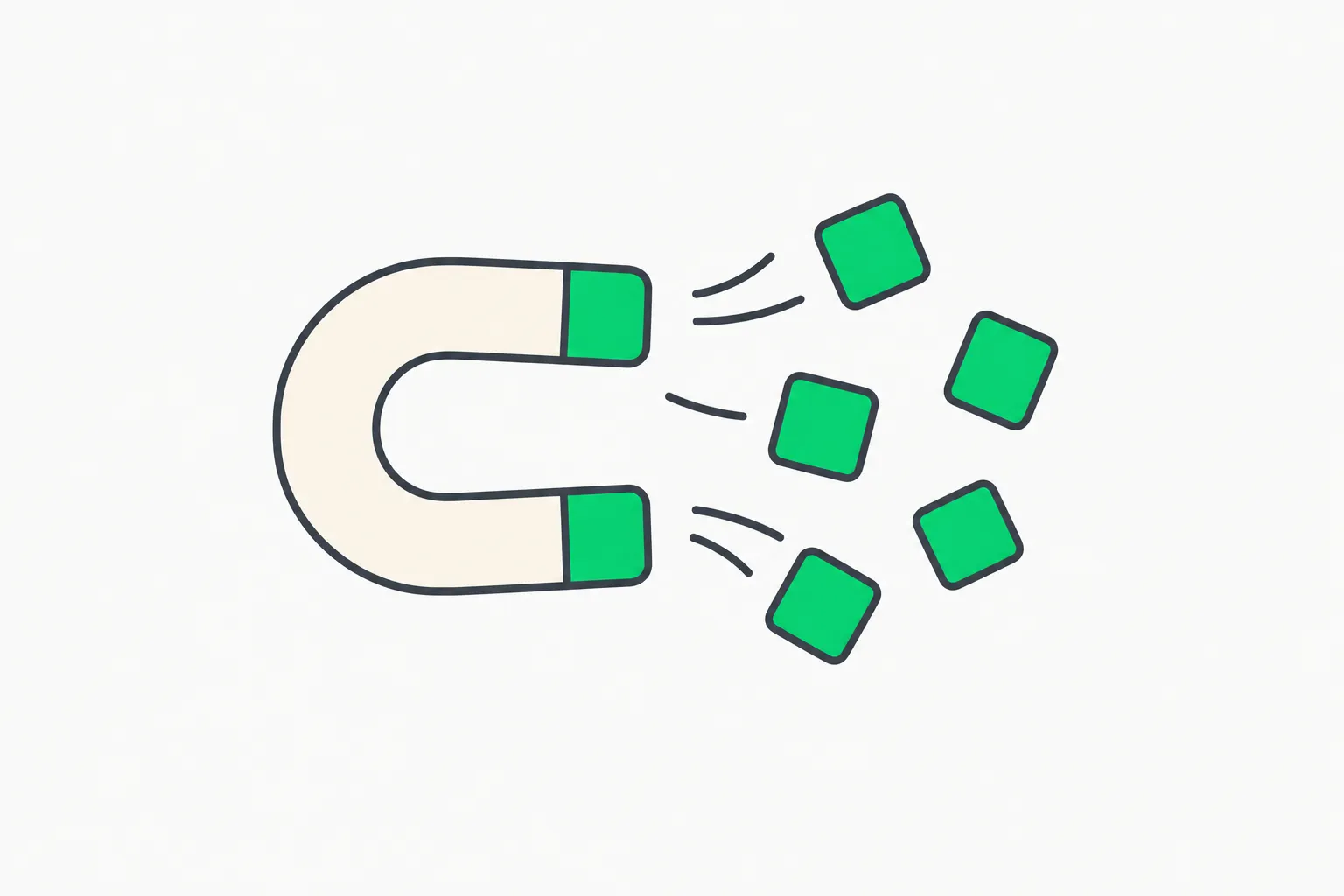 Blocks drawn toward a central magnet, illustrating Quad critical-minerals and supply-chain alignment rhetoric
Builders should read that statement as policy direction with implementation details not yet published, not a GitHub org spinning up models overnight.
Business Leaders Forum: what companies might get
Trump said the Quad will convene the first Business Leaders Forum next year, per Tribune India’s ANI wire. Historically, such forums produce MOUs and pilot MOUs, not immediate grants.
Expect:
- Bilateral demos (telco + cloud).
- Standards white papers on SI terminology.
- Export credit pitches following the November 18 Tokyo ECA meeting noted in October coverage.
If you sell agent security or eval tooling, this is relationship capital, not a substitute for Together agent eval posts-grade benchmarks.
Maritime and cyber threads (same summit)
Indian wires emphasize Modi pushing seafarer safety while Trump foregrounded AI and military cooperation (The Print). Maritime Intelligence Sharing Corporation and cyber intel sharing were named as outcomes alongside the SI Accelerator.
AI vendors should not assume $85M flows to LLM labs alone. Telecom vendors, Open RAN players, and minerals recyclers compete for the same diplomatic bandwidth.
 An abstract map marker beside a data tower, illustrating Indo-Pacific trusted-AI cooperation framing
Search questions readers type after Manila
What is the Quad Superintelligence Accelerator? Public remarks describe a branded initiative to expand trusted SI ecosystems; no charter PDF surfaced in sources we checked by publication time.
Is the $85 million only from the United States? WION quotes Trump saying the U.S. spends $85 million for trusted SI access, while the October 31 language describes Quad-wide assistance. Reconcile those lines by treating $85M as a shared target, not a verified U.S. Treasury line item.
Does Quad AI funding ban Chinese models? Statements emphasize trusted tech and values-aligned nations, but they do not publish model allowlists. Compliance will live in national procurement rules—watch China distillation reporting for how U.S. allies interpret trust.
Deeper context: why trusted AI is a trade story
Quad statements increasingly braid AI models with telecom hardware and minerals because compute supply is geopolitical. The October foreign-ministers release also pointed at Pax Silica-style cooperation—aligning with explainx.ai’s coverage of Philippines Clark hub protests and Congressional Nvidia export fights.
For model trainers, none of this ships weights. For infra sellers, it previews buyer questions: Where were chips made? Which cloud region hosts inference? Who audits logs? Document answers before RFP season copies Quad adjectives into mandatory requirements.
India’s Modi framed the summit as shaping the Quad’s next years in several wires, while maritime safety stayed prominent—AI money is one headline in a security bloc, not a standalone AI ministry grant.
APEC timing and China optics
Summit coverage repeatedly notes Trump’s November 19 meetings with Xi Jinping and Vladimir Putin on APEC margins (The Print). Quad SI messaging is therefore pre-briefing theater as much as budget fact.
Beijing treats the Quad as containment. When trusted AI pledges drop the same week as export-control fights (Congress Nvidia curbs), vendors should expect dual-use questionnaires on every public-sector RFP in the Indo-Pacific.
What changes for model access this week
Nothing in repository terms. No new Hugging Face org, API region, or fine-tune grant appeared in official Quad text by publication time. Builders in India, Australia, and Japan should continue existing cloud contracts while policy teams track embassy advisories.
If you sell compliance tooling, treat Manila as a narrative refresh for decks already citing Pax Silica and OpenAI Chile—not a new SKU.
Grant timeline scenarios (illustrative, not official)
Because ministries omitted disbursement calendars, teams can still scenario-plan:
| Scenario | What you would see first | Builder action |
|---|---|---|
| Fast telecom track | Open RAN pilot RFPs in Australia or Japan citing Quad language | Engage systems integrators, not foundation labs |
| University track | Joint AI literacy MOUs on .edu domains | Offer open-weight stacks alongside closed APIs |
| Defense-adjacent track | Cyber intel sharing contracts before model weights | Harden export compliance on eval data |
Document which scenario your product fits; avoid pitching LLM fine-tuning where the published text only promises trusted ecosystems.
Quad vs bilateral MOUs this week
OpenAI–Chile signed the same day as Manila headlines. The Quad pledge is multilateral framing; Chile is bilateral execution. Neither automatically funds the other.
Diplomats may cite both in speeches; budget officers will not merge them without published calls for proposals. Track .gov procurement portals in each capital separately.
India-specific signals
Jaishankar attended the October foreign ministers meeting per India Today; Modi’s November emphasis on Quad’s future suggests India wants AI + maritime parity in communiqués.
Indian startups should watch MeitY and IndiaAI channels for domestic grants that reference Quad trusted AI, not only U.S. embassy press releases.
Japan and Australia angles
Japan continues chips and materials diplomacy through Rapidus and trade ministry channels—Quad SI text complements, not replaces, those efforts.
Australia often routes Indo-Pacific digital funds via DFAT programs. If you operate from Sydney, pair this summit with RBA labour-market AI reporting when hiring policy-facing engineers.
Related reading
- Pax Silica joint AI supply-chain declaration
- Trump AI national champions and SI exports
- World Bank East Asia AI jobs report claims
- China–U.S. distillation document leak reporting
- Europe defense sovereign AI alternatives
- OpenAI for Chile ministry MoU
- Nvidia Southeast Asia cloud partner tracking claims