



Update — August 19, 2026: Paul Graham added an eleventh, verb-level tell the day after this list published — see Bonus: colorful verb inflation below.
Update — August 27, 2026: This checklist applied to a real shipped product — we ran the new Twitter launch page at twitter.new against these markers and found duplicate meta tags, one boilerplate sentence across three pages, and a CAPTCHA that is a 2.1-second animation. Read the full audit.
You don't need a detector to catch most AI-generated text. You need to know what to look for. Commercial tools like Pangram now sit inside Substack's publishing flow, and classical ML approaches using TF-IDF and SVM classifiers hit roughly 85% sentence-level accuracy on models they were trained on — but a careful human reader, working from a checklist, can flag a lot of AI-written text just by eye, for free, in the time it takes to read a paragraph.
This is that checklist. Ten patterns, ranked roughly by how often they show up and how reliably they distinguish AI output from human writing — with the honest caveat, repeated throughout, that every single one produces false positives on real human writers. Treat this as a "look closer" signal, not a verdict.
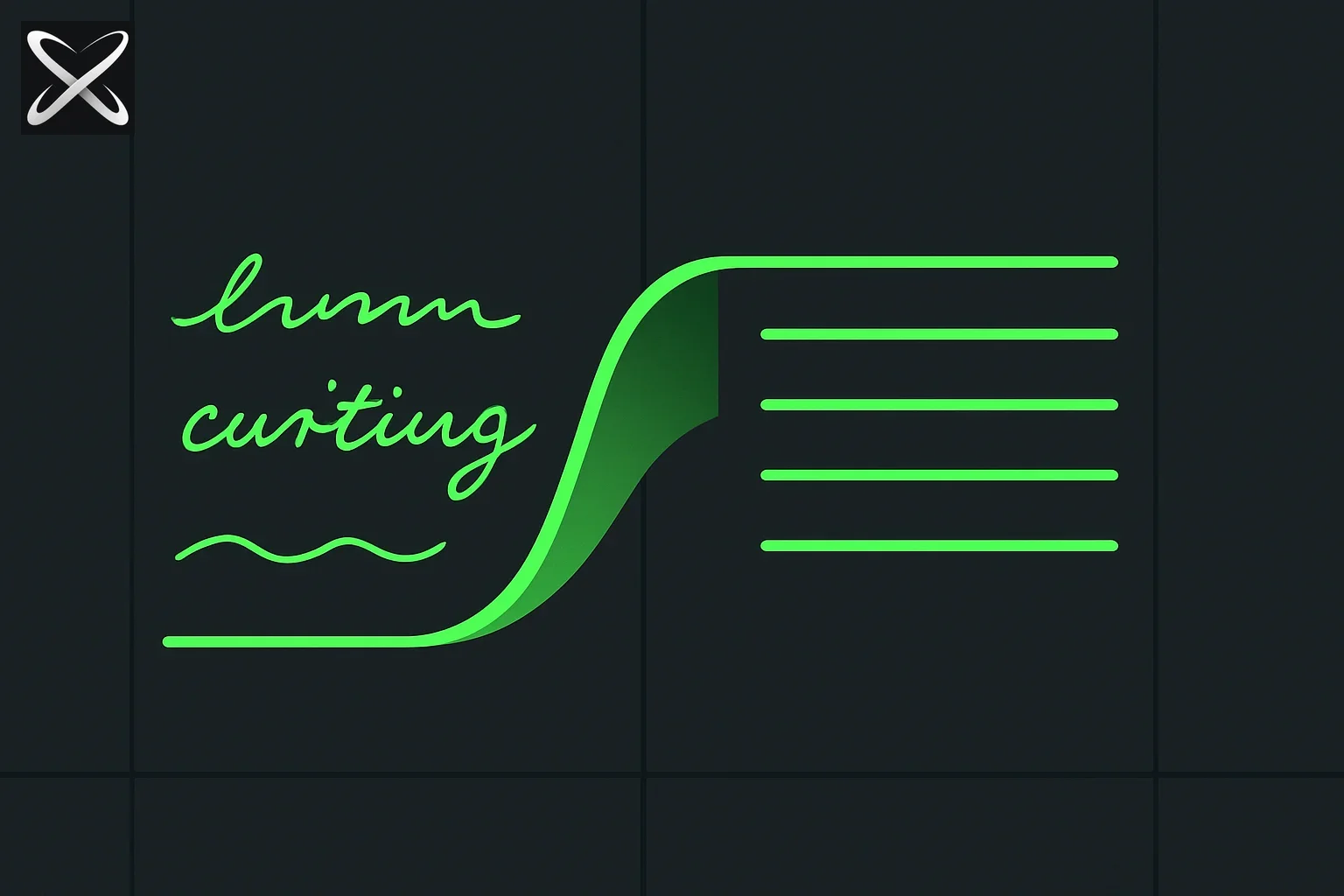 Handwritten text transforming into repetitive uniform printed lines, symbolizing signs of AI-generated writing
TL;DR — the 10 signs
| # | Sign | What to look for |
|---|---|---|
| 1 | Em dash overuse | Multiple em dashes per paragraph, often replacing commas or full stops |
| 2 | Word and phrase repetition | The same word, connector, or metaphor reused as connective tissue across paragraphs |
| 3 | Rule-of-three lists | Almost everything comes in groups of exactly three — three examples, three adjectives, three clauses |
| 4 | "It's not just X, it's Y" | The false-contrast construction, often stacked two or three times in one piece |
| 5 | Hedge stacking | "It's important to note," "it's worth mentioning," "that said" — piled up defensively |
| 6 | Suspiciously even rhythm | No sentence-length variation; every paragraph is the same shape and length |
| 7 | Zero typos, zero voice | Grammatically perfect but personality-free — no idiosyncrasy, no informal detours |
| 8 | Summary-then-restate structure | Opens by restating the question, closes by restating the answer, every time |
| 9 | Vague-specific mismatch | Confident, specific-sounding claims that don't actually cite a source or number |
| 10 | Buzzword clustering | "Delve," "tapestry," "landscape," "leverage," "robust," "seamless" — clustered together |
| 11 (bonus) | Colorful verb inflation | A dramatic verb where a plain one would do — "drew" instead of "got," plus softer/rounder word choices generally |
1. Em dash overuse
The em dash (—) is correct, elegant punctuation that good human writers have always used. The tell isn't the em dash itself — it's the density and consistency. ChatGPT, Claude, and Gemini all default to em dashes as a general-purpose connector, often in places a human editor would reach for a comma, a colon, a semicolon, or simply a full stop and a new sentence. When you see three or more em dashes in a short paragraph, doing three different grammatical jobs, that's the pattern — not any single instance.
This is common enough that it shows up as a punchline inside the AI industry itself: developers report prompting Claude Opus 5 directly to stop using em dashes as a specific, named style constraint, because asking generically for "better writing" doesn't suppress it.
2. Word and phrase repetition
AI models latch onto a word or phrase that worked well in one sentence and then reuse it as connective tissue for the rest of the piece, well past the point a human editor would reach for a synonym or restructure the sentence. Developer educator Matt Pocock named this specific pattern "seamslop" after watching Claude Opus 5 explain Buddhism by reusing the word "seam" relentlessly — technically correct and genuinely useful each time, but unmistakably mechanical once you notice the repetition.
The giveaway is usually a single word or short phrase — "unlock," "landscape," "journey," a specific metaphor — doing structural work across an entire piece instead of being used once, memorably, and left alone.
How to spot it fast: read the piece once quickly, then skim it a second time looking only at verbs and connecting phrases, ignoring content. If the same handful of words are doing the connective work in paragraph 1, paragraph 4, and the conclusion, that's the tell. Human writers vary their connectors even when they're being repetitive about content; AI models tend to lock onto a lexical choice and keep it.
3. Rule-of-three lists
Notice how often things arrive in exactly three: three benefits, three reasons, three adjectives in a row, three example sentences. Rule-of-three is a real rhetorical device — humans use it too, especially in speeches and marketing copy — but AI models default to it so consistently that a piece where everything is a triad, with no twos, fours, or single standalone points anywhere, reads as mechanical rather than intentional.
The tell isn't "does this piece contain a rule-of-three" (most good writing does, sometimes). It's "does every list, description, and argument in this piece land on exactly three," which is a much stronger and rarer pattern in genuine human writing.
4. "It's not just X, it's Y"
This construction — "it's not just a tool, it's a partner"; "this isn't a bug, it's a feature of how the system was designed" — is a real rhetorical device that shows up constantly in AI output because it reads as insightful while requiring very little actual information. One instance in a piece is unremarkable. Two or three instances of the same false-contrast shape, especially stacked within a few paragraphs of each other, is one of the more recognizable AI tells at this point — recognizable enough that it's become a meme in online writing-quality discourse independent of any specific model.
5. Hedge stacking
"It's worth noting that..." "It's important to remember..." "That said, however..." "Of course, this isn't the whole picture..." AI models reach for defensive hedges at a much higher rate than most human writers, often stacking two or three in a single paragraph, as a byproduct of training processes that reward answers sounding balanced and non-committal over answers taking a clear position.
The tell is density, again, not presence — a single "it's worth noting" is normal human writing. A paragraph that hedges at the start, middle, and end is not.
6. Suspiciously even rhythm
Real human writing has irregular sentence lengths — a punchy four-word sentence next to a winding thirty-word one, paragraph breaks that follow the idea rather than a template. AI-generated text tends toward metronomic evenness: every sentence in a similar length band, every paragraph roughly the same size, every section following an identical internal shape. Read a paragraph out loud. If it has the rhythm of a metronome rather than a person talking, that's worth a second look.
7. Zero typos, zero voice
Perfect grammar and spelling used to be a weak signal of careful human editing. In 2026 it's closer to neutral-to-suggestive of AI, because AI output is grammatically flawless by default in a way that's actually rarer in genuine first-draft human writing — most people leave in a comma splice, an inconsistent tense, or an informal aside somewhere. The stronger version of this tell isn't the absence of errors; it's the absence of voice — no personality, no informal detour, no sentence that only makes sense because a specific person with specific opinions wrote it.
8. Summary-then-restate structure
AI-generated explanatory writing has a strong structural habit: open by essentially restating the question ("When it comes to understanding X, there are several key factors to consider"), then close by restating the answer in slightly different words ("In summary, X is shaped by these several key factors"). Human writers, especially in casual or expert writing, tend to just start with the point. A piece that spends its first paragraph re-describing what it's about to describe, and its last paragraph re-describing what it just described, is showing a very AI-shaped skeleton.
9. Vague-specific mismatch
Watch for sentences that sound precise and confident but, on inspection, don't actually contain a checkable claim: "Studies show," "research indicates," "many experts agree," "in recent years, X has significantly increased" — phrased with the cadence of a citation but attached to nothing. This is one of the more consequential tells because it also predicts hallucination risk: AI models are fluent at producing statistically plausible-sounding claims regardless of whether a specific source backs them, which is part of why AI-generated content now makes up roughly 52% of new web articles while actual verifiable reporting has not scaled anywhere near that fast.
10. Buzzword clustering
"Delve," "tapestry," "landscape," "leverage," "robust," "seamless," "unlock," "elevate," "game-changer." Any one of these words is fine — they're real English words with legitimate uses. The tell is clustering: three or four of them showing up in the same paragraph, especially in contexts (a casual blog post, an internal Slack message, a personal email) where that register doesn't match how the ostensible author normally writes. Buzzword density is one of the oldest and most-mocked AI tells, which means models are also actively being trained away from the most obvious offenders — so treat a low buzzword count as weaker evidence of human authorship than it used to be, while a high one is still a decent tell.
Bonus: colorful verb inflation
A day after this list published, Paul Graham (@paulg) pointed out an eleventh tell that sits at the verb level rather than the noun/buzzword level (sign 10): AI writing tends to reach for a more colorful, dramatic verb where a plain one would do. His example — a proposal "drew" 100 votes, where a normal person would just say it "got" 100 votes. It's a small substitution, but it's consistent enough across a piece to be a real signal once you're looking for it: "delivered a keynote" instead of "gave a talk," "forged a partnership" instead of "made a deal," "unveiled" instead of "showed."
Replies to the post surfaced a related, slightly different pattern worth tracking separately: models also lean toward softer, "rounder" word choices — reaching for a gentler synonym before the plain or blunt one, one reply described it as models reaching for a word like "pebble" before "rock." The suggested explanation is that this is a side effect of RLHF training that rewards agreeable, non-confrontational, people-pleasing phrasing — the same underlying mechanism behind hedge stacking (sign 5), just showing up in word choice instead of sentence structure.
Two caveats from the same thread are worth carrying into how you use this tell. First, several replies pointed out this is genuinely hard for non-native English speakers to self-assess — one reply noted taking pride in "correct but non-natural grammar constructions," which is a real, separate phenomenon from AI-generated colorful verbs but can look similar to a skimming reader, echoing the ESL false-positive caveat already covered above. Second, at least one reply argued this may not be an AI tell at all so much as a normal-verbal-fluency trait some human writers already have — someone who's always favored vivid verbs got asked "what AI did you use" despite writing by hand, which is exactly the "several signs together, not one signal alone" caution this whole list leads with.
Why none of these are proof on their own
Every item on this list has real false positives. Writers trained in formal rhetoric or debate use rule-of-three and "it's not just X, it's Y" constructions deliberately. Non-native English speakers and ESL writers often produce grammatically flawless, hedge-heavy prose that has nothing to do with AI. Editors and technical writers cultivate even rhythm on purpose. This is the same limitation classical ML detectors run into — even a well-tuned TF-IDF and SVM pipeline reporting under 0.01% false positives on clean test data still misfires more often on formal, academic, or ESL prose than on casual native-English writing, and Substack's own Pangram-powered detector draws the same caveat directly into its UI.
The honest way to use this list is cumulative, not binary. One em dash and one hedge in an otherwise varied, specific, idiosyncratic piece is nothing. Six or seven of these ten patterns showing up together — even rhythm, rule-of-three everywhere, hedge stacking, zero voice, a restate-the-question opener — in the same short piece is a real signal worth acting on, whether that means asking a student to explain their sources, checking a job applicant's writing sample against their interview answers, or just reading a suspicious blog post more skeptically.
How labs are actively working against these tells
These patterns are not static, because they come from a training process labs can and do adjust. Anthropic's Claude Opus 5 picked up specific, recognizable phrases like "load-bearing" that developers now name and prompt against directly — see the full Claudisms inventory for how specific and traceable a single model's tics can get, and why naming the exact phrase to avoid works far better than a generic "write better" instruction. Once a tic becomes a widely-mocked meme (as heavy em-dash use and "delve" both have), labs have real incentive to train it out in the next model release — which means this list will need updating, and the buzzword-specific items (10) will age faster than the structural ones (3, 5, 6, 8) that are tied to the underlying RLHF objective rather than to specific vocabulary.
Related on explainx.ai
- What is AI slop? SEO, GEO, and content quality
- The Slopocalypse — how AI slop is swallowing the internet
- What is "seamslop"? Matt Pocock's AI writing tic
- Claude Opus 5's "load-bearing" Claudisms — the full inventory
- LLM text detection with classical ML — TF-IDF + SVM
- Substack's AI detector — how Pangram integration works
- AI dictionary: AI slop
- AI dictionary: hallucination
Patterns and examples in this guide reflect AI writing behavior observed across ChatGPT, Claude, and Gemini as of August 19, 2026. Model providers actively train against the most-mocked tics, so specific vocabulary examples will shift over time even as the underlying structural patterns persist. This is a practical reading checklist, not a certified detection method — never treat it as proof of AI authorship on its own.