



Short answer: Together AI's Post-Training service, launched October 19, 2026, lets you write the whole supervised fine-tuning (SFT) or reinforcement learning (RL) loop in your own code while Together runs the GPUs. For the first eight weeks it prices B200 time at $9 per GPU-hour, which Together's account says is down from $11, and it added MiniMax M3.1 Flash as a post-trainable model this week. If you already use the Tinker API, Together says migration is a one-line import change.
The price cut and new model were highlighted on October 29, which is why the story is trending. This post explains what you actually get, what the promo means, and how to judge the vendor's claims.
TL;DR
| Question | Answer |
|---|---|
| What is it? | A managed service for custom SFT and RL where you define the training loop |
| Price? | $9 per B200 GPU-hour for the first eight weeks (previously $11 in the promo, per Together) |
| Billing unit? | Per GPU-minute on dedicated Model Resources |
| Launch models? | Muse Spark Open, GLM 5.3, Kimi K3, Qwen 3.8-27B; MiniMax M3.1 Flash added |
| Training options? | LoRA (several adapters per GPU allocation) and full-weight for select models |
| Losses? | Cross-entropy, GRPO, CISPO, DPPO, or your own custom objective |
| Migration? | Swap the Tinker import for together.post_training.tinker |
| Customer proof? | Deel, Jack & Jill, Collinear AI, all in Together's own post |
How it works
Together's pitch is that post-training is no longer niche. Teams want specialist agents that match frontier quality on a narrow task at lower cost, and they want the resulting checkpoint to be theirs, deployable anywhere, including locally. The hard part is infrastructure: RL needs rollout generation, training, weight syncing and careful numerics, and a silent mismatch can sink a run.
The service is built around a few concepts, according to Together's post:
- Model Resources are GPU allocations that are "fully yours, not competing with others' requests for priority." Each can hold one or more Training Sessions, each a single experiment on the same base model, for example one set of LoRA adapters.
- A Trainer runs forward and backward passes and updates weights; Generators run rollouts from the policy. For SFT you can start a resource with zero generators to save money.
- You control the loop. You choose the data, environments and agent harness, decide when trainer weights go to the generators, and can add logging or external benchmarking at any step. Asynchronous RL is supported to keep both trainer and generators busy during long agentic rollouts.
- Losses. Standard ones include cross-entropy, GRPO, CISPO and DPPO, and you can compute a custom objective locally and send its gradients to the Trainer.
Together contrasts this with its earlier fine-tuning service, where the loop is fixed by the platform.
The $9 price in context
Together says the first eight weeks cost $9 per GPU-hour of B200 usage, and its X account describes that as down from $11. Billing is per GPU-minute on dedicated allocations. A few things to keep straight:
- The $9 rate is a promotion with a stated end after eight weeks. The blog post does not give the standard rate afterward, so budget with the pricing page, not the promo.
- Together argues that, thanks to multi-LoRA and dedicated serving optimizations, overall costs fall below token-based pricing as experiments scale. That is a vendor claim; compare it with your own run estimates.
- Several LoRA experiments can share one Model Resource, so a hyperparameter sweep does not need a separate GPU set for each setup.
A rough budget helps. One B200 running for a ten-hour experiment at the promo rate is $90; an eight-GPU allocation for the same ten hours is $720. RL runs with many rollouts can take longer, so size a pilot before committing.
Models, including MiniMax M3.1 Flash
The launch list in Together's blog is Muse Spark Open, GLM 5.3, Kimi K3 and Qwen 3.8-27B, with more models promised "in the coming weeks." Together's X account says MiniMax M3.1 Flash is now available for post-training too. If you track these models, we have background on Meta's Muse Spark Open on Apple hardware, Kimi K3 on Cerebras wafers, and a GLM 5.3 serving bug at Cloudflare.
SFT or RL: which one do you need?
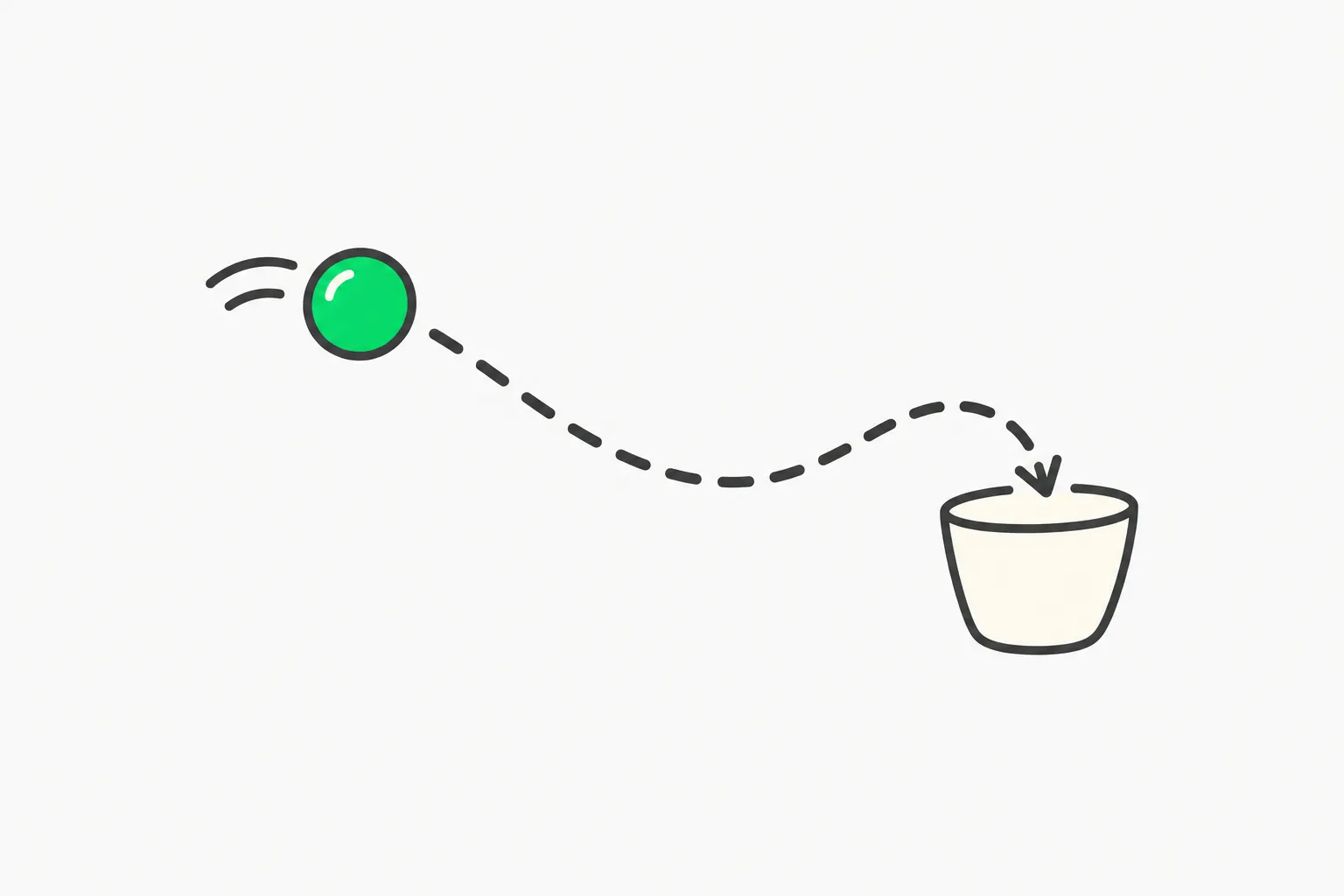 A green ball following a curved track toward a cup, illustrating reinforcement learning with Together Post-Training
Supervised fine-tuning teaches a model by example: you show input and the output you want, and the model imitates. It is the right tool when you have good labeled data, such as support transcripts with ideal answers or documents paired with extractions. It is cheap, stable and a fine first step.
Reinforcement learning teaches by outcome: the model attempts a task, an environment or reward function scores the attempt, and the policy improves. It shines for agents, where success is a passing test suite, a correct tool call or a completed workflow, and where there is no single right answer to imitate. It is also harder. Rewards can be gamed, rollouts are expensive, and small numerical differences between the training engine and the sampling engine can make a run unstable. That last issue is what Together says it targets with techniques such as Rollout Routing Replay, which keeps mixture-of-experts routing consistent between generation and training.
A common recipe is to start with SFT to get the format and basic behavior right, then apply RL to push task success. Because Together bills dedicated allocations per GPU-minute and lets SFT run with no generators, the first stage costs less than the second.
After training: serving the result
Together adds multi-LoRA adapter serving in Dedicated Model Inference so you can swap adapters on one GPU deployment instead of starting a separate deployment per run. It also says each checkpoint keeps its quality when converted for production, including a merged inference path in FP4 precision. That is a claim about numerical consistency between training and serving, which is a real source of RL failures; test it by comparing your eval scores before and after the conversion.
The Tinker migration
Together says that if you use a service like the Tinker API, you can replace one import line and leave the rest of the script alone:
-import tinker
+import together.post_training.tinker as tinker
It also provides a migration guide and a post-training cookbook on GitHub with examples for GRPO on GSM8K, DPO as a custom loss, and multiple LoRA adapters in one Model Resource. Treat the one-line change as a starting point: check that your loss functions, sampling parameters and checkpoint formats behave the same before running a long job.
What customers say, and how much to trust it
Together quotes three early users in its own announcement:
- Deel says it started real RL experiments within a couple of hours and ran up to five concurrent experiments on the same GPU capacity. Together's X account adds that Deel's Pangaea K1 model was trained on more than 43,500 pages of expert knowledge.
- Jack & Jill says it post-trained a model that predicts which candidates a hiring manager will want to meet, and matched a closed-source model's quality in offline evaluations using a cheaper open model.
- Collinear AI reports that self-onboarding made it easy to launch full-scale agentic RL runs.
These are testimonials in a vendor blog. None gives a public benchmark, a cost per run or a held-out evaluation. They show the service works for early adopters, not that you will get the same results. For a measured example of a small fine-tuned model beating a larger one on a narrow task, see our write-up of Samaya's Sterling on financial tasks.
Should you use it?
It fits if you have a task with a clear reward or good labeled data, you want to own the checkpoint, and you do not want to run RL infrastructure. It fits less well if you only need light tuning, in which case a simpler fine-tuning service or an in-house run on rented GPUs may be cheaper.
Questions to ask before you start:
- What is my reward or eval? RL without a trustworthy reward drifts. Build the evaluation first.
- What is my baseline? Measure the base open model and a closed model on your task so you know what improvement means.
- What does a full run cost? Pilot on a small model, extrapolate, and add margin for failed runs.
- Who owns the artifacts? Together says the checkpoint can be deployed anywhere. Confirm the license terms of the base model too.
- What is the exit plan? Keep your data and loop code portable so you can move to another provider.
If you are new to the topic, our guide to agentic RL with Microsoft's Agent Lightning shows the loop from the framework side, and the research on fine-tuning recovering removed safeguards is a reminder that anyone who fine-tunes an open model also takes on responsibility for its behavior.
Related reading
- Agent Lightning v1: harnessed agentic RL
- Samaya Sterling: small model, 11x cheaper
- Kimi K3 on Cerebras
- Muse Spark Open on Apple hardware
- GLM 5.3 KV cache leak at Cloudflare
- Fine-tuning recovers removed safeguards
Sources: Together Post-Training announcement, Together AI on X, post-training cookbook.
Prices and model availability are as of October 29, 2026. The $9 rate is a limited-time promotion; confirm current pricing with Together.