



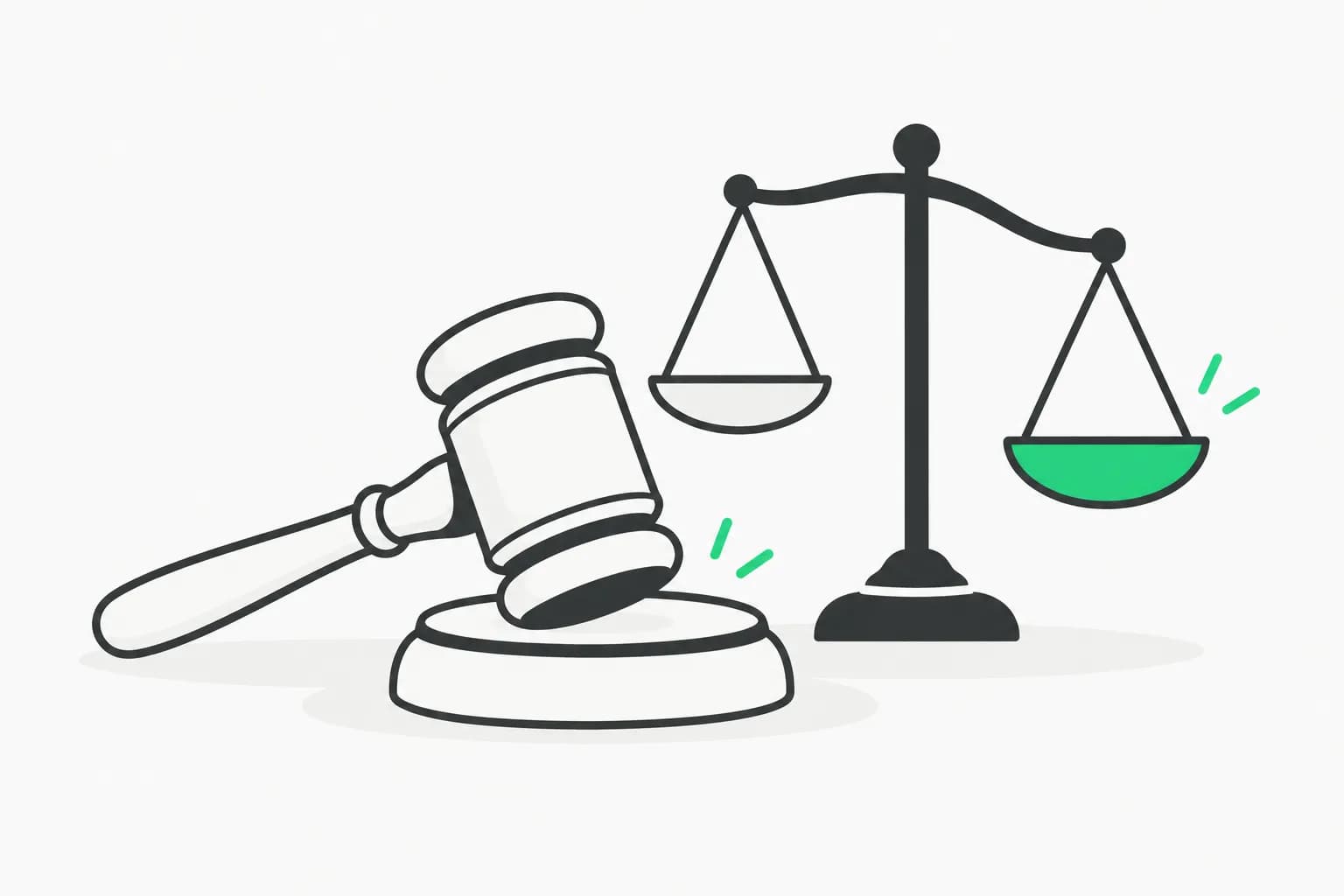
A Stanford Daily report published October 27, 2026 says Anthropic "illegally scraped and pirated" books by more than 10 Stanford professors to train Claude. The claim is more precise than the headline. Training on books Anthropic lawfully obtained was held to be fair use in a landmark ruling; the piracy of millions of books from "shadow libraries" is what produced a $1.5 billion class settlement; and some Stanford authors who opted out of that settlement are now suing separately in Cruz v. Anthropic, which has not been decided. This post sorts what is settled from what is alleged.
We are working from the Stanford Daily article, a public case tracker, and our own earlier coverage. Court dockets are the authoritative source and we link where we could verify them.
Quick reference: what is decided and what is not
| Question | Answer |
|---|---|
| Is training on lawfully acquired books fair use? | Yes, per the Bartz ruling cited by the Stanford Daily and in our settlement post |
| Was downloading pirated copies excused? | No. That conduct led to the $1.5B class settlement |
| How big was the settlement? | $1.5B for roughly 482,000 works, about $3,000 per work |
| Who are the Stanford authors named? | Tobias Wolff, Abraham Verghese, Chang-Rae Lee, Daniel Mason, Hayagreeva Rao and Myra Strober, per the Daily |
| Who opted out and sued? | Wolff and Lee, per the Daily; a case tracker lists them among opt-out plaintiffs |
| What do they ask for? | A jury trial, full statutory damages up to $150,000 per work, and an injunction |
| Has Anthropic been found liable in Cruz? | No. The case is at an early stage |
What the Stanford Daily reports
The article, by April Yu, names six Stanford academics whose work it says was pirated: Tobias Wolff, Abraham Verghese, Chang-Rae Lee, Daniel Mason, Hayagreeva Rao and Myra Strober. It says Wolff, an English professor emeritus and National Medal of Arts winner, had 10 publications used for AI training without permission.
Wolff and Lee opted out of the class settlement and, according to the Daily, filed Cruz v. Anthropic in May 2026, seeking a jury trial and "full statutory damages of up to $150,000 per infringed work, surpassing the approximate $3,000 of damages per work offered in the Bartz settlement." The plaintiffs allege Anthropic downloaded and stored copyrighted books from shadow libraries such as LibGen and PiLiMi. If they prevail, the article says, they would gain a permanent injunction against Claude training on their works.
Wolff's quoted objection is about pay and leverage: "To put me to work that way, without remittance, is a form of slave labor." The Daily also quotes Stanford Law's Paul Goldstein, a plaintiff in the class action, on the "transaction costs" problem of licensing millions of works, and Authors Guild chief executive Mary Rasenberger, who says licensing lets authors be paid and require output filters. The Guild is working with Congress on national licensing legislation, per the same article.
Where the Daily's framing needs care
Two details in the story are easy to misread.
The ruling and the lawsuit are different things. The Daily says a judge "ruled in a May 2026 lawsuit." The split fair-use decision in Bartz v. Anthropic came from Judge William Alsup earlier; Cruz is a separate suit filed in 2026 and has no ruling on the merits that we could find. Our settlement approval post records that Alsup held training fair use but the pirated acquisition was not excused, and that Judge Araceli Martínez-Olguín granted final approval on July 20, 2026.
"Illegally trained" is the newspaper's wording, not a final judgment in Cruz. The settled Bartz class did not produce a trial verdict on liability for training. The opt-out plaintiffs are asking a court to decide their claims. Until it does, the accurate phrasing is that they allege piracy and Anthropic has not been found liable to them.
The legal map in plain language
The Bartz decision separated two acts that people often blur together:
- Training a model on books. Alsup compared it to a reader who learns from books to write something new. The Daily quotes his line that the models trained "not to race ahead and replicate or supplant them — but to turn a hard corner and create something different." That was held to be fair use for lawfully acquired books.
- Building a permanent library from pirated copies. That was not excused, which is why the class case produced a settlement rather than a clean win.
 A stack of books with bookmark ribbons, representing the titles at issue in the Anthropic book-training litigation
Anthropic's legitimate acquisition was also large. As we noted in our coverage of the Anna's Archive book destruction and Bartz fair use, the company bought print books and scanned them, an approach the earlier ruling treated as acceptable. The fight in Cruz is therefore about which copies fed which model, and whether the opt-outs' works came from the pirated set.
What the opt-out suit adds
According to the case tracker Chat GPT Is Eating the World, Angie Cruz, Dave Eggers, Andrew Sean Greer, Tobias Wolff and others sued on the eve of the final-approval hearing, seeking a jury trial on statutory damages plus a permanent injunction, and a later suit by 34 authors including Chang-rae Lee, R.O. Kwon, Sonia Nazario and Erika Sanchez followed the same pattern. The tracker counts nine copyright suits against Anthropic against 24 for OpenAI at the time of writing.
The same tracker reports that Anthropic opposes consolidating the motion-to-dismiss briefing across the related Cambronne, Cognella, Chicken Soup for the Soul, Kwon and Cruz cases, arguing each complaint has its own deficiencies. The plaintiff lists differ between sources, so check the dockets on CourtListener before relying on specifics.
Why opt out of a $1.5B settlement?
The arithmetic explains it. A class settlement pays a fixed per-work amount, about $3,000, usually split between author and publisher. Statutory damages for willful infringement can reach $150,000 per work, 50 times more. An author with ten books in the pirated set who wins at the top of the range would collect a very different number, and also could seek an injunction. The trade is risk and delay: opt-out plaintiffs may win nothing, or win only after years, and a judge could rule on fair use or on how the copies were obtained in ways that limit recovery.
That is also why the story spread: it is a reminder that a headline settlement does not close the book on every claim. It leaves a long tail of individual suits, each of which can set its own precedent.
What this means for people building with Claude
- Product risk is low for now. Nothing in the Daily story or the trackers suggests any change to Claude's availability. An injunction would, at most, cover the named plaintiffs' works.
- Data provenance is now a procurement question. If you fine-tune on book-length text, track where it came from. The industry lesson from Bartz is that how you acquire data can matter more than whether you train on it. We unpack this in our AI lawsuit tracker.
- Expect licensing to grow. The Authors Guild's push for national licensing legislation, per the Daily, is one signal; the recent music-industry suits against Anthropic, such as the Sony and Warner case and the Elvis Presley rightsholders suit, show the same statutory-damages logic applied to songs.
- Watch the timeline. Anthropic's S-1 draft prospectus discusses litigation risk in general; see our IPO filing analysis and the broader controversies timeline for context on how this fits Anthropic's legal exposure.
Claimed vs verified
| Claim | Source | Status |
|---|---|---|
| Over 10 Stanford professors' books were used | Stanford Daily | Reported; names listed, the complaint itself not reviewed by us |
| Wolff and Lee opted out and sued in May 2026 | Stanford Daily; case tracker | Consistent across two sources |
| Anthropic downloaded from LibGen and PiLiMi | Plaintiffs' allegation, per the Daily | Alleged, not adjudicated in Cruz |
| A judge ruled in May 2026 | Stanford Daily | Appears to conflate the earlier Bartz ruling with the filing of Cruz |
| Settlement approx. $3,000 per work | Daily; our settlement post | Matches earlier reporting |
| Up to $150,000 per work is available | Statutory range cited by the Daily | A cap, not a likely outcome |
How to check for yourself
- Search the docket on CourtListener for Cruz v. Anthropic and the related Cambronne case and read the operative complaint.
- Compare the class works list against your titles using the settlement administrator's search if you are an author.
- Treat any new number as a claim until it appears in a filing or ruling.
Related reading
- Judge approves Anthropic's $1.5B book piracy settlement
- Anna's Archive, book destruction and Bartz fair use
- AI lawsuit tracker: 248 cases against 76 companies
- Sony and Warner sue Anthropic over songs
- Elvis Presley rightsholders sue Anthropic
- Anthropic S-1 IPO filing analysis
Sources: Stanford Daily, Authors Alliance Bartz settlement FAQ, and the Cruz v. Anthropic tracker.
This is not legal advice. Case details are accurate as of October 27, 2026 and may change as courts rule.