



OpenAI and LVMH Group’s Media Division signed a strategic partnership on November 16, 2026 that does two things at once: put ChatGPT Enterprise and custom newsroom tools into Groupe Les Echos–Le Parisien, and pipe cited excerpts and links from those outlets into ChatGPT answers. OpenAI’s announcement frames AI as research and operations support for journalists, not a replacement for reporting.
For builders, the deal is a template for how publisher orgs negotiate enterprise sandboxes plus distribution in the consumer bot—the same tension our readers watched in Washington Post voter-guide chatbot tests and OpenAI’s education EMEA partnerships.
TL;DR
| Question | Answer (OpenAI + LVMH, Nov 16, 2026) |
|---|---|
| Who signed | LVMH Media Division (CEO Michèle Benbunan) and OpenAI (EMEA MD Emmanuel Marill) |
| Internal tools | ChatGPT Enterprise + OpenAI stack for tailored newsroom apps |
| Reader surface | Summaries/excerpts in ChatGPT with source labels and links to originals |
| Example uses | Document research, comparison, preliminary translation |
| Scale | 17 brands, ~700 journalists, ~27M monthly reach in France (per release) |
| Editorial line | AI helps efficiency and personalization; journalists keep investigation and verification |
What LVMH’s media arm actually is
LVMH is known for luxury goods, but its media division is a separate publishing stack, which also owns L’Opinion and L’Agefi alongside Les Echos and Le Parisien. OpenAI describes Groupe Les Echos–Le Parisien with 1,800 employees, including nearly 700 journalists, reaching more than 27 million people in France every month.
Named brands in the release include Les Echos, Le Parisien, Challenges, Paris Match, L’Opinion, Investir, L’Agefi, Capital Finance, and specialty titles such as medici.tv and Mezzo. That matters for ChatGPT citation diversity: finance, regional news, culture, and sports titles may surface on different query clusters than a single national daily would.
The OpenAI post notes the news was first published by LVMH’s Media Division; builders auditing provenance should treat both the OpenAI index page and any publisher press room URL as paired primaries when they diverge on timing or quotes.
What OpenAI says newsrooms will do with AI
The joint language focuses on operational leverage, not auto-publishing:
- Document research — faster retrieval across archives and filings.
- Document comparison — side-by-side diffing for investigative follow-ups.
- Preliminary translation — draft passes human editors still own.
OpenAI repeats a line familiar from Codex for hardware teams: when AI handles repetitive synthesis, specialists spend more time on judgment-heavy work—in newsrooms, investigation, analysis, and field reporting.
The release also pitches personalization as a revenue lever: products that match readers and advertisers in a crowded information market. That is the same business logic behind Singapore Airlines’ Kris assistant APIs, but applied to subscriptions and ads instead of miles.
ChatGPT as a distribution channel with citations
The second pillar is outbound: content from the division’s publications will appear in ChatGPT as summaries and excerpts when user questions match, with sources identified and direct links to originals.
That is structurally similar to publisher licensing debates across the industry (OpenAI’s earlier Le Monde and Prisa Media deal also promised summaries with links to original articles), but OpenAI here ties it to a full Enterprise rollout and company-wide training, not a single-title experiment.
Builders shipping RAG over news should note what OpenAI promises publicly:
- Attribution — identify the publication behind an excerpt.
- Deep links — send users to the canonical article URL.
- Scope — “all the division’s publications,” not one flagship only.
What is not in the November 16 text: ranking weights, paywall handling, update cadence for breaking news, or revenue shares. Until OpenAI documents retrieval mechanics, treat surfacing as a black-box partnership channel and benchmark your own apps with explicit source cards.
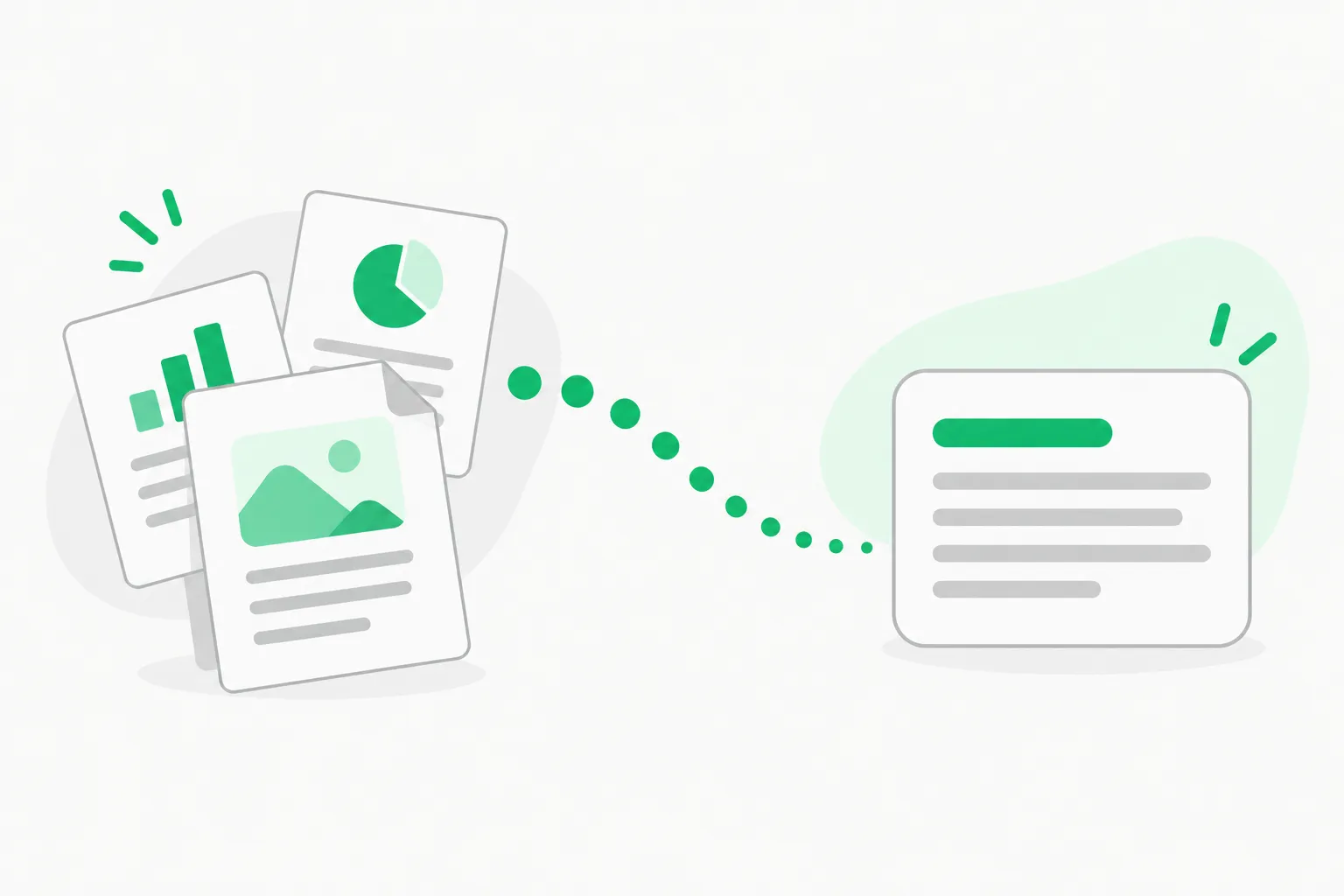 Source citation trail for ChatGPT answers that summarize licensed publisher journalism with outbound article links
Quotes from the CEOs (verbatim from OpenAI’s post)
Michèle Benbunan, CEO of LVMH Group’s Media Division:
“LVMH’s Media Division (Les Echos, Le Parisien, Challenges, Paris Match, L’Opinion, Investir, L’Agefi and others) and OpenAI are entering into a strategic partnership. This agreement will position our publications at the forefront of the media industry. Integrating AI will become an everyday asset for all our teams. We are delighted to embark on this journey with a partner whose expertise and reputation are recognised worldwide.”
Emmanuel Marill, Managing Director, EMEA at OpenAI:
“Quality journalism depends on the people who investigate, verify facts and help audiences make sense of information. We want to help put AI to work for everyone across LVMH’s Media Division, giving teams tools to explore their stories and develop new uses of AI. Our ambition is to help them spend more time on what makes their journalism valuable, while respecting their editorial independence. This partnership will also give ChatGPT users access to high-quality journalism that keeps pace with the news.”
Read those lines as positioning for regulators and newsroom unions, not as technical guarantees. “Editorial independence” is asserted; human-in-the-loop publishing workflows are implied but not diagrammed.
Enterprise journalism: what teams should configure first
If you run an internal newsroom agent program, the LVMH deal highlights three configuration layers OpenAI is selling together:
| Layer | LVMH use (per release) | Builder parallel |
|---|---|---|
| Workspace | ChatGPT Enterprise seats with admin controls | Same pattern as United Airlines’ third-party agent policy — govern who automates what |
| Apps | Custom tools on OpenAI stack for day-to-day tasks | Mirror with MCP connectors to CMS, DAM, and archive search |
| Distribution | Consumer ChatGPT cites publisher URLs | Only pursue if legal clears training vs. retrieval boundaries |
 Enterprise-scale rollout metaphor for division-wide ChatGPT Enterprise seats across LVMH media brands
Train journalists on failure modes you already document for agents: ChatMate-style remote execution risks are not journalism-specific, but document comparison on untrusted PDFs can still leak malware metadata.
How this fits OpenAI’s 2026 partnership map
November has been dense for OpenAI distribution deals:
- Education — ThinkYoung guidance-gap framing for schools.
- Travel — Singapore Airlines Jarvis APIs.
- Engineering — Astra/Codex hardware bench claims.
- Publishing — LVMH Media, November 16.
The through-line is enterprise workspaces plus consumer surfacing where the partner owns trust-heavy content. Media adds election- and finance-grade accountability expectations beyond consumer chat.
Compare with Google’s K-12 posture: Gemini off by default for students and parent protests over Classroom AI. Publishers, conversely, are opting in to frontier tools while insisting humans keep verification.
Risks readers and editors should track
Source diversity. If ChatGPT answers finance questions with Les Echos-heavy bundles, users may under-read competing wires unless the UI surfaces multiple publishers. Watch for regulator questions in the EU’s media pluralism frame.
Translation quality. “Preliminary translation” can accelerate breaking news, but idioms and legal terms still need bilingual editors. Do not ship auto-publish pipelines without human gates.
Security. Enterprise newsrooms are high-value targets. Pair OpenAI rollout with the same agent governance we recommend after Uber’s Fireworks breach: least-privilege API keys, no paste of anonymous tips into untrusted plugins.
Transparency. Users searching “what is enterprise journalism” usually mean long-form investigative pieces, not ChatGPT Enterprise. This deal is about the software SKU, but the naming collision will confuse readers—clarify in internal training docs.
What to do this week
- Publishers outside LVMH — benchmark your archive search latency against what Enterprise + custom apps promise; that is the pain point OpenAI sells.
- SEO and product teams — monitor whether ChatGPT begins citing your URLs on finance and Paris news queries; log referrer spikes from chat.openai.com if/when analytics expose them.
- Agent builders — if you syndicate LVMH content under license, do not assume this deal grants API rights to third-party scrapers; contracts stay bilateral.
- Educators — contrast this professional newsroom rollout with South Korea’s CSAT cheating crackdown: institutions pick radically different AI postures for credentialed tests vs. working journalists.
European media context and compliance checkpoints
LVMH’s portfolio is France-centric but covers finance wires (Les Echos, L’Agefi, Investir) and culture titles (Paris Match, medici.tv). Any ChatGPT surfacing layer must respect EU copyright implementation, press publishers’ rights, and GDPR on journalists’ prompts.
OpenAI’s release stresses editorial independence, but it does not publish:
- How paywalled Les Echos pieces appear in free ChatGPT tiers.
- Whether training on publisher archives is in scope or retrieval-only licensing.
- Which languages beyond French get citation cards first.
Legal teams should assume Enterprise logs are subject to newsroom source-protection policies. Configure retention windows and human review queues before investigators paste anonymous tip PDFs into ChatGPT threads—the same operational mistake class we flagged in ChatMate remote execution.
Training and change management inside Groupe Les Echos–Le Parisien
The announcement promises training tailored to everyone’s use cases across 1,800 staff. Successful rollouts usually sequence:
| Phase | Goal | Metric |
|---|---|---|
| Week 1–2 | Research assistants on archives | Median minutes saved per FOIA-style doc pull |
| Week 3–4 | Translation drafts with mandatory human edit | Words changed after AI draft (quality proxy) |
| Month 2 | Personalization experiments on newsletters | CTR lift with disclosure labels |
| Month 3+ | ChatGPT citation analytics | Referrers and conversion to subscriptions |
Avoid single-model mandates for breaking news: pairing OpenAI with existing CMS plugins reduces vendor lock-in when model pricing shifts or compute shortages hit APIs.
How this differs from election-cycle chatbot tests
Our Washington Post voter-guide audit measured consumer bots hallucinating ballot facts. The LVMH deal targets professional publishers with citation links, not generic voter Q&A.
The distinction matters for trust: cited journalism carries bylines and correction policies; raw chat completions do not. If ChatGPT surfaces LVMH excerpts, users should see publication name, date, and URL—the minimum bar OpenAI’s text already promises.
Election teams should still watch whether political queries pull L’Opinion opinion pieces versus wire-style Les Echos reporting, because opinion labels change reader interpretation.
Builder checklist for publisher + OpenAI stacks
- Separate Enterprise tenants per brand if firewalls require it—finance desks often do.
- Block paste of unpublished images containing embargoed market data.
- Instrument hallucination reports back to editors, not only to OpenAI support.
- Run red-team prompts on translation workflows; idioms break nuance in diplomacy and labor coverage.
- Document which stories opt out of ChatGPT surfacing; maintain an editorial registry.
Workshops and upskilling
Teams implementing newsroom agents benefit from structured AI workshops that cover prompt governance, source protection, and MCP connectors to archives—parallel skills to those in Google Stitch skills for coding agents.