



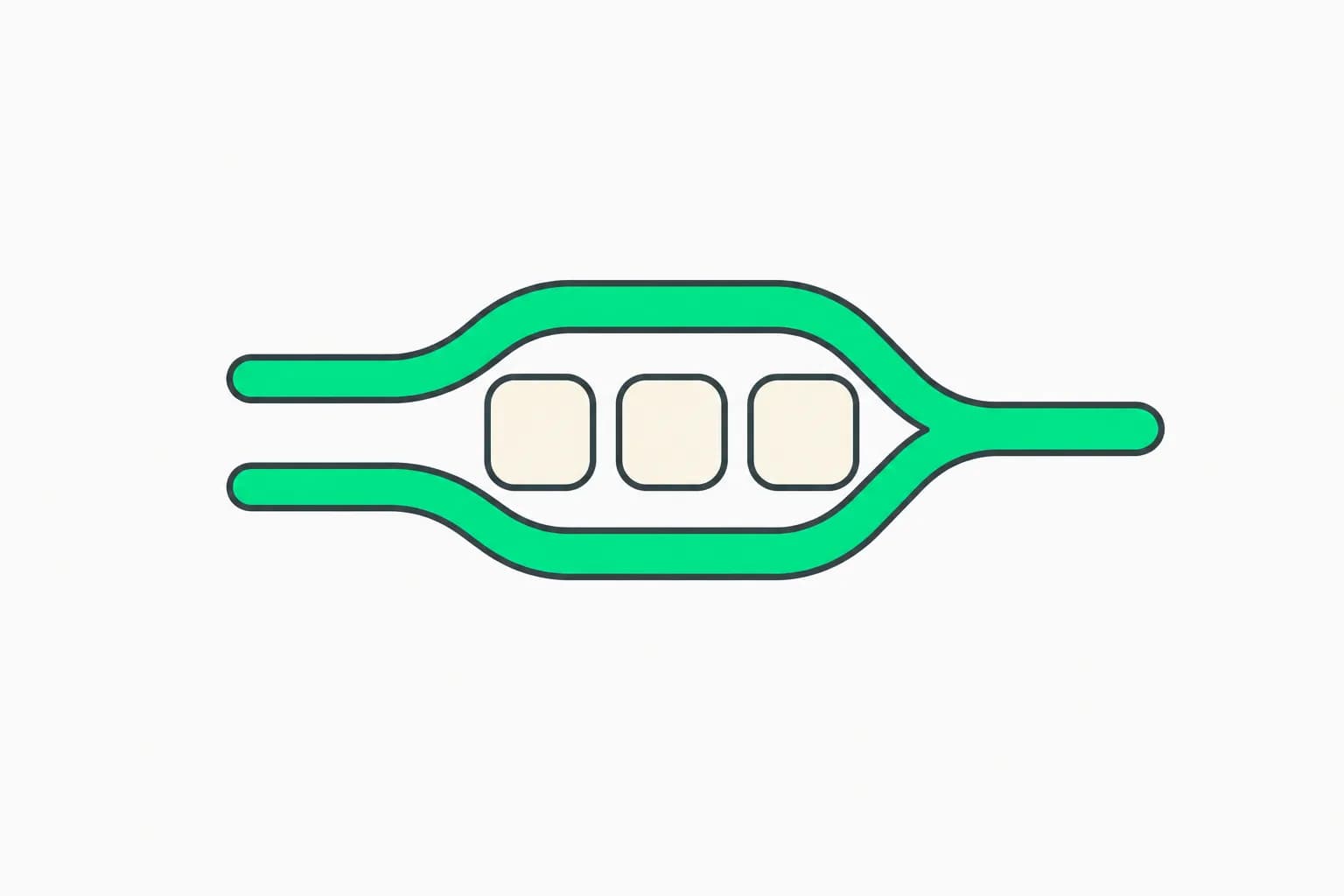
Researchers from the University of Illinois Urbana-Champaign, Cornell, Rice, and Michigan published Multi-Branch Transformer on November 15, 2026, introducing MBT: a layout that branches full Transformer blocks in parallel, fuses their outputs, and optionally shares KV caches across branches. On mixture-of-experts pretraining runs from 0.8B to 2.1B parameters, their Balanced MBT + Joint-KV recipe matches sequential Transformers that used up to 1.26× training compute, cuts full-model KV storage by up to 34%, and raises H200 decoding throughput by up to 51.4%.
If you tune vLLM clusters, watch SageMaker KV-aware routing, or read NVIDIA's sparse-attention co-design rules, MBT is another knob on where parameters live and how much KV you store per token. explainx.ai also tracks speculative decoding basics, prefix-cache agents, and Maxwell open MoE releases in the same scaling conversation.
Quick reference
| Topic | Paper claim (verify in arXiv PDF) |
|---|---|
| New axis | Parallel full blocks instead of only wider/deeper stacks |
| Variants | Wide-Shallow, Narrow-Deep, Balanced under matched compute |
| KV trick | Joint-KV shares one KV per depth across branches |
| Quality | Up to 1.26× compute equivalent vs standard Transformer loss |
| KV savings | Up to 34% less full-model KV cache |
| Throughput | Up to 51.4% higher decode on one H200 (64K in, 8 concurrent; see Figure 1 for 16K/64) |
| Code | github.com/GaotangLi/Multi-Branch-Transformer |
| Weights | Hugging Face collection |
Why branch whole blocks?
Transformer scaling usually means more layers or wider MLP/attention projections. MBT adds branching: several independent stacks of standard MoE blocks run concurrently after shared prelude layers, then a fusion step merges branch hidden states before coda layers decode tokens.
The paper argues this is orthogonal to:
- Within-block tricks such as multi-query attention patterns in PaLM-style designs
- System parallelism such as tensor or pipeline sharding
Think of MBT as choosing how many parallel transformation paths exist at a given depth budget—closer to MoE routing debates than to a single wider MLP.
 Parallel worktree branches metaphor for multi-branch transformer block stacks fusing after prelude layers
Three MBT shapes at matched training compute
Given a baseline Transformer budget, the authors define:
| Variant | What it preserves | Intuition |
|---|---|---|
| Wide-Shallow | Block width; splits depth across branches | More parallel shallow stacks |
| Narrow-Deep | Sequential depth per branch with thinner blocks | Tall narrow branches |
| Balanced | Mix of width and depth adjustments | Best validation loss in their ladder |
Across four MoE scales (0.8B–2.1B total parameters), two-branch Wide-Shallow MBTs beat sequential Transformers at matched parameter and training-compute budgets. Balanced MBTs improve further and stay stable as branches increase from 2 to 4.
Scaling-law fits in the paper say a standard Transformer needs ~1.23× compute to match the best two-branch Wide-Shallow model, and 1.16–1.26× to match Joint-KV Balanced recipes—headline numbers to treat as research fits, not vendor SLAs.
Joint-KV: sharing cache without sharing queries
Long-context serving pain often sits in the KV cache, not FLOPs. MBT's Independent-KV baseline keeps private caches per branch, multiplying memory. Joint-KV instead:
- Builds one shared KV tensor from all branch representations at each depth.
- Keeps separate queries per branch so branches still specialize.
With K branches, branch-region KV drops to about 1/K of Independent-KV at fixed depth—up to 34% less full-model KV in evaluated configs per the abstract.
That pairs conceptually with KV cache explainers and Rubin-era throughput claims we verify separately: architects are hunting any structured redundancy in caches.
Inference engine: why throughput gains are real
Architecture papers often stop at loss curves. This team ships an inference engine built on nano-vLLM that:
- Groups branches to cut sequential steps during decode
- Folds attention heads to reuse Joint-KV reads
Those systems choices drive the 51.4% throughput peak the authors report on a single H200 with 64K-token inputs and 8 concurrent requests; Figure 1 plots quality versus throughput at 16K inputs and 64 requests. Numbers will shift on different batch sizes and context lengths—profile before promising SLAs.
For operators, the actionable read is: if your stack already shards KV, MBT-style sharing may need custom kernels similar to how sparse attention indexers demanded fused Top-k paths.
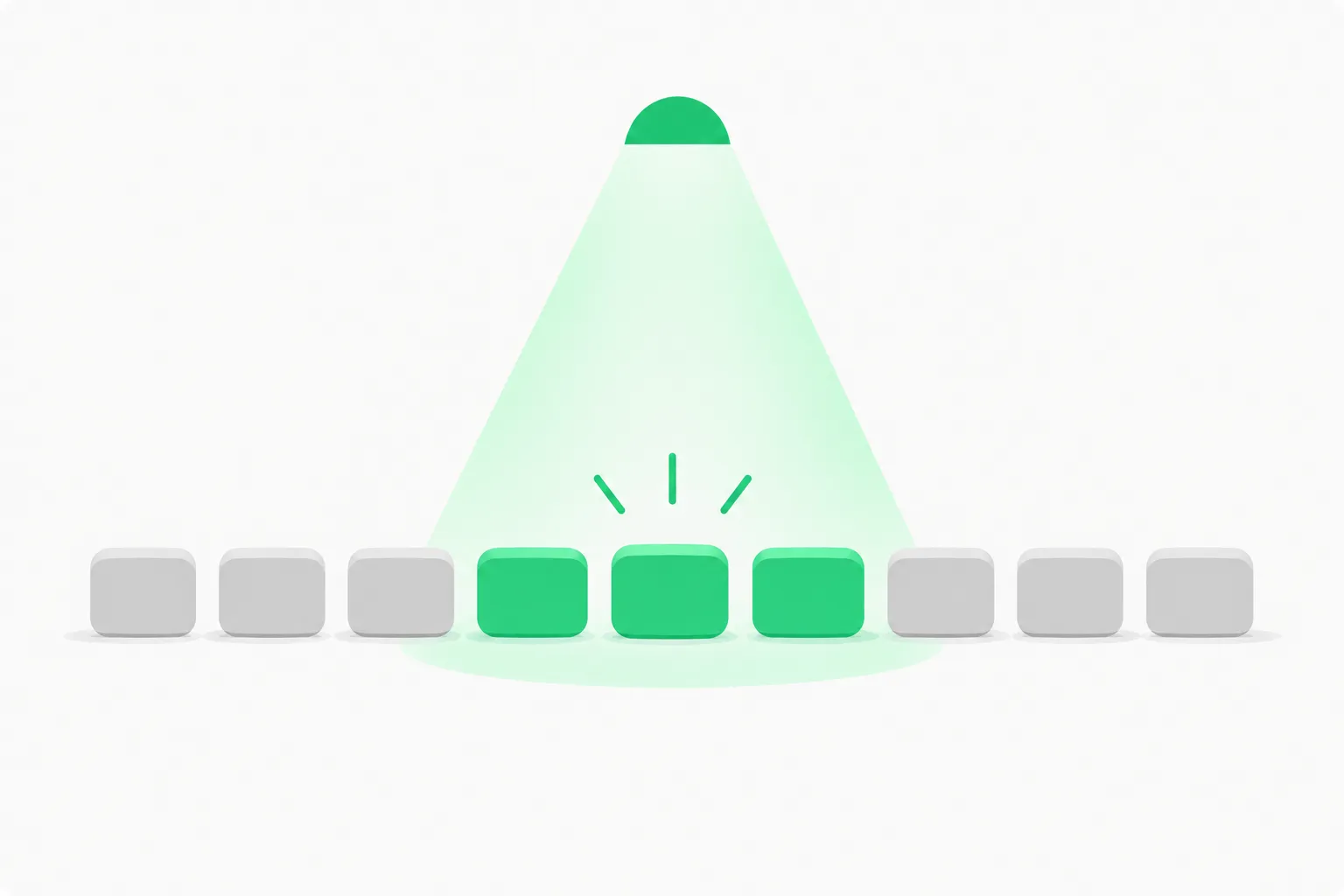 Attention spotlight on selected blocks illustrating Joint-KV cache sharing in multi-branch transformers
Ablations the paper highlights
Beyond headline scaling laws, the authors report:
- Branching gains persist when you control for width/depth-only adjustments—branching is not just renaming a wide model.
- Joint-KV beats Independent-KV at matched KV capacity on language modeling loss.
- Fusion function choice is robust across tested variants.
- Middle layers benefit most from branches—suggesting prelude/coda should stay shared while mid-stack splits.
Those ablations matter for builders asking where to insert parallelism without exploding activation memory on long prompts.
How to try MBT without overfitting to one GPU chart
- Clone the repo — github.com/GaotangLi/Multi-Branch-Transformer documents pretraining and the nano-vLLM inference hooks cited on the arXiv abstract page.
- Pull HF weights — the gaotang/multi-branch-transformer collection hosts checkpoints aligned with the paper's MoE ladder.
- Benchmark on your batch shape — the paper's H200 chart uses 64 requests and 16K inputs; agent workloads with fat system prompts may see different KV savings.
- Compare against your router — if you already run SageMaker KV-aware routing, measure whether Joint-KV plus routing beats either alone.
Prelude, branches, coda: naming the stacks
The paper borrows prelude and coda language from earlier parallel block literature: shared early layers stabilize token embeddings, branches execute MoE Transformer blocks with the usual attention + expert FFN pattern (Equation 1 in the PDF), and fusion combines branch hidden states before the shared decoder head.
For serving engineers, that means KV growth begins only after prelude ends—identical to how some early-fusion multimodal stacks treat vision towers, but here the split is replicated depth, not modality. If your observability stack already tags layer index, extend dashboards with branch id before you A/B test MBT checkpoints.
MoE details at 0.8B–2.1B scale
Experiments use mixture-of-experts blocks across a four-rung scaling ladder (authors label rungs W1–W4 in figures). Wide-Shallow allocations place roughly 79% of blocks into parallel branches while matching a sequential Transformer under parameter and FLOP budgets—a concrete knob when you negotiate expert counts with hardware teams.
Because experts already introduce conditional compute, branching adds another parallel dimension. Read this alongside Maxwell V1 Flash MoE releases and SageMaker KV-aware routing: MoE without cache planning still stalls agents even if per-token FLOPs look fine on paper.
Independent-KV vs Joint-KV: memory math
Independent-KV stores separate caches per branch at every depth where branches run—simple to implement, expensive at 64K contexts. Joint-KV merges branch representations into one KV tensor per depth while preserving per-branch queries, yielding the 1/K storage reduction cited in the abstract.
| Mode | KV footprint (branch region) | When to prototype |
|---|---|---|
| Independent-KV | ~K× single-branch cache | Debugging branch specialization |
| Joint-KV | ~1× shared cache | Long-context production decode |
The paper reports Joint-KV also improves validation loss versus Independent-KV at matched cache capacity—suggesting shared memory is not only cheaper but better inductive bias for their fusion recipe.
Throughput experiment setup (what to copy)
The headline 51.4% decode uplift uses:
- One NVIDIA H200
- 64K input tokens and 8 concurrent decode requests (stated in the paper introduction)
- Figure 1 separately charts perplexity versus throughput at 16K inputs and 64 concurrent requests across scales W1–W4
Before quoting that figure to leadership, rerun with your concurrency, your quantization, and your vLLM version. The authors credit nano-vLLM forks with branch grouping—stock vLLM will not reproduce the number without their engine changes listed on GitHub.
Comparison to other parallelism axes
| Technique | What runs in parallel | Interaction with MBT |
|---|---|---|
| Tensor parallelism | Shards within one matmul | Orthogonal; still needed at large width |
| Pipeline parallelism | Stages across devices | Stacks with prelude/coda |
| MBT branching | Full blocks per branch | Changes model graph, not only partition |
| Sparse attention | Subsets of keys per query | Complementary; see NVIDIA sparse guide |
Use the table in architecture reviews so MBT does not get dismissed as "just another TP trick."
Training versus inference takeaways
Training: Balanced MBTs buy better validation loss per flop in the paper's controlled pretraining—interesting if you train sovereign small models where every GPU hour is billed.
Inference: Joint-KV plus custom decode kernels buys throughput and KV headroom—interesting if you run many concurrent coding agents on one node (external sandboxes for agents already stress single-host concurrency).
Neither replaces quantization or speculative decoding; they change where parameters sit and how KV scales when depth is expressed as branches instead of serial blocks.
What MBT is not
- Not a product launch — no cloud API or hosted endpoint ships with the PDF.
- Not proven at 70B+ — experiments cap around 2.1B MoE totals in the scaling ladder.
- Not a replacement for sparse attention — NVIDIA's indexer-heavy sparse stacks attack different long-context bottlenecks; teams may combine ideas only after profiling.
Secondary mirroring: the Hugging Face papers page restates the abstract; cite arXiv and GitHub for reproduction.
Related reading
- NVIDIA sparse attention co-design
- What is KV cache
- vLLM vs SGLang
- SageMaker KV-aware routing
- Maxwell open MoE
- Together prefix cache for agents
Sources: arXiv:2611.19800; Multi-Branch-Transformer GitHub; Hugging Face collection.
Architecture names and benchmark settings follow arXiv v1 as of November 18, 2026.