




A screenshot is circulating that, if genuine, shows a creator brief for the Kimi K3.1 Pro launch telling promoters to get their drafts approved and not to put the paid-partnership label on their posts. As of October 25, 2026, the document has not been authenticated, nobody has said who wrote it, and the reports we found cite no response from Moonshot AI. That is the whole verified state of the allegation: a claim with a plausible shape and no confirmation.
This post separates three things that are getting mixed together in the discussion: what the screenshots allegedly say, what is independently verified about the model itself, and what a reader who builds with AI should do with both. Our launch coverage lives in the Kimi K3.1 Pro announcement post; this is the companion on the marketing controversy.
Quick reference: claimed vs. verified
| Question | Status |
|---|---|
| Did a brief tell creators not to use paid-partnership labels? | Claimed. Screenshots posted by X user Elshayib, reproduced by another account on Oct 24; not independently authenticated |
| Who wrote the brief (Moonshot, an agency, someone else)? | Unknown |
| Did anyone actually publish undisclosed paid posts under it? | Not established |
| Has Moonshot responded? | No response cited in VentureBeat, Pekingnology or RuntimeWire as of Oct 25 |
| Is Kimi K3.1 Pro a real, strong model? | Largely yes: Artificial Analysis scored it 55 on its Intelligence Index |
| Are the weights out? | No. Promised by Nov 4, 2026 |
What the screenshots allegedly say
According to VentureBeat's report, X user Elshayib posted screenshots he described as instructions for a Kimi promotional campaign, and said he declined to take part on those terms. The brief reportedly required creators to submit drafts for approval and included the line "Please DO NOT put on the paid partnership label."
Pekingnology's write-up adds detail on the alleged instructions: creators were also told not to link to Kimi's website or tag its official account. Suggested talking points reportedly framed Kimi as an open-source equivalent of Claude Opus 5.5 at roughly one-fifth the price, with lines such as "China just made Opus 5.5 free to use for everyone." RuntimeWire says the allegation was posted on October 24 by the account @0xLogicrw, reproducing material attributed to Elshayib.
Pekingnology reports that the German commentator @kimmonismus criticised the practice and said his own Kimi coverage was not paid. We have not independently verified that either.
What we could not confirm
- Authenticity. All three outlets say the screenshots are unauthenticated. Images of documents are easy to fabricate or alter.
- The issuer. An in-house team, an outside agency, or a third party could have written it. If a contractor wrote it, the question of what Moonshot knew is different.
- Scale. How many creators received it, and whether any published paid posts without disclosure, is not established.
- Response. We found no statement from Moonshot in any of the three reports.
A Chinese-language report on the story from theblockbeats was reported by Pekingnology to be inaccessible; Pekingnology says there is no evidence Moonshot was involved in that or that it was deliberately removed.
Why the disclosure label matters
Paying creators is normal in tech marketing. The concern, as VentureBeat frames it, is the combination of tight editorial control and concealing the commercial relationship. X's policy requires paid-partnership disclosure on qualifying posts, and US FTC guidance calls for clear disclosure of material connections between endorsers and brands, including payments or free products. VentureBeat says the alleged instruction would violate various US laws and probably those of other countries. That is the outlet's reading, not a legal finding, and it applies only if the document is real and was acted on.
Pekingnology argues a cultural dimension: paid, company-reviewed content is common in Chinese media and social platforms and rarely disclosed to readers, so a team used to that environment might assume it travels abroad. That is the article's interpretation, offered without evidence about this specific campaign.
For readers, the practical point is simple. When a model launch is accompanied by a wave of enthusiastic posts that all use the same comparison ("Opus-class at a fraction of the price"), the sameness is a signal to look for primary data rather than a reason to dismiss the model.
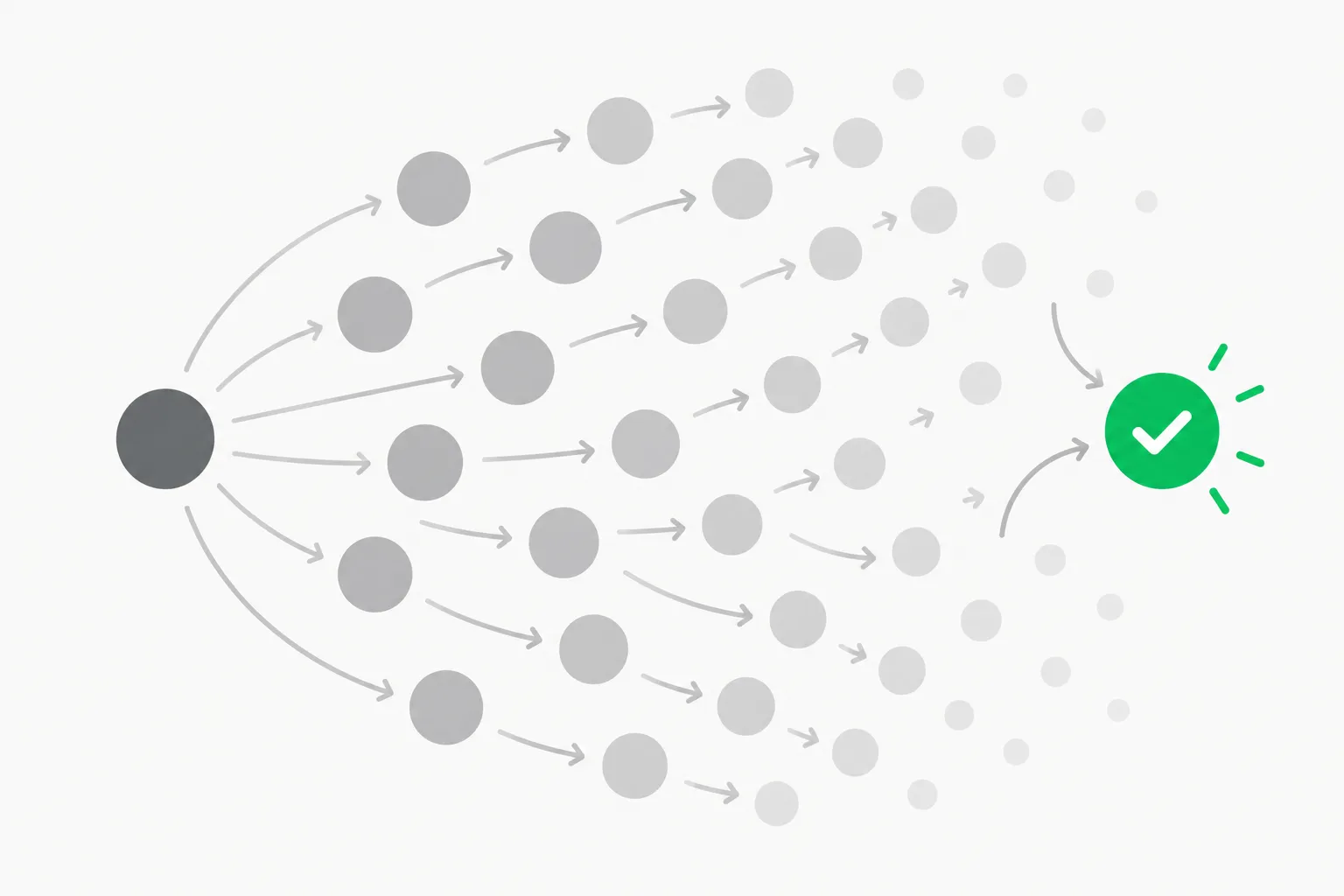 Illustration of one unverified claim spreading as many copies, with one checked dot resisting, representing the Kimi K3.1 Pro influencer allegation
What is independently verified about the model
The influencer story landed on a launch with real, checkable substance. Moonshot released Kimi K3.1 Pro and a faster Highspeed variant on October 23, per its launch post. VentureBeat reproduces Artificial Analysis results comparing it with Kimi K3:
| Evaluation (Artificial Analysis) | Kimi K3 | Kimi K3.1 Pro |
|---|---|---|
| Intelligence Index | 44 | 55 (fourth overall) |
| Terminal-Bench 4.0 | 13% | 67% |
| CyberGym-E2E-AA | 58% | 95% |
| Cyber Index | 41% | 64% |
| AutomationBench-AA | 58% | 73% |
| GDPval-AA (Elo) | 1,534 | 1,846 |
| Humanity's Last Exam | 47% | 52% |
VentureBeat notes that Claude Opus 5.5 still leads on Humanity's Last Exam (61%) and CritPt (32%) in Artificial Analysis's Kimi-versus-Opus comparison. In other words, the independent data supports "very strong open-weight-class model" and does not support "Opus 5.5 for free."
Moonshot's own table
Moonshot's published comparison, as relayed by VentureBeat, shows mixed results against Claude Opus 5.5 and GPT-6 Astra:
| Benchmark | K3.1 Pro | Claude Opus 5.5 | GPT-6 Astra |
|---|---|---|---|
| SWE-Marathon | 51.7 | 46.3 | 42.5 |
| OfficeQA Pro v2 | 64.4 | 62.2 | 54.4 |
| BenchCAD with tools | 92.7 | 96.2 | 95.9 |
| Terminal-Bench Science 0.1 | 38.1 | 63.3 | 68.1 |
| Terminal-Bench 4.0 | 65.7 | 66.4 | 58.2 |
VentureBeat points out that these combine Moonshot's own testing with externally reported scores, so they are not a controlled head-to-head trial. The Terminal-Bench Science row, where Kimi trails clearly, is a useful reminder that the "matches Opus" framing is selective.
Open numbers that still do not reconcile
Independent reporting has also flagged inconsistencies in Moonshot's own documents. Implicator.ai notes the claim-level hallucination rate is 8.3% in the launch blog (down from 23.4% for K3) but 6.85% in the API quickstart (down from 23.35%), drawn from different test sets. Both documents say the figures do not represent real-world error rates, and the article does not establish which is right.
The same piece covers the cybersecurity claim: Moonshot says it removed cyber-related data from mid-training and RL environments, and on its in-house xdev-bench-hard the released model solves 81.0% versus 90.5% for an unfiltered build. That benchmark is unpublished, so outsiders cannot check it, and no external adversarial testing has been reported. Meanwhile Artificial Analysis gives the model a 64% Cyber Index, which sits awkwardly beside the claim that cyber ability was cut. For the policy angle on that tension, see our post on AI cyber guardrails that block defenders.
The geopolitical backdrop
The timing matters because Moonshot is already under US scrutiny. In July, White House science adviser Michael Kratsios accused the company of using Anthropic technology to develop Kimi K3, and Treasury Secretary Scott Bessent raised the possibility of sanctions, per Pekingnology. Moonshot disputes it, and independent researchers have questioned whether distillation explains Kimi's gains. We covered the thread in the White House distillation post and the later detention rumor and distillation theory.
A marketing scandal in that environment is not a small footnote: it hands critics a narrative about trust, even though a campaign brief and a model's weights are separate things. Equally, supporters should not use "the model is good" to wave away a disclosure question.
What developers are saying
The thread-level reaction we can verify comes through the reports above rather than a long Hacker News discussion: commentators such as @kimmonismus pushed back on undisclosed promotion, and Pekingnology says Latent Space and Chinese-speaking users also discussed it. We are not quoting individual posts we could not confirm. For an earlier example of the same pattern, where launch-day numbers needed a second look, see our vLLM speed check on Kimi K3 and our benchmark claims fact-check.
What to do with this as a builder
- Separate the questions. Is the model good for your task? Is the company's marketing trustworthy? Both matter, but they are decided by different evidence.
- Weight independent evaluations. Artificial Analysis, community arenas and your own evals beat a vendor chart and beat a feed full of identical talking points.
- Check the harness. Agentic benchmark scores depend on the harness and tooling used, so check the footnotes before comparing numbers across vendors.
- Do not build on a promise. The weights are due by November 4, 2026. The license, commercial terms and hardware requirements are unknown until then. Our K3 open-weights guide shows how heavy a 2.8-trillion-parameter model is to self-host.
- Treat the brief as unproven. Until Moonshot responds or the document is authenticated, "alleged" is the correct word, in either direction.
What would settle it
- A statement from Moonshot confirming or denying the brief, or naming an agency.
- Authentication of the screenshots by the original recipient with metadata, or additional creators confirming they received the same text.
- Examples of specific posts published without the label, with evidence of payment.
- The November 4 weight release, which will let anyone test the model without relying on any promoter.
We will update this post if any of those arrive.
Related reading
- Kimi K3.1 Pro launch: benchmarks, price and the Nov 4 weights promise
- Kimi K3.1 teaser video: what was confirmed
- Kimi K3 open weights: the 2.8T-parameter guide
- White House and Moonshot: the distillation accusation
- Moonshot detention rumor and the distillation theory
- Kimi K3 842 tokens per second on vLLM: claimed vs. verified
- AI benchmark claims fact-check
Details reflect public reporting as of October 25, 2026 and may change as Moonshot responds or the weights ship.