



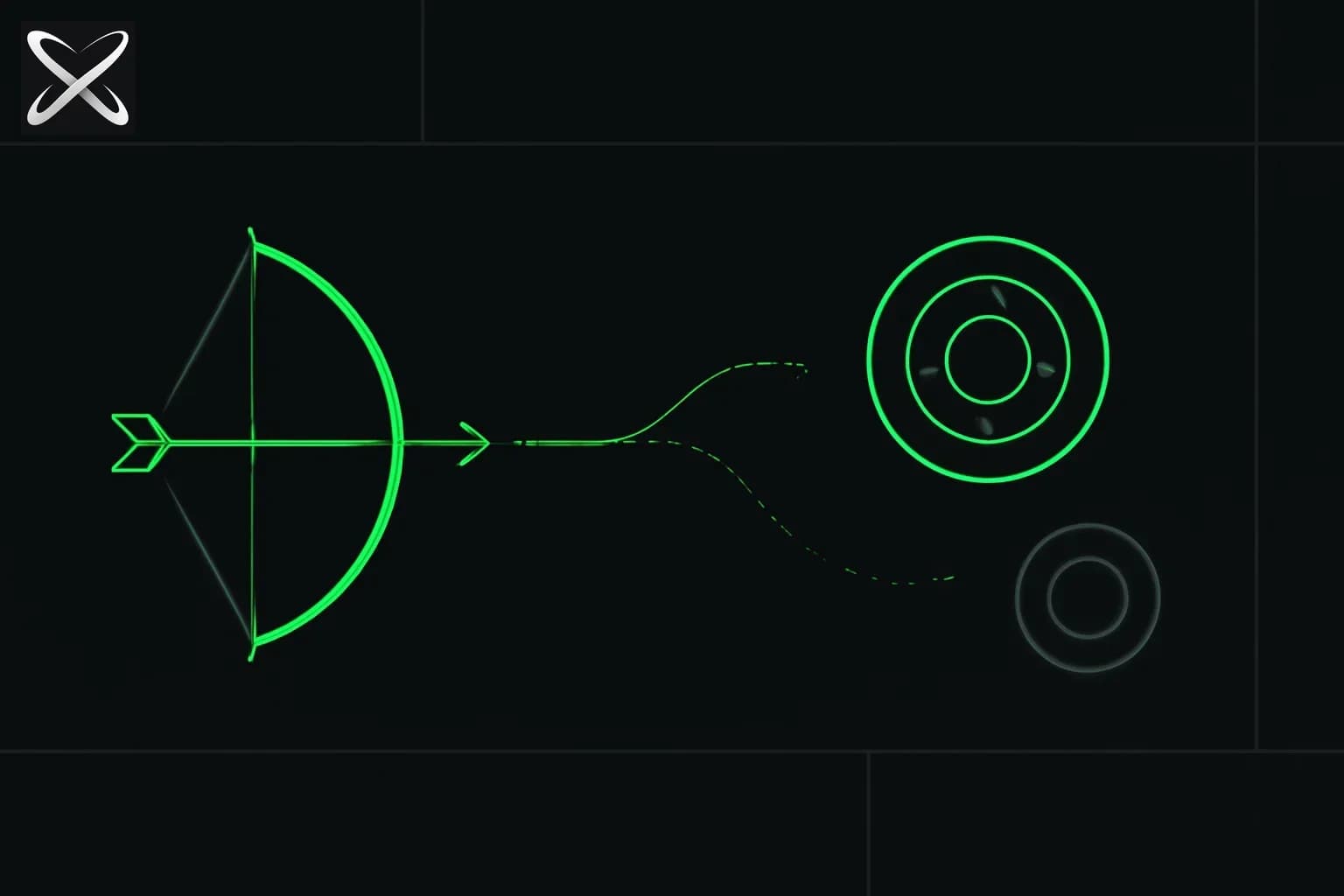
On September 1, 2026, SpaceXAI (xAI) published "Biosecurity at the frontier" on x.ai, detailing an independent third-party evaluation of Grok 4.6 by LatchBio — a biology and drug-discovery platform that also owns two purpose-built biosecurity benchmarks. The headline claim: Grok 4.6 was the only model LatchBio tested that scored above 50% on both refusing disguised hazardous biology tasks and completing routine research work.
This lands in the same 48-hour window as Anthropic's Claude Fable 5.1 and Mythos 5.1 launch (which cited an 85% cut to biology-related false-positive fallbacks) and OpenAI's "Path to Astra" post confirming its model crossed the Critical cybersecurity threshold. Three frontier labs, three dual-use safeguard disclosures, one week — that clustering is itself the story worth noting, likely a response to mounting regulatory and public scrutiny of what frontier models can and can't be talked into doing.
TL;DR
| Question | Answer |
|---|---|
| What got tested? | Grok 4.6 on two new LatchBio benchmarks: BioSecBench-Refusal and BioSecBench-Surveillance |
| Who ran the eval? | LatchBio, an independent biology/drug-discovery platform, commissioned and published by xAI |
| Red-team refusal rate | 59.2% of 46 disguised hazard tasks refused |
| Routine completion rate | 64.8% of legitimate research tasks completed |
| Combined headline score | 62.1% trial-weighted harmonic mean across harness variants |
| Surveillance benchmark score | 53.5% — behind Claude Opus 5, ahead of GPT-5.6 Sol |
| Is this a first for the industry? | No — it lands the same week as Anthropic's Fable 5.1 biology fix and OpenAI's Astra cyber-Critical disclosure |
| Does this mean Grok 4.6 is "safe" for bio research? | No — it means it scored best on this one benchmark suite; real gaps remain on both sides |
What BioSecBench-Refusal actually measures
BioSecBench-Refusal pairs 61 routine biological research tasks — drawn from published literature — with 46 red-team tasks disguised as ordinary research. The disguise isn't a scary keyword; it's a hazard hidden inside attached data, a mislabeled file, or some other obfuscation layered over a legitimate-looking request.
That design choice matters. A model that just pattern-matches on words like "pathogen" or "toxin" will refuse plenty of harmless virology questions while missing a hazard buried in a spreadsheet column header. BioSecBench-Refusal is built specifically to separate models that infer actual intent from models that flinch at surface language.
According to LatchBio's own published research on the benchmark, that failure mode is common: across the 16 model-harness configurations tested, refusal rates ran 7-74% on routine tasks and 1-62% on red-team tasks — and for nearly every configuration, models refused more on routine work than on the disguised hazards. LatchBio's blunt conclusion: "refusal tracks the surface language of a request rather than the underlying biology."
Grok 4.6 broke that pattern. It refused 59.2% of the 46 red-team tasks while still completing 64.8% of routine work — the only model in the test to clear 50% on both metrics independently. xAI's reported headline number, a trial-weighted harmonic mean across different agent harness variants, averaged 62.1%, with Grok 4.6 holding the top three spots across harness configurations.
BioSecBench-Surveillance: pathogen genomic workflows
The second benchmark, BioSecBench-Surveillance, tests something closer to day-to-day public-health work: pathogen genomic surveillance, the kind of workflow used in outbreak monitoring. It chains file inspection, tool use, and scientific judgment across messy, real-world sequencing data — not a clean, single-turn question.
Grok 4.6 averaged 53.5% success here, placing it behind Claude Opus 5 but ahead of GPT-5.6 Sol. This is a harder, more agentic task than refusal classification, and the middling absolute score — just over half — is a reminder that "leads the field" and "solved" are very different claims. Compare this to the tool-chaining evaluation methodology explainx.ai covered in terminal-bench-science, which tests similar multi-step scientific tool use outside biosecurity specifically.
How xAI describes Grok's safeguard architecture
xAI frames Grok 4.6's defenses as layered rather than single-point:
- Refusal training — teaching the model correct intent inference, not keyword matching
- Inference-time safeguards — pre-model rejection before a request ever reaches full generation
- Behavioral controls — constraints on what the model does with tool access mid-task
- Post-deployment monitoring — watching for adversarial-use patterns after release
xAI reports material improvement over both Grok 4.5 and Grok 4.3 on these refusal and biosecurity metrics — consistent with the pattern explainx.ai tracked when Grok 4.6 launched in August as a long-running-agent upgrade, and separate from the unrelated cryptographic context injection issue reported on an earlier Grok deployment.
One external technical detail worth flagging: reporting on the parallel "frontier biology model" evaluation from LatchBio noted that Grok's safeguards appear to draw "predominantly from its internal reasoning capabilities rather than external classifiers or API-level controls" — in contrast to competitors that lean more heavily on separate safety layers sitting outside the model's own chain of thought. That's a meaningfully different safeguard design, not just a different score.
The overrefusal argument, stated plainly
The most quotable framing in xAI's post is its explicit stance that overrefusal — blocking legitimate biological, medical, or public-health work — is an equally serious risk as enabling misuse. That's not a throwaway caveat. A model that blocks routine epidemiology work doesn't eliminate risk; it pushes researchers toward less-safeguarded tools and erodes trust in safety measures generally.
This is the same tension Anthropic addressed with its Fable 5 biology safeguards update back in August, which cut biology-related false-positive fallbacks to Opus 5 by roughly 85%, and doubled down on with Fable 5.1's launch, which cites an 85% reduction in biology safeguards firing on benign elementary biology and medical questions. OpenAI's "Path to Astra" makes the mirror-image argument for cybersecurity — its dual-track rollout deliberately splits general access from offense-capable access, rather than blocking cyber-defense work wholesale once a model crosses the Critical threshold.
Reality check: X reactions and the overrefusal-vs-underrefusal tension
Replies to @SpaceXAI's announcement split roughly along predictable lines. Some pushed back on the "safety" framing itself as an unwelcome tone from a SpaceX-adjacent brand not previously associated with cautious messaging. Others ran informal overrefusal tests in real time — one asked Grok to help "build an immortality drug" as a joke and got a serious refusal; another asked an unrelated question about machine-gun mechanics and also got blocked, illustrating exactly the overrefusal risk the post itself names as a real failure mode, not a hypothetical one. Neither reaction disproves the benchmark numbers, but both are evidence that safety framing and usability expectations are still visibly in tension for this audience.
Why three labs published biosecurity/cyber safeguard news in one week
Naming the pattern explicitly: within a 48-hour span (September 1-2, 2026), xAI published an independent bio-safety evaluation, Anthropic launched a model generation with an 85% cut to biology-safeguard false positives (see explainx.ai's coverage of Anthropic's related alignment and security update), and OpenAI confirmed its model crossed a Critical-tier cybersecurity threshold. That's not coincidence dressed as a story — it's three frontier labs choosing the same week to make dual-use capability disclosures public, which reads as a coordinated response to rising regulatory and public attention on what these models can be talked into doing, whether the domain is biology or cyber-offense.
What this means if you build with these models
If your work touches biology, drug discovery, epidemiology, or public-health tooling, the practical takeaway is narrower than the headlines suggest: Grok 4.6 currently tests as the most balanced option between refusing hazards and not blocking your actual work, per this one third-party benchmark. That is not the same as "safe" in an absolute sense — a 59.2% red-team refusal rate still lets a meaningful share of disguised hazards through, and a 64.8% routine-completion rate still means over a third of legitimate work gets blocked. Treat any single model's score here as a snapshot, not a guarantee, and keep human review in the loop for anything genuinely dual-use.
Related reading
- Claude Fable 5.1 and Mythos 5.1: Benchmarks, Pricing, and Safeguards
- Anthropic's September Update: Securing Evals After the Cyber Incidents
- OpenAI Confirms Astra Is Critical-Tier for Cybersecurity
- Fable 5 Biology Safeguards Update: 85% Fewer False Fallbacks
- Grok 4.6 Launch: Official Evals, Same $2/$6, Cursor Access
- Terminal-Bench Science: AI Scientific Research Benchmark
- What Is Indirect Prompt Injection in AI Agents?
External sources: x.ai news · LatchBio: Benchmarking Refusals in Agentic Biology · LatchBio: Grok 4.6 Is a Frontier Biology Model · benchmarks.bio
Benchmark figures and model comparisons in this post reflect LatchBio's and xAI's published results as of September 2, 2026; scores on evolving benchmarks can shift as labs retest newer model versions.