



The FBI and Justice Department on November 12, 2026 publicly named FaceStealer, a North Korean campaign that stole more than $400 million in cryptocurrency using fake video meetings, libraries of stolen webcam footage, and a growing layer of AI-generated deepfakes. The Justice Department press release ties the social-engineering wave to state-sponsored groups the industry tracks as Sapphire Sleet, UNC1069, and Lazarus-linked names, and the FBI published a detailed IC3 FLASH aimed at crypto and open-source targets.
If you ship code, hold API keys, or work anywhere crypto and OSS communities overlap, this is not a wallet-only story. The same playbook that empties a treasury can pivot to repository credentials and CI secrets once a maintainer joins the fake call.
TL;DR
| Item | What U.S. authorities say (Nov 12, 2026) |
|---|---|
| Name | FaceStealer social-engineering campaign |
| Losses | $400M+ in cryptocurrency over 18 months |
| Mechanism | Hijacked Telegram, LinkedIn, Slack, Discord invites → fake Zoom/Teams/Meet → prerecorded victim video → fake “audio fix” malware |
| Deepfakes | Emerging — notable crypto figures; most attacks still use real stolen webcam clips |
| Webcam library | 900+ victim videos seized |
| OSS angle | Maintainers targeted to compromise distribution |
| DOJ actions | Infrastructure seizures plus $1.2B restraint related to Binance theft recovery effort |
What the Justice Department announced
The DOJ release frames November 12 as coordinated action against DPRK cryptocurrency theft, not a single exchange incident. FaceStealer infrastructure seizures sit beside a court-authorized restraint of more than $1.2 billion in cryptocurrency linked to the October Binance theft the FBI attributes to North Korean TraderTraitor activity.
The DOJ release says North Korean hackers also use super intelligence tooling to develop deepfake video alongside stolen webcam reels. FBI Cyber Branch Operations Director Brett Leatherman, in the same briefing, tied FaceStealer to more than $400 million stolen over 18 months. Special agent Jeremy Robertson in Los Angeles, quoted by The Register, described typo-squatted meeting URLs and an in-call text channel that tells victims they are on mute and need a software upgrade to hear audio — the “fix” is malware.
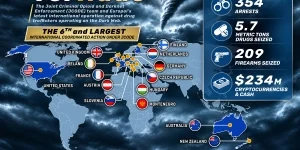 Operation Tornado graphic illustrating the FBI FaceStealer North Korea crypto theft disruption
Image: U.S. Department of Justice
 Deepfake and stolen webcam layers in the FBI FaceStealer North Korea crypto theft campaign
How FaceStealer works, step by step
The FBI FLASH walks through a repeatable cycle that scales because every victim becomes props for the next lure.
Stage 1 — believable invite. Attackers send calendar invites or messages from hijacked accounts on Telegram, LinkedIn, Slack, Discord, and similar platforms. The contact is real; the account is not.
Stage 2 — fake meeting room. Links point to imposter Zoom, Microsoft Teams, or Google Meet pages controlled by the attacker, often via typo-squatted domains Robertson described to reporters.
Stage 3 — stolen video masquerading as live colleagues. When the victim joins, attackers play prerecorded webcam footage of a prior victim or contact the target recognizes. The FBI says hackers record the new victim’s webcam at join time for reuse.
Stage 4 — the mute gambit. Without working audio, instructions arrive through the meeting text channel: install a patch or driver. That download carries cryptocurrency-stealing malware and exfiltrates contact lists to restart the cycle.
Stage 5 — exponential growth. Each compromise adds fresh video and fresh inboxes, which is how a modest initial access list becomes a $400 million haul over eighteen months in the FBI’s accounting.
This is adjacent to, but distinct from, brand-themed phishing campaigns that steal cloud identity without a full video stage, such as the fake OpenAI and SpaceX event pages Push Security documented in November. FaceStealer invests more effort up front because crypto keys and repo tokens on a developer laptop are worth the production cost.
Where AI deepfakes enter the pipeline
The FLASH’s Additional Warnings section is explicit that deepfakes are additive, not yet dominant. North Korean actors reportedly use super intelligence tooling to synthesize video of well-known crypto and web3 personalities from public photos, then drop those clips into the same imposter meetings alongside or instead of stolen victim reels.
Quality only needs to pass as compressed webcam video, which lowers the bar compared with broadcast-grade fakes. That mirrors consumer deepfake risks we covered in celebrity likeness abuse on social platforms, but here the goal is wallet and key theft, not ad fraud.
For security teams, the practical shift is small but important: “I see their face” is no longer sufficient proof on a surprise call. Out-of-band verification beats visual familiarity, the same lesson from AI-planned social engineering at scale.
Open-source supply chain: the overlooked target
The FBI warns that FaceStealer is not limited to individuals holding large crypto balances. Maintainers and developers are in scope because compromising one laptop with repository access can poison downstream users.
That threat rhymes with:
- RevStealer malware posing as a fake Claude app targeting dozens of crypto wallets.
- Railway’s October breach, where attackers hunted AI provider API keys for resale and distillation.
- Google GTIG reporting on stolen cloud AI access feeding unauthorized model use.
FaceStealer is human-layer compromise first. Once malware lands, automated pipelines can chase the same API and signing keys agent builders store beside model endpoints.
Operation context: Binance, Lazarus, and prior scams
U.S. officials connect FaceStealer to the broader North Korean virtual asset theft program that funds the regime. The same November 12 briefing discussed recovery efforts around the Binance theft, which FBI leaders previously attributed to TraderTraitor, another Lazarus-family line.
Readers tracking state-sponsored tradecraft should also read explainx.ai’s running November 2026 cyber incident list, which now includes this FLASH alongside AI-enabled agent misuse cases.
On the defensive research side, labs are racing to field cyber models and red-team agents — see OpenAI’s Daybreak Red launch and Microsoft’s MAI-Cyber preview — but those tools do not replace meeting-hygiene controls at the human layer FaceStealer exploits.
What to do if you are in the target set
The FBI FLASH lists sector-specific guidance. Condensed for builders:
- Never install software from an in-meeting chat during an unsolicited call. Real IT does not fix mute problems with a random binary link.
- Verify meeting URLs character by character; Robertson emphasized typo-squats on familiar brands.
- Treat hijacked contacts as compromised until the person confirms through a second channel you initiate.
- Rotate crypto wallets, signing keys, and AI API keys if you joined any suspicious call in the last month, even if balances look unchanged.
- Segment maintainer machines that can publish releases; one FaceStealer success on a laptop with npm or PyPI tokens is a supply-chain event.
For teams running autonomous agents with tool access, pair human controls with runtime guardrails. AgentBeam helps block agents from executing dangerous shell or exfiltration actions when a compromised workstation tries to drive them — useful when malware arrives through social engineering rather than a model jailbreak.
 FBI FaceStealer defense checklist for crypto developers and open-source maintainers
FBI best practices from the FLASH
The IC3 document ends with sector guidance worth copying into runbooks:
- Pre-call verification: If a colleague invites you to an urgent video sync you did not schedule, call them on a known number before clicking.
- Domain discipline: Keep a blocklist of recently registered meeting lookalike domains and alert developers who live in Telegram crypto channels.
- Webcam hygiene: Cover or disconnect cameras during installs; attackers record even failed joins for later lures.
- Wallet segregation: Use hardware signing for treasury moves; hot wallets on the same laptop as Zoom are FaceStealer’s preferred target.
- Maintainer laptops: Treat machines with git push rights like production servers — no consumer meeting clients without MDM allowlists.
These controls complement the runtime agent guardrails noted above when malware tries to drive local automation after the social layer succeeds.
Binance recovery thread vs FaceStealer social layer
The November 12 briefing linked FaceStealer (continuous social compromise) with enforcement on stolen Binance assets from the late-October TraderTraitor wave. They share attribution themes — North Korean revenue generation — but different TTPs:
| Track | Entry | Goal |
|---|---|---|
| FaceStealer | Hijacked social + fake meetings | Steal keys from individuals and maintainers |
| Exchange theft | Compromise exchange infrastructure | Move already pooled assets |
Defenders should not assume blocking one layer protects the other. Exchange hardening does not stop a maintainer from joining a fake standup. Conversely, personal vigilance does not replace exchange monitoring if you custody funds on platforms.
How this compares with prior AI-themed lures
explainx.ai has tracked AI brand abuse on separate paths:
- Identity phishing via fake event pages (Kali365 / VoidProxy) steals Microsoft 365 sessions.
- Fake apps such as RevStealer steal wallet material directly.
- FaceStealer invests in video stagecraft because crypto and OSS targets tolerate longer grooming.
The trend line is clear: attackers combine familiar brands, real-time media, and AI synthesis to beat text-only phishing filters. Security awareness training that only shows screenshot typos will miss FaceStealer.
What remains unverified or evolving
Reuters and other outlets relay FBI figures, but individual victim counts and per-wallet losses are not itemized in the public FLASH. The $1.2 billion restraint is a separate Binance recovery thread; do not conflate it with the $400 million FaceStealer social-engineering total.
Deepfake usage is real but minority today, per the FBI’s own emphasis on stolen genuine webcam video. Expect the balance to shift as synthesis costs fall — the same dynamic that made fake executive voice calls a briefing-room problem for policy staff.
Related reading
- Fake OpenAI, SpaceX, and Anthropic event phishing
- Fake Claude app and RevStealer wallet malware
- Railway breach and stolen AI API keys
- Google GTIG on stolen cloud AI access
- November 2026 cyberattacks tracker
- OpenAI Daybreak Red Team and Defense Factory
Facts reflect U.S. government releases and reporting cited here as of November 13, 2026. Indicators and infrastructure change quickly; treat the IC3 FLASH as the live reference for defenders.