



Introduction
As AI capabilities become increasingly essential to modern applications, developers face a critical choice: rely on cloud-based API services with their recurring costs and privacy concerns, or build local infrastructure that offers complete control and data sovereignty. DreamServer addresses this challenge by providing a comprehensive, self-hosted AI stack that brings enterprise-grade capabilities to your local environment.
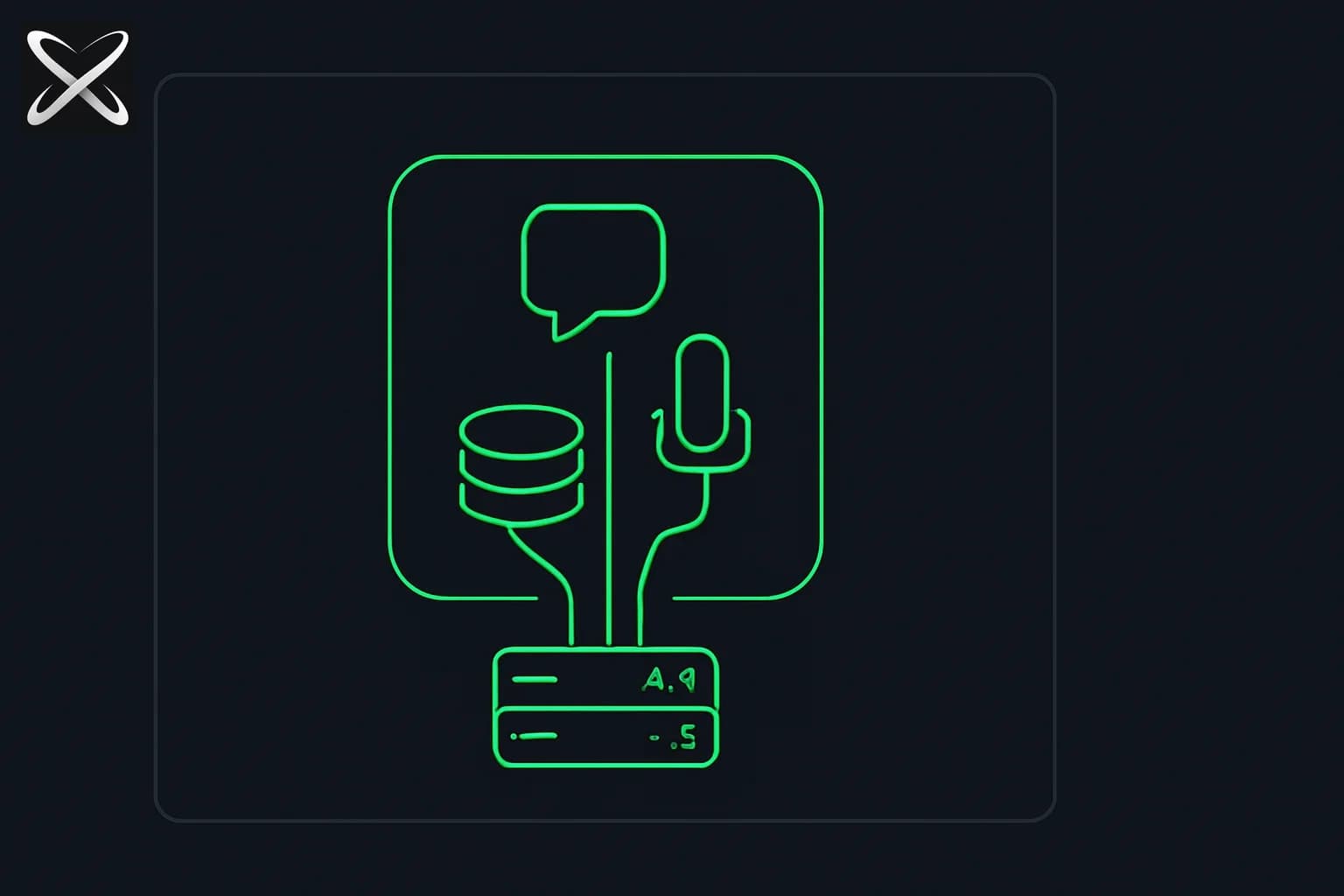
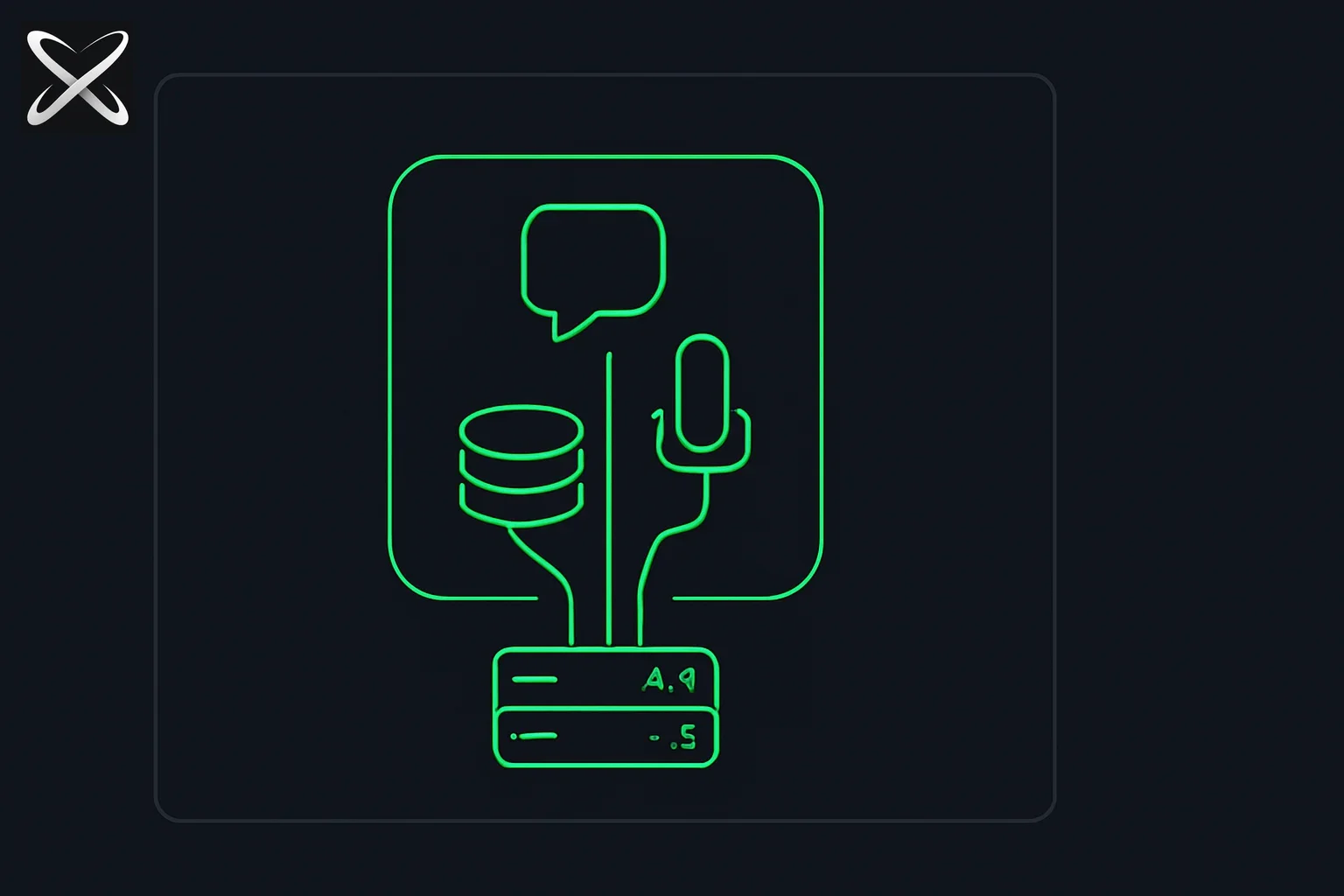
DreamServer is an open-source project from Light-Heart-Labs that packages multiple AI services into a unified platform. It combines LLM inference, multimodal chat interfaces, voice transcription, text-to-speech, and autonomous agent orchestration—all designed to run efficiently on local hardware without external dependencies.
Why Local AI Infrastructure Matters
The shift toward local AI deployment isn't just about cost savings. Organizations handling sensitive data—healthcare providers, financial institutions, legal firms—require absolute certainty about where their data flows. Running AI models locally ensures that proprietary information, customer data, and confidential communications never leave your infrastructure.
Beyond privacy, local deployment offers predictable performance. Cloud API rate limits, network latency, and service outages become non-issues when your AI stack runs on dedicated hardware. You control scaling, resource allocation, and availability.
DreamServer makes this local-first approach accessible. Rather than assembling disparate tools and managing complex dependencies, you get a cohesive platform that handles the integration work for you.
Core Architecture and Components
LLM Inference Engine
At its foundation, DreamServer provides high-performance LLM inference through integration with llama.cpp and other optimized engines. The platform supports:
- Model flexibility: Run models in GGUF format, from compact 7B parameter models to larger 70B+ configurations
- Hardware optimization: Automatic detection and utilization of GPU acceleration (CUDA, Metal, ROCm) with CPU fallback
- Quantization support: 4-bit, 5-bit, and 8-bit quantized models for memory-efficient deployment
- Concurrent inference: Handle multiple simultaneous requests with efficient batching
The inference layer abstracts the complexity of model loading, memory management, and hardware acceleration, presenting a simple API that applications can consume.
Multimodal Chat Interface
DreamServer includes a full-featured chat interface that goes beyond text:
- Vision capabilities: Upload images for analysis and conversation about visual content
- Document understanding: Process PDFs, presentations, and structured documents
- Streaming responses: Real-time token generation with progressive rendering
- Conversation management: Persistent chat history, context windowing, and session handling
- Multiple model support: Switch between different LLMs mid-conversation based on task requirements
The interface is designed for both end-users and developers, offering a polished UI for direct interaction and RESTful APIs for programmatic access.
Voice Capabilities
Speech integration transforms DreamServer into a voice-enabled AI platform:
Speech-to-Text (STT): Leverages Whisper models for accurate transcription with support for multiple languages and accents. The system handles real-time streaming audio and batch file processing with speaker diarization capabilities.
Text-to-Speech (TTS): Generates natural-sounding speech from text using models like Piper. Multiple voice profiles allow customization for different use cases—customer service agents, narration, accessibility features.
Voice pipelines integrate seamlessly with the chat interface, enabling fully conversational AI experiences where users speak questions and receive spoken responses.
Autonomous Agent Framework
DreamServer's agent system enables AI to take actions beyond simple conversation:
- Tool integration: Agents can invoke functions, query databases, call APIs, and interact with external systems
- Planning and reasoning: Multi-step task decomposition with iterative refinement
- Memory systems: Short-term working memory and long-term knowledge storage
- Scheduling: Trigger agents on schedules or events for proactive automation
- Multi-agent coordination: Deploy specialized agents that collaborate on complex workflows
The agent framework follows the ReAct pattern—reasoning, acting, observing—allowing models to break down goals, execute actions, and adapt based on results.
Installation and Setup
DreamServer prioritizes ease of deployment. The project provides Docker containers that bundle all dependencies and pre-configured services.
Quick Start with Docker Compose
version: '3.8'
services:
  dreamserver:
    image: lightheartlabs/dreamserver:latest
    ports:
      - "8080:8080"  # Web UI
      - "8081:8081"  # API server
    volumes:
      - ./models:/app/models
      - ./data:/app/data
    environment:
      - MODEL_PATH=/app/models/llama-2-7b-chat.Q4_K_M.gguf
      - ENABLE_VOICE=true
      - ENABLE_AGENTS=true
    deploy:
      resources:
        reservations:
          devices:
            - driver: nvidia
              count: 1
              capabilities: [gpu]
This configuration launches the complete stack with GPU acceleration. Models are stored in the ./models directory for persistence across restarts.
Hardware Requirements
Minimum specifications depend on your model choices:
- Small models (7B-13B): 16GB RAM, modern CPU, optional GPU with 6GB+ VRAM
- Medium models (30B-40B): 32GB RAM, GPU with 12GB+ VRAM recommended
- Large models (65B+): 64GB+ RAM, GPU with 24GB+ VRAM or multi-GPU setup
DreamServer's quantization support allows 70B parameter models to run in 32GB RAM with 4-bit quantization, making powerful AI accessible on consumer hardware.
Real-World Use Cases
Customer Support Automation
A software company deployed DreamServer to handle tier-1 support queries. The system ingests their documentation, API references, and historical support tickets into a vector database. When customers submit questions:
- The agent searches relevant documentation
- Retrieves similar past tickets and resolutions
- Generates contextual responses citing specific resources
- Escalates complex issues to human agents with full conversation context
Voice integration allows phone-based support where customers describe issues verbally, and the system provides spoken troubleshooting steps. The entire pipeline runs on-premises, ensuring customer data never reaches external services.
Healthcare Documentation
A medical practice uses DreamServer for clinical note generation. Doctors conduct patient consultations while the system transcribes and structures conversations into SOAP notes:
- Subjective: Patient-reported symptoms and concerns
- Objective: Clinical observations and vital signs mentioned
- Assessment: Extracted diagnoses and conditions discussed
- Plan: Treatment recommendations and follow-up actions
The LLM generates draft notes adhering to documentation standards, which physicians review and finalize. Local deployment ensures HIPAA compliance without expensive cloud-based medical AI services.
Research and Data Analysis
Academic researchers leverage DreamServer's agents for literature review automation. The system:
- Queries academic databases using provided search terms
- Downloads and extracts text from papers
- Summarizes findings and identifies key themes
- Generates synthesis documents connecting related work
- Maintains citation graphs and reference management
This workflow compresses weeks of manual review into automated processes that run overnight on local workstations.
Development Assistance
Software teams use DreamServer as an internal coding assistant. By indexing their codebase into the knowledge base, the system answers questions about architecture, suggests refactoring approaches, and generates boilerplate code following established patterns.
Unlike cloud-based alternatives, proprietary code and business logic never leave the development environment. Voice interfaces allow developers to ask questions hands-free during coding sessions.
Integration Patterns
RESTful API
DreamServer exposes comprehensive REST endpoints for all functions:
# Generate completion
curl -X POST http://localhost:8081/v1/completions \
  -H "Content-Type: application/json" \
  -d '{
    "prompt": "Explain quantum entanglement in simple terms",
    "max_tokens": 500,
    "temperature": 0.7,
    "stream": true
  }'

# Transcribe audio
curl -X POST http://localhost:8081/v1/audio/transcribe \
  -F "file=@meeting.wav" \
  -F "language=en"

# Invoke agent
curl -X POST http://localhost:8081/v1/agents/run \
  -H "Content-Type: application/json" \
  -d '{
    "agent_id": "research_assistant",
    "task": "Find recent papers on transformer efficiency",
    "max_iterations": 10
  }'
OpenAI-compatible endpoints allow existing applications built for GPT models to work with DreamServer by simply changing the base URL—no code rewrite required.
WebSocket Streaming
Real-time applications benefit from WebSocket support for bidirectional streaming:
const ws = new WebSocket('ws://localhost:8081/v1/stream');

ws.on('open', () => {
  ws.send(JSON.stringify({
    type: 'chat',
    message: 'Explain neural networks',
    conversation_id: 'session_123'
  }));
});

ws.on('message', (data) => {
  const response = JSON.parse(data);
  if (response.type === 'token') {
    process.stdout.write(response.content);
  }
});
This enables progressive response rendering where text appears as the model generates it, providing instant feedback rather than waiting for complete responses.
Python SDK
For Python developers, DreamServer provides a native SDK that simplifies integration:
from dreamserver import DreamClient

client = DreamClient(base_url="http://localhost:8081")

# Text generation
response = client.completions.create(
    prompt="Write a Python function to parse JSON",
    max_tokens=300,
    temperature=0.3
)

# Voice transcription
transcript = client.audio.transcribe(
    file=open("audio.wav", "rb"),
    language="en"
)

# Agent execution
result = client.agents.run(
    agent_id="code_reviewer",
    task="Review pull request #342",
    context={"repo": "myproject", "pr": 342}
)
The SDK handles authentication, error handling, streaming, and connection management automatically.
Security and Privacy Considerations
Local deployment inherently provides stronger security boundaries than cloud services, but proper configuration remains essential.
Network Isolation
Run DreamServer on isolated networks or VLANs that separate AI workloads from public-facing services. Use reverse proxies with authentication for external access rather than exposing ports directly.
Authentication and Authorization
Implement API key authentication for programmatic access and integrate with existing identity providers (LDAP, OAuth, SAML) for user authentication. Role-based access control ensures users only access authorized models and agents.
Data Handling
Configure data retention policies for conversation logs, transcripts, and agent outputs. While local deployment prevents external data sharing, internal data governance still applies—especially for regulated industries.
Model Security
Verify model checksums before deployment to ensure models haven't been tampered with. Use model repositories from trusted sources and maintain an inventory of deployed models with version tracking.
Performance Optimization
Model Selection and Quantization
Choose models that balance capability with resource constraints. A 13B parameter model at 4-bit quantization often provides 80% of a 70B model's performance with 1/6th the memory requirements.
Batch Processing
For high-throughput scenarios, batch multiple requests together. DreamServer's inference engine processes batches more efficiently than sequential single requests, especially with larger models.
Caching Strategies
Implement prompt caching for repeated patterns. System prompts, instruction templates, and common prefixes only need processing once, then subsequent requests reuse cached context.
Hardware Acceleration
Ensure CUDA/ROCm/Metal support is properly configured. Monitor GPU utilization—underutilized GPUs indicate opportunities for larger batch sizes or concurrent model serving.
Comparison with Cloud Alternatives
| Aspect | DreamServer (Local) | Cloud APIs |
|---|---|---|
| Cost | Fixed hardware investment, zero usage fees | Per-token pricing, scales with usage |
| Privacy | Data never leaves infrastructure | Data sent to third-party servers |
| Latency | Network overhead minimal, LAN speeds | Internet latency, geographic distance |
| Availability | Depends on local infrastructure | Subject to provider SLA and outages |
| Customization | Full control over models and configuration | Limited to provider's model offerings |
| Compliance | Easier to meet data residency requirements | Complex data processing agreements |
For organizations with consistent AI workloads and strict data requirements, local deployment with DreamServer typically achieves ROI within 6-12 months compared to equivalent cloud API costs.
Future Development and Roadmap
The DreamServer project actively develops new capabilities:
- Multimodal models: Native support for vision-language models like LLaVA and CogVLM
- Fine-tuning pipeline: Tools for training adapters and fine-tuning models on custom datasets
- Model marketplace: Community hub for sharing specialized models and agents
- Kubernetes operator: Simplified deployment in container orchestration environments
- Observability: Enhanced metrics, tracing, and monitoring for production deployments
Getting Started
Begin experimenting with DreamServer by deploying a small model configuration:
# Clone repository
git clone https://github.com/Light-Heart-Labs/DreamServer.git
cd DreamServer

# Download a compact model
mkdir -p models
wget https://huggingface.co/TheBloke/Llama-2-7B-Chat-GGUF/resolve/main/llama-2-7b-chat.Q4_K_M.gguf \
  -O models/llama-2-7b-chat.Q4_K_M.gguf

# Launch with Docker Compose
docker-compose up -d

# Access web interface
open http://localhost:8080
The web interface provides an immediate environment for testing chat, voice, and basic agent functionality. From there, explore API integration, custom agent development, and advanced model configurations.
Conclusion
DreamServer represents a shift toward accessible, self-hosted AI infrastructure. By consolidating LLM inference, multimodal interfaces, voice capabilities, and autonomous agents into a unified platform, it removes the complexity barrier that has kept local AI deployment restricted to large organizations with specialized expertise.
Whether you're building privacy-focused applications, experimenting with AI capabilities without cloud costs, or simply want complete control over your AI stack, DreamServer provides production-ready infrastructure that runs on hardware you already own.
As AI continues transforming software development, having local inference capabilities becomes increasingly valuable—not just for privacy and cost, but for the freedom to experiment, customize, and innovate without external dependencies or constraints.
Explore the project at github.com/Light-Heart-Labs/DreamServer and join the community building the future of decentralized AI infrastructure.