




Cloudflare announced on October 9, 2026 that the Deno team is joining the company. The headline sounds like a typical acqui-hire, but the details matter more than the headline: Cloudflare says it will support the Deno runtime for one more year with monthly bug-fix and security releases, and then end its own development of the runtime. Deno stays open source. The team's real job from here is to merge its new project, celld, into Cloudflare's open source Workers runtime, workerd.
If you ship TypeScript with Deno today, that is a planning signal rather than an emergency. If you build on Cloudflare Workers, it is a roadmap signal: self-hosting Workers and Durable Objects is about to get serious engineering attention.
TL;DR: what was announced
| Question | Answer |
|---|---|
| Who is acquiring whom? | Cloudflare is acquiring Deno, per Simon Willison's write-up of the Cloudflare post; the Cloudflare blog says the Deno team is joining. |
| What happens to the Deno runtime? | Monthly releases with bug fixes and security updates for another year, then Cloudflare ends its development. It remains open source. |
| What is the new project? | Merge celld into workerd so self-hosting the Workers model, including distributed Durable Objects, is a first-class supported path. |
| Who leads it? | Ryan Dahl and Bert Belder. |
| When do we hear more? | Cloudflare says more announcements will come over the coming months. |
| Can I try it today? | Yes: you can self-host celld or workerd now. |
What exactly is Cloudflare buying?
The Cloudflare post is written as two letters. Ryan Dahl, creator of Node.js and Deno, explains the technical thesis. Kenton Varda, who leads the Workers platform, explains why Cloudflare is happy about it.
Dahl's argument is that Deno improved the experience of writing JavaScript and TypeScript but "didn't fundamentally change what developers had to assemble around the runtime." The hard problems, in his telling, are distributing computation, coordinating state, storing data, and autoscaling. He found an answer in Cloudflare's Durable Objects: a distributed singleton with its own SQLite database, single-threaded for easy reasoning, with synchronous local database access and WebSocket handling. One Durable Object per chat channel, for example, shards both data and connections.
The catch, as Dahl puts it, is that running that model outside Cloudflare is difficult. workerd, Cloudflare's open source Workers runtime, implements Durable Objects only as a single instance: fine for local testing, unable to scale across machines. celld is Dahl's answer. It is one binary written in Rust whose only external dependency is an object storage bucket. You run many celld instances and one bucket, and the platform handles placement, routing, and durable storage.
Why is the Deno runtime being wound down?
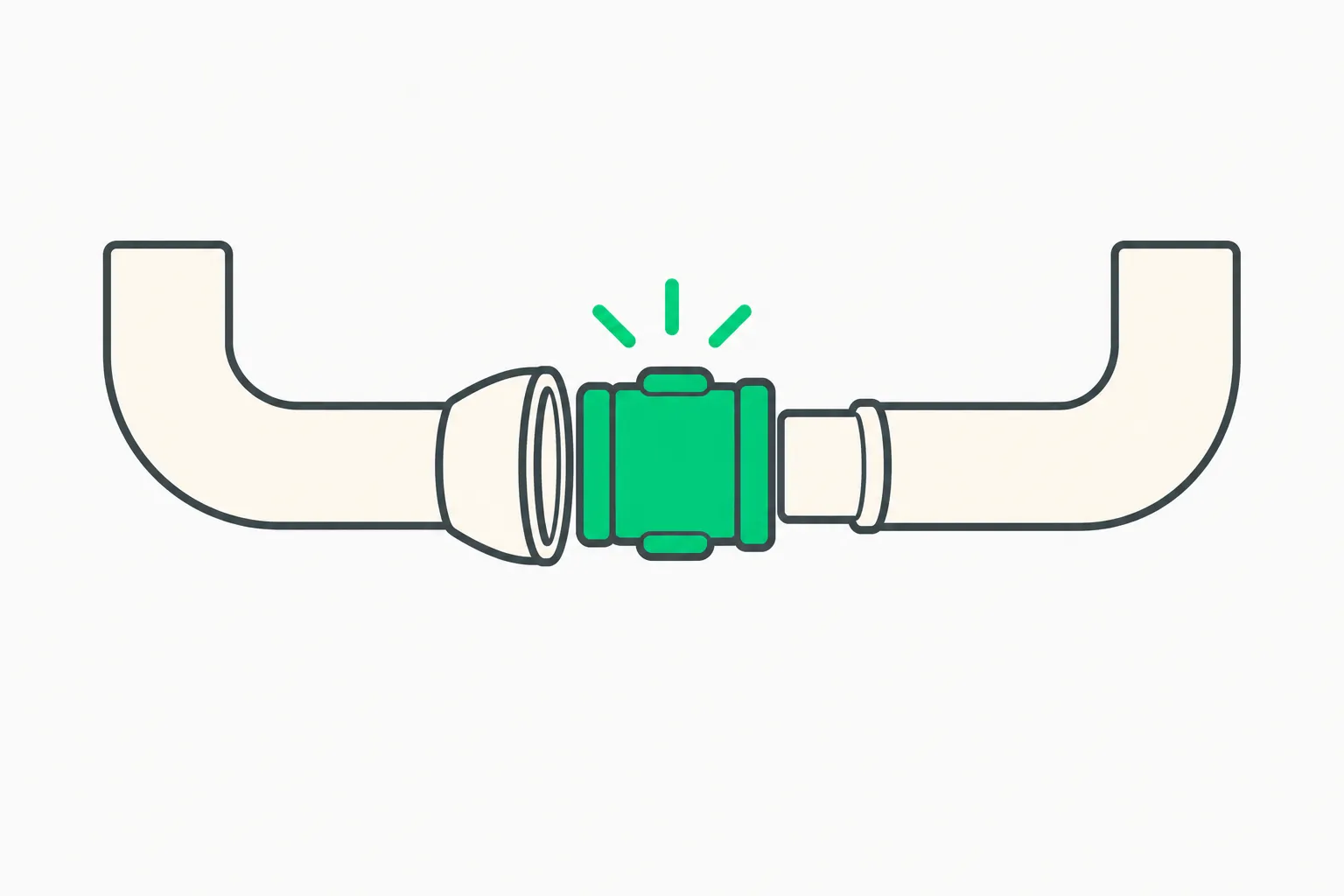 Two pipes with different mouths joined by an adapter, illustrating Deno's Node compatibility layer
This is the part that surprised people. Dahl commented on Hacker News, as quoted by Willison, that the decision was joint and that he agrees with it. His reasoning: Deno "has been sucked into the gravity well of node compatibility, which forces it to behave exactly as Node does," and marginal performance, UX, or security benefits are not enough reason to reimplement Node. He says he wants to build "powerful new abstractions" instead.
That is a candid assessment from the person who created both runtimes. It also matches what many Deno users have seen over the last few years: the project added npm and Node compatibility layers to remove adoption friction, which made it more usable and less distinct at the same time.
One Hacker News commenter put the structure plainly: the team is joining Cloudflare while Deno as a project is being discontinued. Another quipped that Bun is joining Anthropic, Deno is joining Cloudflare, and uv is joining OpenAI, which captures a pattern: developer tooling companies are being absorbed by the platform and AI companies that depend on them.
What developers are saying
The Hacker News thread had 23 points when we read it, and the early comments were short:
- User
thevinterclarified the key detail: the team joins Cloudflare, but the Deno project itself is the thing being discontinued. - User
rgbjoysaid they like Cloudflare's direction and called isolates "the future of computing your web thing." - User
hootzlinked the deal to other developer-tool acquisitions and joked about falling back to Node.
These are individual reactions, not a survey. The thread was young, so treat sentiment as early.
Cloudflare's lock-in argument
Varda spends a large part of his letter rebutting a popular theory: that Workers is deliberately different from other clouds to lock customers in, and that celld, as an open source implementation of Workers, is therefore a threat. His response has three parts.
First, he says Workers is different because it is better: cheap management of an application running in hundreds of locations, and "bindings" that make external resource access easier and more secure at once. Second, he argues lock-in would hurt Cloudflare, because large customers such as Shopify told the company in 2022 that they could not build on Workers for Platforms unless the runtime was open source. Third, he points out that workerd is the same code that runs in production, not a parallel implementation, and that some former customers have migrated away using it.
He then admits the gap: workerd's Durable Objects support was never production-ready for self-hosters. he notes that unfinished-work comments in the code go back to the original release, and a spring attempt to fix it "didn't work." Cloudflare's production routing implementation is, in his words, a beast built for hundreds of locations and run by a team of site reliability engineers. Deno was building the self-hosting version Cloudflare never got around to.
What this means for what you build or pay
 Gears along one shaft, illustrating a single runtime coordinating many instances
If you run Deno in production. You have a year of monthly security releases. Use it. Audit which Deno-specific APIs you rely on. If you mostly use Node-compatible code and npm packages, the migration cost to Node.js may be modest. If you use Deno's permission flags, note that Node.js has a permission model too: added in Node v20.0.0 in April 2023 and declared stable in v22.13.0 in January 2025, per Willison. It does not yet allow-list specific network hosts; networking is on or off.
If you build on Workers. The promise is that you will be able to run Workers and Durable Objects on your own infrastructure with a supported, scalable path. That changes the portability story for architecture-sensitive teams, especially those deploying agents with per-session state. Cloudflare has been investing in agent infrastructure for months: see our coverage of the Cloudflare OS open source agent platform, the Sandbox SDK 1.0 where your Durable Object owns the container, the agent runtime built on isolates and containers, and Kitesurf's V8-isolate agent browser. Each of those uses the same primitives that celld and workerd are about to unify.
If you evaluate vendors. Varda writes that he will personally use the result to host an instance of Cloudflare OS at home, which tells you the self-hosted version is meant to be real software, not a demo. Still, nothing has shipped beyond the announcement. Treat roadmap promises as promises.
If you want to try it now. The announcement says you can self-host celld or workerd today. A sensible weekend experiment is a small chat-style app with one Durable Object per room on workerd, then the same app on celld with a single object storage bucket, and a note of what breaks. Before you build anything serious on it, wait for the merged project's first announcement.
Open questions
Several things are not answered in the Cloudflare post:
- Deno Deploy and commercial products. Dahl points to a separate post on the Deno blog for what happens to the runtime and other efforts. We did not find terms for hosted products in the Cloudflare announcement.
- Deal terms. The post does not state a price or structure. Do not infer one.
- Fork or steward. Cloudflare says Deno stays open source and welcomes others who want to continue development. Whether a credible maintainer group forms is the open question for long-term Deno users.
- Compatibility of the merge. Merging celld into workerd means design choices about storage, routing, and failure modes. The post promises more in the coming months.
How this fits the bigger picture
For AI builders, the interesting part is not JavaScript runtimes as such. Agent systems increasingly want a cheap, isolated, stateful unit per session or per task, and Durable Objects are one of the more popular answers. The Cloudflare move signals that the platform wants that unit to be portable, so teams with data residency or cost constraints are less likely to rule it out. It also fits the broader trend of platform companies absorbing the developer tools their ecosystems depend on, which is worth watching if you standardize on any single tool maintained by a small independent team.
For a plain-language refresher on the primitives involved, see our guide to Python Workers going GA and the Artifacts Git storage beta, both built on the Workers model.
What to do this week
- Read both Cloudflare letters and the Deno blog post linked from them.
- Inventory Deno usage: runtime version, Deno-only APIs, permission flags, and any Deno Deploy projects.
- Pin a plan: stay on Deno for the supported year, migrate to Node.js, or target Workers.
- Try celld and workerd locally if you build stateful services.
- Re-check in a few months, when Cloudflare says it will share more.
Details here reflect the Cloudflare and Deno announcements as of October 9, 2026 and may change as the companies publish more.