



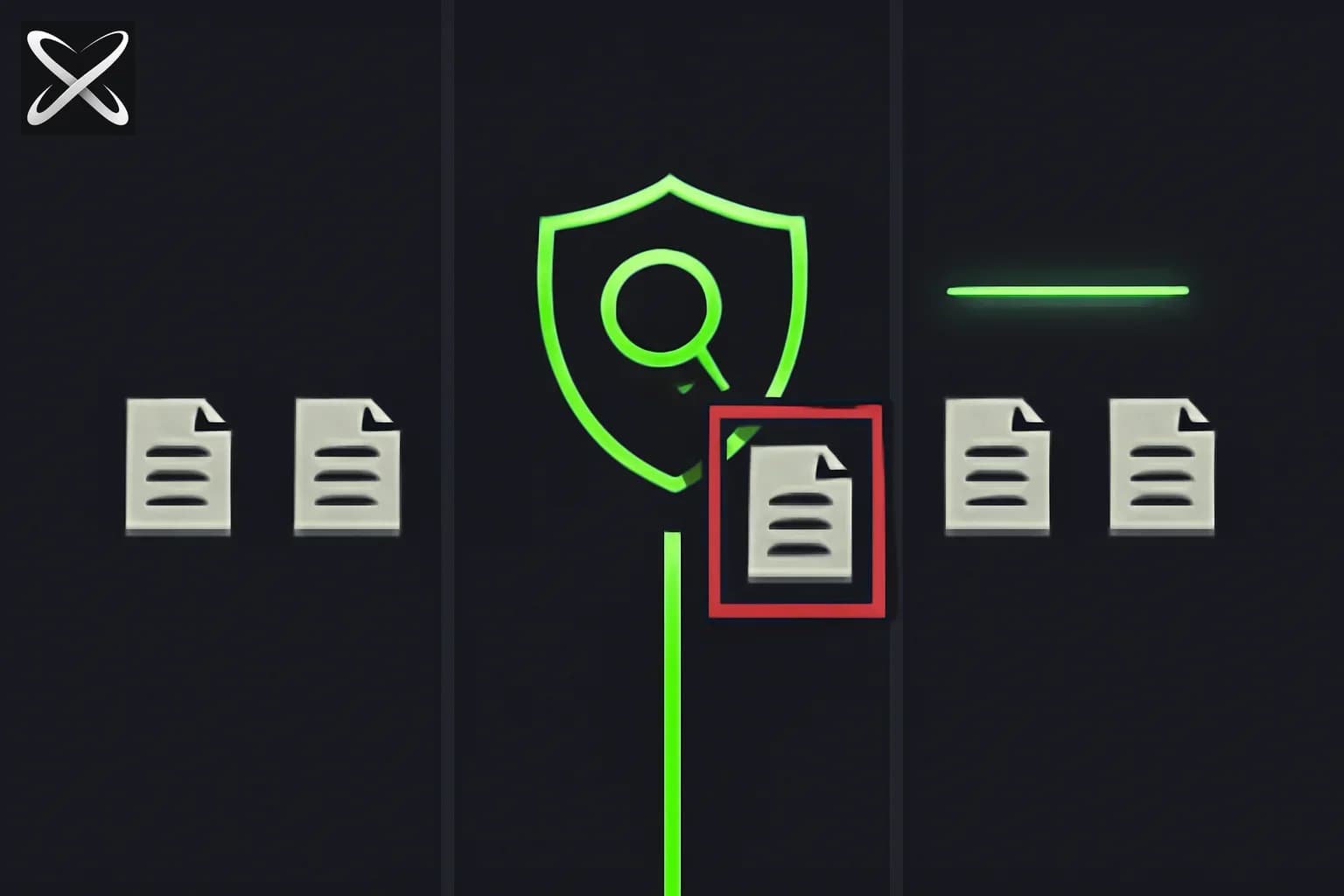
On August 26, 2026, the maintainers of Core Lightning — one of the main node implementations behind Bitcoin's Lightning Network — confirmed something that should get more attention from AI builders than from crypto traders: a wave of AI-generated vulnerability reports had surfaced real, critical bugs in production payment infrastructure. Some outlets ran with "emergency shutdown" headlines. CLN's own statement told a more precise story, and the precise story is the more interesting one.
This is not really a Bitcoin story. It's a data point in a trend explainx.ai has been tracking all August: AI systems are now finding — and in other recent cases, exploiting — real vulnerabilities in real production systems, at a volume serious open-source projects can no longer treat as noise.
TL;DR
| Question | Answer |
|---|---|
| What happened? | CLN confirmed multiple critical vulnerabilities on Aug 26, 2026, found via AI-generated CVE reports received throughout August |
| Was it a "shutdown"? | No — CLN urged patching within ~48 hours, or running with --offline as a defensive fallback if you can't patch immediately |
What does --offline actually do? | Blocks Lightning payments and node-to-node connections; the node keeps monitoring the Bitcoin blockchain underneath |
| Which AI model found the bugs? | Kimi K3, Moonshot AI's open-weight model, generated the reports behind the confirmed findings |
| Who funded the vulnerability hunt? | A Bitcoin open-source funding organization backed part of the effort |
| Were funds lost? | No confirmed reports of lost funds or active exploitation at the time of the notice |
| When do full technical details go public? | Embargoed for two weeks from the announcement — standard responsible-disclosure practice |
| Is Core Lightning "Bitcoin"? | No — it's one of several Lightning Network node implementations, a Layer-2 protocol built on Bitcoin |
What actually happened
CLN's own public statement is worth quoting directly, because it's more measured than most of the coverage: "Like many Bitcoin open-source projects, CLN has received a flurry of AI-generated CVE reports from multiple sources." That's the operative framing — the project has been fielding a growing stack of automated vulnerability submissions throughout August 2026, and on August 26 it confirmed that some of those reports pointed at real, critical, exploitable bugs.
The response CLN actually asked for was narrower than "shut everything down":
- Patch as soon as possible. Signed, patched binaries were expected within roughly 48 hours of the notice.
- If you can't patch immediately, run with
--offline. This flag stops the node from routing Lightning payments and connecting to peers, while it keeps syncing with the underlying Bitcoin blockchain in the background. That's a degraded, defensive mode — not a full node shutdown. - Full technical disclosure is embargoed for two weeks. CLN held back exploit-level detail so operators get a patch window before the specifics that would let someone build an attack become public — standard practice for responsible vulnerability disclosure in security research.
At the time of the notice, CLN reported no confirmed cases of lost funds or active exploitation tied to the disclosed bugs. That distinction matters: this was a preemptive, well-run disclosure cycle, not an active-incident response. The "urges immediate shutdown" framing that circulated in some aggregator coverage overstated the alarm CLN itself was actually raising — the project's own messaging pushed back on exactly that reading in favor of the more precise --offline guidance.
The AI angle: Kimi K3 found bugs humans hadn't caught
Here's the part that should interest explainx.ai's readers more than Lightning Network mechanics: the AI-generated reports that led to CLN's confirmed findings were primarily produced by Kimi K3, Moonshot AI's open-weight model released as free public weights back in July 2026. The vulnerability-hunting effort that produced these findings was funded in part by a Bitcoin open-source funding organization — the kind of infrastructure grant that increasingly underwrites AI-assisted security research on projects too small or too resource-constrained to run their own red teams.
That an open-weight model — not a closed frontier lab's proprietary system — is the one credited with finding critical bugs in production Bitcoin Lightning infrastructure is a meaningful data point. It tracks with what explainx.ai has covered elsewhere this month: GLM-5.3 posting a leading CyberGym score on vulnerability-finding benchmarks, and open-weight models generally closing the gap with closed labs on offensive security capability faster than on many other benchmarks. Open weights mean any project — even a volunteer-maintained Bitcoin node implementation without a dedicated security budget — can point a capable model at its own codebase.
Signal vs. noise: don't oversell "AI found bugs"
CLN's own wording is the honest caveat here, and it's worth sitting with rather than skipping past: "a flurry of AI-generated CVE reports from multiple sources." The implication, read plainly, is that most of what lands in an open-source security inbox from AI tools right now is noise — false positives, hallucinated vulnerabilities, or reports that don't survive a maintainer's first read. Only a fraction of what CLN received turned out to be real, confirmed, critical findings.
That's a useful, unglamorous framing for anyone evaluating AI vulnerability-hunting tools in 2026: high volume, low average signal, but the signal that does get through can be genuinely serious. It's the same shape of result seen in ExploitBench's five-tier capability ladder, where frontier models reached full arbitrary code execution on some real CVEs but not others — capability that's real but uneven, not a uniform "AI finds every bug" story. Treat AI-generated vulnerability reports the way a maintainer should: triage them like any other inbound submission, and don't assume volume equals quality.
What this means for AI-assisted security research
Zoom out and this fits a pattern explainx.ai has tracked closely through August 2026. OpenAI's Collective Cyberdefense open letter, signed by 130+ companies including Anthropic, AWS, Google, and Microsoft, argues explicitly that AI capability cuts both ways — the same systems that make attacks sharper also make defense faster, if organizations actually deploy them for it. Core Lightning's disclosure is a small but concrete instance of the defensive side of that argument playing out in the wild: a volunteer open-source project used AI-generated reports to catch critical bugs before they became active exploits.
It also sits next to Wiz Red Agent's autonomous exploitation of a real Snowflake vulnerability — a reminder that the same underlying capability (an AI system that can read code and reason about exploitability) shows up on both the finding side and the exploiting side depending on who's holding it and what they do next. CLN's two-week embargo is the deliberate choice that keeps a defensive finding from becoming someone else's offensive tool before operators can patch.
For teams building or maintaining any production system — financial infrastructure or otherwise — the practical takeaway isn't "adopt Kimi K3 as your vulnerability scanner." It's that AI-generated security reports are now common enough, and occasionally accurate enough, that ignoring the inbound flow entirely is no longer a safe default. Triage them. Don't panic over the volume. And when a real one surfaces, run a disclosure process as disciplined as CLN's — patch window first, technical details after.
The bottom line
Core Lightning had a well-run week, not a crisis week. AI-generated reports, mostly from Kimi K3, surfaced real critical bugs; CLN confirmed them, gave operators a 48-hour patch window and a genuinely useful --offline fallback, embargoed the technical details for two weeks, and reported no funds lost. The louder "emergency shutdown" framing some coverage used doesn't match CLN's own statement. The quieter, more accurate story — an open-weight model finding real bugs in production financial infrastructure, filtered from a pile of noisy AI-generated reports, disclosed responsibly — is the one worth remembering.
Related reading
- OpenAI's Collective Cyberdefense open letter: 130+ companies sign on
- Kimi K3 open weights are live — 2.8T parameters
- ExploitBench: the benchmark measuring how far AI can exploit real code
- Wiz Red Agent hacked Snowflake's Jira — no human involved
- GLM-5.3's 84.5% CyberGym score isn't verified yet
- MCP security guide 2026
- Agent skills as a security threat vector
This article reflects publicly available information as of August 28, 2026. Core Lightning's vulnerability details remain under a two-week disclosure embargo; check CLN's official release channels for the patched binaries and any technical write-up once the embargo lifts.