



AI can help reduce poverty. It can also concentrate wealth, automate vulnerable work, and turn incomplete data into an automated denial of help.
Which future arrives is not determined by model intelligence. It depends on ownership, infrastructure, labor markets, public policy, competition, and whether people with low incomes gain useful capability and bargaining power.
The research-backed answer is:
AI is a general-purpose tool that can strengthen several poverty-reduction mechanisms. It does not replace the mechanisms: inclusive growth, decent jobs, education, health, infrastructure, rights, redistribution, and capable institutions.
Poverty is larger than one income threshold
In June 2025, the World Bank updated the international extreme-poverty line from $2.15 to $3.00 per person per day using 2021 purchasing-power parities. On the updated basis, about 838 million people lived in extreme poverty in 2022.
The exact number changes when prices, surveys, and thresholds improve. That is not statistical trivia. Poverty measurement compares household resources with the cost of basic needs, and many countries lack recent representative surveys. The World Bank recommends national poverty lines for country policy and also tracks multidimensional deprivation such as education, basic infrastructure, and services.
AI can improve data timeliness. It cannot reduce poverty merely by estimating it more precisely.
How AI could affect poverty
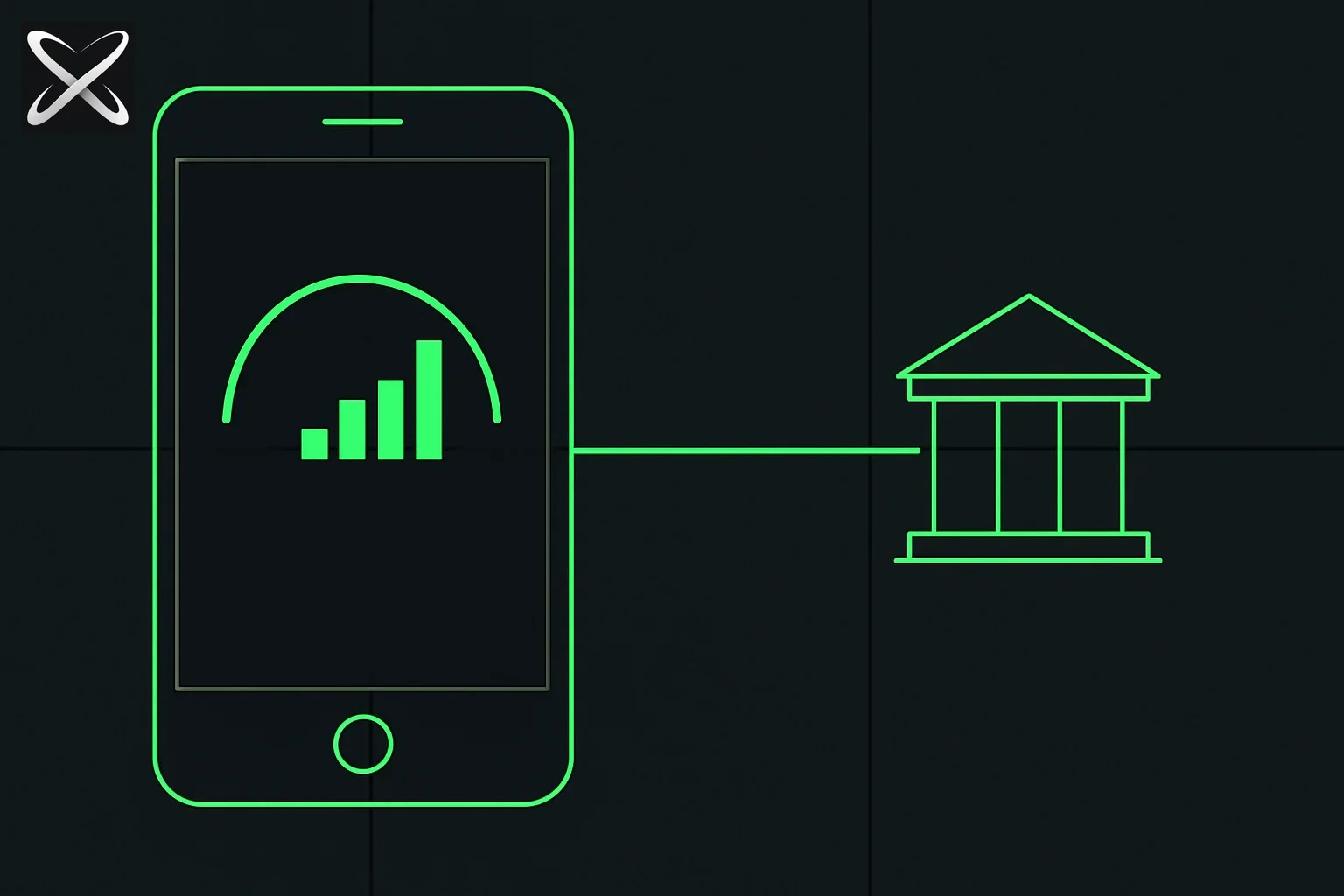 Can AI end poverty — a mobile phone showing a rising algorithmic credit-score gauge connected to a bank icon
| Channel | Potential benefit | Potential harm | Outcome to measure |
|---|---|---|---|
| Worker productivity | More output and higher earnings | Job loss, work intensification | Real wages, job quality, hours |
| Small businesses | Advice, translation, marketing, bookkeeping | Platform dependency, fraud | Profit, survival, market access |
| Credit | Lower assessment cost, new borrowers | Discriminatory proxies, debt | Productive investment and default, by group |
| Public services | Lower-cost support in health and education | Low-quality substitution for poor users | Health and learning outcomes |
| Social protection | Faster identification and payment | Exclusion, surveillance | Coverage, error, appeal, payment speed |
| Economic planning | Better maps and forecasts | False precision | Better-funded decisions and resilience |
| Innovation | New firms and services | Concentrated rents and imports | Broad productivity and local value creation |
The distribution column matters as much as the average. A national productivity increase can coexist with more poverty if gains flow to capital owners while wages fall.
1. Make workers and small firms more productive
Generative AI can help draft, translate, analyze, tutor, plan, and handle routine administration. A small business might use it to create product descriptions, reconcile records, answer customer questions, or understand a regulation. A worker can receive step-by-step assistance without hiring a specialist for every task.
The World Bank's World Development Report 2026 frames this as a potential way to address skill gaps and help firms through widely available devices. But access is uneven. Reliable internet, electricity, local-language performance, digital literacy, payment methods, and trust all shape adoption.
Productivity is also not the same as income. If ten workers produce more but the employer captures the gain, poverty may not fall. If AI enables one person to replace five, consumers may get lower prices while displaced workers lose earnings.
A credible intervention follows workers over time and measures pay, employment stability, mobility, and who captures the surplus—not only task completion speed.
2. Expand access to expertise
Low-income communities often face shortages of teachers, clinicians, lawyers, agricultural extension officers, and financial advisers. AI can translate information, support frontline staff, and provide basic guidance at lower marginal cost.
The opportunity is augmentation. A nurse with validated decision support, a teacher with adaptive practice material, or an extension worker with local weather data may serve more people consistently.
The danger is a two-tier system: wealthy users receive qualified humans supported by AI, while poor users receive an unverified chatbot. Low price cannot excuse lower safety. Systems need local validation, escalation to people, privacy protections, and outcome monitoring.
Our AI career roadmap for non-developers shows why practical AI literacy can increase access to better work, but training must connect to actual jobs rather than certificate collection.
3. Improve poverty maps and anticipate shocks
Household surveys are essential and can be infrequent. Satellite imagery, climate data, prices, mobility, and administrative records can help estimate how conditions change between surveys. The World Bank explicitly points to machine learning as a way to close data gaps, while emphasizing the need for better foundational data.
AI can also forecast compound social risks such as displacement, conflict, disasters, and sudden price changes. The World Bank describes models used to support anticipatory financing, including a displacement-risk mechanism in Uganda intended to expand public-service capacity before refugee arrivals.
These applications are strongest at geographic or program-planning level. Household targeting is more dangerous because a single wrong classification can deny support. Model uncertainty should lead to additional verification, not automatic exclusion.
4. Deliver social protection faster
Digital identity, payment systems, and secure data exchange can make cash transfers faster and reduce leakage. During the pandemic, Togo's Novissi program combined satellite, survey, and mobile-phone data to prioritize emergency payments in selected areas. The World Bank reported that machine-learning models predicted consumption patterns for millions of individuals and that the expanded program reached 57,000 new beneficiaries.
This is an important case—not proof of a universal recipe. Phone metadata may systematically miss people without a phone, shared-phone users, or people whose behavior differs from training data. Crisis urgency can justify imperfect targeting, but it does not remove the need for appeals and alternative enrollment.
Digital public infrastructure often matters more than the model: an inclusive ID, interoperable registry, affordable account, and reliable payment rail make action possible. AI is one layer above that foundation.
5. Improve credit without creating a data trap
Small firms and low-income borrowers may lack conventional credit files. AI can use cash-flow or transaction information to estimate risk and reduce underwriting cost. This may expand credit to people who were previously invisible.
Alternative data can also become invasive. Location, phone use, contacts, device type, or online behavior can proxy protected characteristics and poverty itself. A borrower may be denied without understanding why. Easy digital credit can increase over-indebtedness rather than productive investment.
Responsible systems need consent, purpose limits, understandable adverse-action reasons, discrimination tests, correction rights, affordability checks, and regulation. The outcome is not loans issued. It is whether suitable credit raises durable income without disproportionate default or coercive collection.
The global AI divide could widen the income divide
The World Bank's 2025 Digital Progress and Trends Report finds that high-income countries dominate AI innovation, compute, and startup funding, while adoption remains limited in low-income economies. Connectivity, compute, relevant data, and skills are barriers.
This creates at least four distribution risks:
- Capital concentration: owners of chips, clouds, models, and platforms capture rents.
- Language concentration: performance is strongest for well-resourced languages and contexts.
- Task exposure: routine digital work may be automated before workers gain complementary tools.
- Dependency: countries import expensive AI services while exporting little local value.
A joint ILO–World Bank analysis across 135 countries warns that developing economies may experience disruption before the full productivity dividend because digital infrastructure and task composition differ.
The correct policy question is not “Will AI create more jobs than it destroys globally?” It is which workers, regions, and firms face losses, when gains arrive, and whether institutions can share those gains.
Same total productivity gain — slide who it actually reaches:
What AI cannot substitute for
Macroeconomic stability and inclusive growth
Inflation, debt crises, conflict, and low investment can overwhelm a useful app. Poverty reduction historically depends on sustained income growth that reaches poorer households.
Education, health, and infrastructure
AI can support services; it cannot replace schools, clinics, roads, sanitation, electricity, housing, and skilled staff.
Worker power and social insurance
Productivity gains do not automatically become wages. Labor standards, competition, tax systems, bargaining, unemployment protection, and retraining influence distribution.
Peace and accountable government
Many people in extreme poverty live in fragile or conflict-affected states. A model cannot guarantee rights, stop violence, or make public budgets accountable.
A poverty-impact scorecard
Before calling an AI program pro-poor, report:
- change in real household income or consumption;
- employment, wages, hours, and job quality;
- price and quality of the service delivered;
- coverage among the poorest and excluded groups;
- false exclusion and false inclusion rates;
- appeal outcomes and correction time;
- privacy and surveillance costs;
- who owns the system and captures financial gains;
- performance after subsidies or pilots end;
- comparison with a simpler non-AI program.
This turns “AI for good” from branding into a testable claim.
Would AGI end poverty?
A hypothetical artificial general intelligence could make high-quality expertise cheap, accelerate science, improve public administration, and help individuals perform complex work. If access were broad, these capabilities could raise productivity and make education, health, legal, and business support far more available.
None of that determines distribution. An economy can become more productive while wages stagnate and ownership concentrates. If a small group controls the AGI, compute, data, and complementary infrastructure, its gains may increase inequality. If it automates bargaining-sensitive work before new institutions share the dividend, poverty could rise during the transition.
AGI also cannot legitimately choose tax rates, property rules, welfare entitlements, labor protections, or the acceptable balance between privacy and targeting. These are political decisions involving rights and competing values. It can model consequences; accountable societies must decide.
Universal access to a capable system might become a valuable public good, but access alone would not supply housing, clean water, safety, land, health care, or cash. AGI could expand the feasible set of solutions. Ending poverty would remain a choice about institutions and allocation.
Verdict: AI can support poverty reduction, but distribution is the product
Can AI end poverty? No. Poverty is not a puzzle waiting for a sufficiently large model. It reflects resources, institutions, opportunity, discrimination, geography, shocks, and political choices.
AI can still matter. It can lower the cost of expertise, improve small-firm operations, reveal changing need, strengthen risk forecasting, and help deliver benefits. It can also automate insecure work, deny assistance, and concentrate economic power.
The decisive question is not whether AI raises productivity. It is whether people with the least income receive higher real earnings, better services, more resilience, and meaningful control over their data and work.
Read the connected evidence reviews on world hunger, climate change, cancer, and pandemic prevention.
Related reading
- Can AI end world hunger?
- Can AI solve global warming?
- Can AI cure cancer?
- Can AI prevent the next pandemic?
- The AI career-change roadmap for non-developers
Sources and further reading
- World Bank: June 2025 update to global poverty lines
- World Bank: World Development Report 2026—Decoding AI
- World Bank: Digital Progress and Trends Report 2025
- World Bank: AI for social-risk forecasting
- World Bank: Togo's Novissi machine-learning targeting
- ILO: Disruption without dividend?
- World Bank: Multidimensional Poverty Measure