



AMD closed its acquisition of World Labs and named Fei-Fei Li executive vice president and chief scientist, the chipmaker said in a November 16, 2026 newsroom release. A Form 8-K/A amendment filed after close states the merger completed November 13, 2026 and AMD issued 14,978,322 shares to former World Labs holders under the ~$8.2 billion all-stock agreement signed September 28, 2026.
For builders, the deal is not a headline valuation exercise. It is AMD trying to co-design Instinct and software stacks with researchers who ship multimodal world models — the same spatial-AI lane we covered when World Labs launched Atlas and when Yann LeCun argued world models beat text-only LLMs.
TL;DR
| Question | Answer |
|---|---|
| Closed when? | Nov 13, 2026 (SEC); announced Nov 16 (AMD newsroom) |
| Shares issued? | 14,978,322 AMD common shares (8-K/A) |
| Li's title? | EVP and chief scientist, reports to Lisa Su |
| World Labs focus? | Interactive 3D worlds + robotics learning/simulation (AMD) |
| Research continues? | Yes — foundational models plus AMD engineer collaboration |
| Prior partnership? | World Labs said deep technical partnership on AMD GPUs from 2025 |
What AMD announced
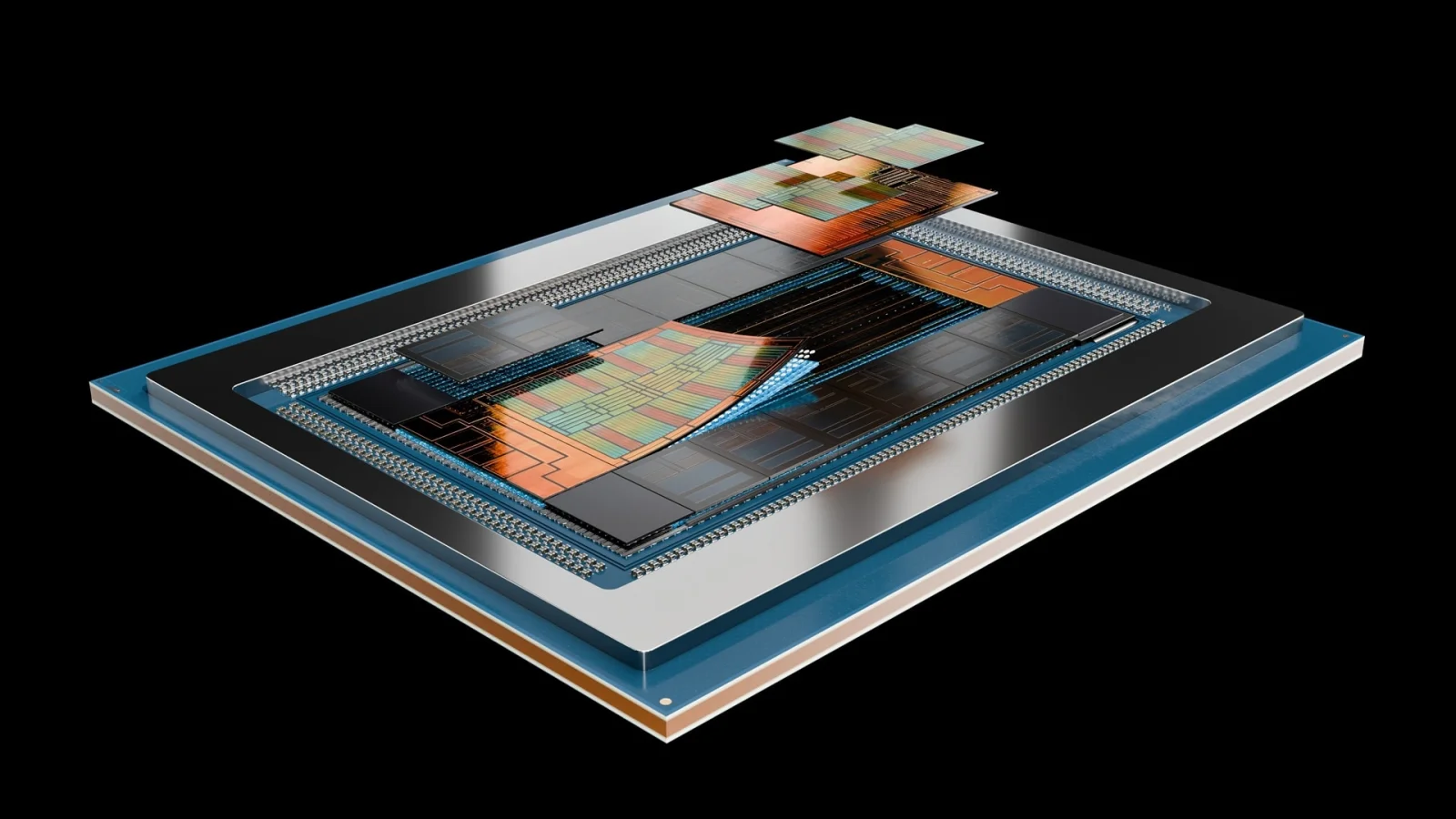 AMD welcome imagery for World Labs acquisition completion
Image: AMD
Lisa Su's quoted line frames the strategy: "optimize compute platforms and models together" for "the next era of superintelligence." AMD positions World Labs as a world-class model team inside its stack, not a siloed startup unit.
Concrete duties in the release:
- Fei-Fei Li leads as chief scientist with a direct Su reporting line.
- The World Labs team keeps advancing foundational model research.
- The same team works with AMD engineers to turn emerging model capabilities into future hardware, software, and systems for an open AI ecosystem.
That "open ecosystem" language matters politically and technically. AMD is selling open platforms against Nvidia CUDA lock-in while buying a lab that already shipped developer-facing world-model APIs. See our Oracle Vera CPU agent sandbox post for how hyperscalers pitch open agent runtimes — AMD wants the model side of that story in-house.
SEC paperwork vs press-release date
SEC amendments often land after marketing copy. Here:
- Closing date: November 13, 2026 (8-K/A Item 3.02).
- Share count: 14,978,322 shares calculated from the 10-day VWAP formula in the merger agreement.
- Newsroom timestamp: November 16, 2026 publication.
Builders tracking AMD dilution should read the 8-K/A table, not only the headline $8.2B figure from September, because all-stock deals reprice with AMD's ticker.
What World Labs was building before close
Our September 2026 Atlas guide documented pixel-aligned 3D reconstruction, Viewfinder, and Chisel editing flows — product-shaped research, not only papers. World Labs' September blog previewed the merger by emphasizing spatial and physical-world AI and a 2025 GPU partnership with AMD.
After close, expect three questions in Discord threads:
- Do Atlas API keys migrate to AMD branding? Not answered in the completion release — watch worldlabs.ai status pages.
- Does training move to MI450/MI455 racks? Su's quote implies hardware feedback loops, but no cluster map shipped November 16.
- How does this interact with Meta SAM 3D and Nvidia Cosmos? Compare on your reconstruction latency and robotics sim hooks, not slide decks.
Why spatial models matter to chip strategy
 AMD and World Labs spatial AI research collaboration
Image: AMD
World models eat video, depth, and multiview tensors — different bandwidth and precision profiles than chat-only inference. AMD's November MI400 series updates already pitch leadership inference claims; owning World Labs gives internal benchmarks that do not leak through OEM NDAs.
Robotics teams should note AMD's explicit mention of robotic learning and simulation. That aligns with NVIDIA Cosmos world models and Gemini Robotics 2.5 narratives — but AMD's bet is buying researchers, not only shipping a demo humanoid.
For game and creator tooling, spatial models also intersect Tencent HY-World and Scenario's 3D dataset hub — the ecosystem is crowded; chief-scientist leadership signals AMD will publish evals, not only FLOPS.
What developers should watch next
- World Labs product changelogs for Atlas, Marble, and robotics sim APIs — completion day did not freeze roadmaps.
- AMD Instinct software releases citing World Labs kernels — watch ROCm notes for spatial workloads.
- SEC quarterly filings for goodwill and R&D line items — confirms how AMD accounts for the lab.
- Hiring pages under AMD AI research — integration success shows up in joint job posts, not press releases alone.
If you need open weights today, World Labs was never the only path; our regional AI landscape posts list US, EU, and Asia alternatives while AMD integrates this team.
Fei-Fei Li's role in plain language
Li is not a ceremonial fellow. Chief scientist with a Su reporting line means architecture reviews for future AI IPs — think memory hierarchy for multiview transformers, not keynote cameos. Her computer-vision pedigree is historical context; the job is forward SKU planning on spatial transformers and simulation throughput.
Justin Johnson and Ben Mildenhall continue leading engineering per World Labs' September merger post — continuity matters for developers with existing Atlas projects.
Comparison: lab acquisition vs partnership-only
| Model | Example | What changes for builders |
|---|---|---|
| Partnership only | Prior AMD–World Labs GPU tuning | Shared benchmarks, separate roadmaps |
| Acquisition (now) | Completion November 2026 | Shared hardware–model planning, single employer |
| Competitor pattern | Nvidia invests in Cosmos + GR00T | In-house demos, less M&A headline |
How this compares with Nvidia's vertical stack
Nvidia sells Cosmos world foundation models, Omniverse, and GR00T robotics stacks as a bundle tied to CUDA. AMD's World Labs buy is the mirror strategy: own frontier spatial researchers who can stress-test MI-series memory bandwidth before SKUs freeze. Neither approach guarantees better developer UX — compare time-to-first-mesh on your pipeline.
Our Huawei vs US compute gap piece shows why non-Nvidia stacks keep chasing efficiency narratives. AMD adding Li's team is a credibility bid in that race, not an instant Atlas-for-ROCm port.
Questions export-control readers ask
Congressional fights over AI chip sales to China do not pause because a world-model lab changes owners. AMD still sells Instinct globally under BIS rules — same frames as Koios sockpuppet export debates and Megaspeed probe coverage. World Labs itself was US-founded; integration does not by itself move training clusters overseas, but customer contracts might.
Practical checklist for Atlas developers
| Step | Action |
|---|---|
| 1 | Export current World Labs project assets and note API versions in use |
| 2 | Watch AMD investor calls for goodwill and headcount mentions |
| 3 | Benchmark ROCm against CUDA on your reconstruction jobs, not marketing charts |
| 4 | Track Justin Johnson / Ben Mildenhall posts for research continuity signals |
| 5 | Keep a fallback 3D path (Tencent HY-World, open splat repos) until AMD documents migration |
Timeline: agreement to close
| Date | Event |
|---|---|
| Sept 28, 2026 | Definitive agreement announced |
| Nov 13, 2026 | Merger closes; 14,978,322 AMD shares issued (SEC) |
| Nov 16, 2026 | AMD newsroom completion release and Li appointment |
Related on explainx.ai
- World Labs Atlas launch and APIs
- Yann LeCun on world models vs LLMs
- Tencent HY-World 3D competition
- Scenario 3D dataset for builders
- Apple GHARP and 3D priors
- Huawei vs US compute share context
- Koios export-control influence context
Sources
- AMD newsroom: Completes acquisition of World Labs (Nov 16, 2026) — primary.
- SEC Form 8-K/A: share issuance on close (Nov 13, 2026) — primary.
- World Labs: Joining AMD agreement post (Sept 28, 2026) — context.
What enterprise procurement teams should ask AMD
Buyers evaluating multi-year Instinct contracts should add world-model roadmap questions to RFPs:
- Will World Labs research produce public ROCm kernels or stay internal until launch?
- Does chief-scientist reporting to Su mean priority support for Atlas-class customers on AMD hardware?
- How are IP boundaries drawn if World Labs models train on customer-private scene data?
AMD's release does not answer those yet. Treat November 16 copy as directional, not SLA.
Robotics and simulation angle
Interactive 3D environments are the training substrate for embodied agents. Our envisioning agentic robotics survey maps how labs stage S0–S2 maturity. World Labs sits upstream — generating rooms, objects, and camera paths — while Gemini Robotics 2.5 shows downstream factory demos.
If you build sim-to-real, watch whether AMD publishes paired benchmarks: world generation latency on MI455 versus H100/B200 baselines. Without numbers, the acquisition is strategic signaling.
Open ecosystem messaging vs developer reality
AMD repeated "open AI ecosystem" language from the September signing through November close. Developers hear open and ask weights, APIs, and exportable checkpoints. World Labs has shipped research products, not necessarily open weights on every atlas release.
Pair this deal with our Pax Silica supply-chain declaration coverage — governments want trusted AI infrastructure; chip vendors want **labs that prove sovereign-friendly training stories. AMD now owns one of the most visible US spatial-AI brands in that conversation.
Accurate as of November 16, 2026. Product URLs and Atlas availability should be verified on World Labs' own site after close. SEC figures are primary for share count.