



Update — September 28, 2026: New to AI? Start with our plain-language fundamental guide on how to use AI — Rule 6 covers verifying answers.
Watch first: Why do AI models hallucinate? — Anthropic (YouTube)
In that short explainer, Jordan at Anthropic walks through a question many people eventually hit: *if today’s assistants are so capable, why do they sometimes invent things—citations, numbers, even whole references—with full confidence? The video is worth the full run; what follows is a structured summary plus explainx.ai-specific ideas that go beyond the same do-and-don’t list.
What “hallucination” means here
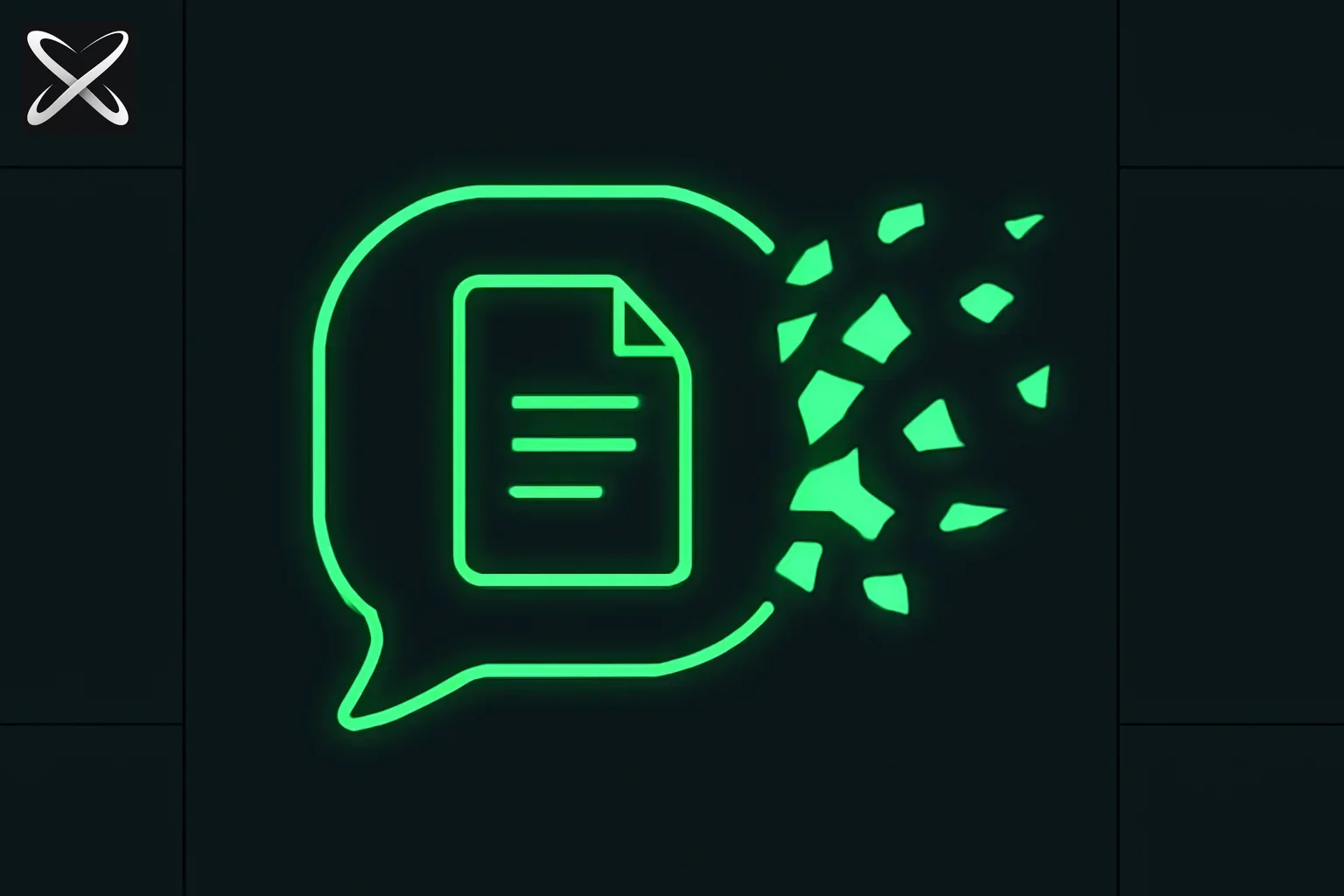 Why AI models hallucinate — a confident speech bubble containing a citation icon fracturing into scattered shards
A hallucination (in product safety and research discussions) is not poetry—it is a false or unsupported factual claim presented as if it were true. The painful part, as the video stresses, is epistemic confidence: the model can read as informed and sound as a careful expert even when the content is wrong. Examples named in the explainer include:
- Bogus citations (e.g. paper titles that do not exist)
- Fake or mangled statistics
- Wrong details about real people, places, or events
The video notes that Claude has improved a lot on this axis versus even a year prior—so staged “gotcha” examples are harder to find in day-to-day use—but the mechanism and risk remain: the plausible wrong answer is the default failure mode, not a shy model saying “I don’t know.”
The core “why” (in one mental model)
Modern assistants are built on large language models that learn distributions over text: what phrasing tends to follow what, similar in spirit to next-word prediction on a phone—just at book-scale and with very long context. That is strength for drafting, pattern completion, and structured reasoning, but a structural limitation for trivia and bibliographic accuracy:
- For rare topics (e.g. a specific paper by a specific author), the model may not have a reliable internal “ground truth.”
- The model is also shaped to be helpful, which can nudge it toward a satisficing answer—something that looks like a citation or stat—when the truthful move might be abstention or explicit uncertainty.
Anthropic’s framing in the video is that teams train and measure for honesty—including “I don’t know” as a good answer—and run batteries of adversarial questions to track citation fabrications, hedging, and inappropriate confidence. They also say plainly that this is not solved for the field as a whole.
When hallucinations are more likely (from the same playbook)
The explainer calls out high-risk request shapes. In practice, treat these as red zones for unsupervised use:
- Specific facts, statistics, or citations you will not verify yourself
- Obscure, niche, or very recent topics (beyond what training + tools cover)
- Real but low-signal people, places, or events online
- Exact identifiers: dates, version numbers, legal citations, product SKUs, phone numbers, URLs
If your task sits in that list, you are in “trust but verify” territory regardless of which frontier model you use.
What Anthropic suggests you do in the product (summary)
The video’s user-facing advice—still good—centers on epistemic hygiene:
- Ask for sources and, if the model gives them, ask it to self-check that the sources actually support the claims.
- Permission the model to not know up front.
- Ask how confident it is and what could be wrong.
- For doubtful answers, open a new thread and ask the model to critique the prior answer and re-check sources.
- For high-stakes work, use independent trusted references—humans, databases, primary documents, not chat alone.
That list is the right baseline. The gap for builders and teams is: habits and infrastructure so you do not rely on willpower in every single message.
explainx.ai: what we add (outside the chat tips)
explainx.ai is not a model lab; we build around models—skills, MCP, and courses—so people can work with agents without mistaking fluency for truth. Here is what we have seen work in addition to the video’s user prompts.
1. Separate “language” from “ground truth”
For factual questions, the durable pattern is: retrieval (search, RAG, internal docs) or tool-backed answers before the model “freestyles” from parametric memory. The model is a synthesizer; the corpus (or API you trust) is the authority—what MCP enables in tool-first stacks.
2. Encode verification in your agent setup, not only in your head
Agent skills are a practical place to write “when claiming X, run Y”: grep the repo, hit the internal wiki, or call a read-only HTTP check—so verification is a default workflow, not a one-off reminder. The same idea applies to security: treat untrusted text as instruction surface, not only “the answer.”
3. Use independent checks that do not share the same mistake
- Second channel: confirm paper titles in Google Scholar or a DOI resolver, not by asking the same model again in a fresh chat.
- For code and APIs: run tests, read official docs, or diff against the real SDK—hallucinated function names and parameters are a whole parallel category of “sounds right.”
4. Calibrate process, not just phrasing
Critical teams keep lightweight evals on their own domains: a small set of questions with known correct answers, re-run on model or prompt changes. That catches regressions in accuracy that end-user chitchat will not.
5. Education beats vibes
Anthropic Academy (the Learn hub) exists because reliability is partly competence: knowing when the tool is a writer and when it must defer to your sources. explainx.ai courses and hubs push the same idea for builders and orgs rolling out agents and skills.
Bottom line
Hallucination is not a matter of “bad” users. It is a known failure mode of language models that are trained to be helpful and to produce fluent continuations. Fixing it, for any vendor, is ongoing research and product work—including honesty training, evaluations, and release discipline—as Anthropic’s video lays out.
For you: bookmark that explainer, use in-chat habits when you are working without tools—and when you can invest a little setup, prefer retrieval, tools, and team rituals so accuracy is a property of the system, not a one-off self-discipline in every message.
Read next on explainx.ai: Sam Altman’s AI genie — mind the mushrooms · When Gemini calls a real product fake: a multimodal case study · What are agent skills? · What is MCP? · Registry: explainx.ai/skills
This article summarizes themes from a public Anthropic video and adds independent context from explainx.ai. Model behavior, safety features, and product names may change; check current vendor documentation and the video description on YouTube for updates.
How do you verify a citation rather than its appearance?
Open the claimed source and compare its title, author, and date with the answer. Then locate the passage that establishes the attached claim. A real paper can still be cited for something it never measured, and a correct URL can point to an unrelated announcement. Checking existence is the first step; checking support is the decisive one.
Split compound claims before reviewing them. “The tool launched this month, is available globally, and cuts costs in half” contains three propositions. A launch page might support the first while leaving the other two unanswered. Attach evidence to each proposition or narrow the sentence to what the source actually establishes.
Record whether a figure is independently measured, reported by the vendor, or illustrative. Those labels change how a reader should use the result. A model's confident delivery does not erase the distinction, and asking it to add citations after drafting can create a convincing reference list without improving the underlying claims.
What does a small hallucination evaluation look like?
Choose questions your application genuinely receives and collect the authoritative answers. Include some questions for which the documents contain no answer. If every test has an answer, you never check whether the model can decline a request instead of filling the gap.
Grade support as well as correctness. A correct-looking answer with a mismatched source is still a problem in a system that promises citations. Track missing-source responses separately from invented facts, because the remedy may be better retrieval in one case and a clearer abstention policy in the other.
Run the same set after changing the model, prompt, or retrieval settings. Preserve a few representative failures with their inputs and retrieved passages. This gives the next change a concrete target without pretending that a small local evaluation proves reliability on every topic.
What should the user see when evidence is missing?
State the missing fact plainly and give the next useful action. For a product question, that might be checking a current account setting. For a document question, it may mean asking for the relevant page. Avoid replacing absent evidence with a vague confidence percentage that has no measured calibration behind it.
Keep the supported parts of the response useful. An assistant can summarize the supplied document while saying that it cannot establish a launch date from it. This is a better outcome than either inventing the date or discarding the whole task. The workflow should reward that distinction during evaluation.
For practical exercises, use the structured-output guide to represent missing values explicitly and the enterprise benchmark guide to keep your grading criteria tied to real user tasks.
Update — October 9, 2026: A teen's Claude-planned hike ended in a helicopter rescue, a real-world cost of trusting confident AI directions. Full breakdown →